What makes a batik different?
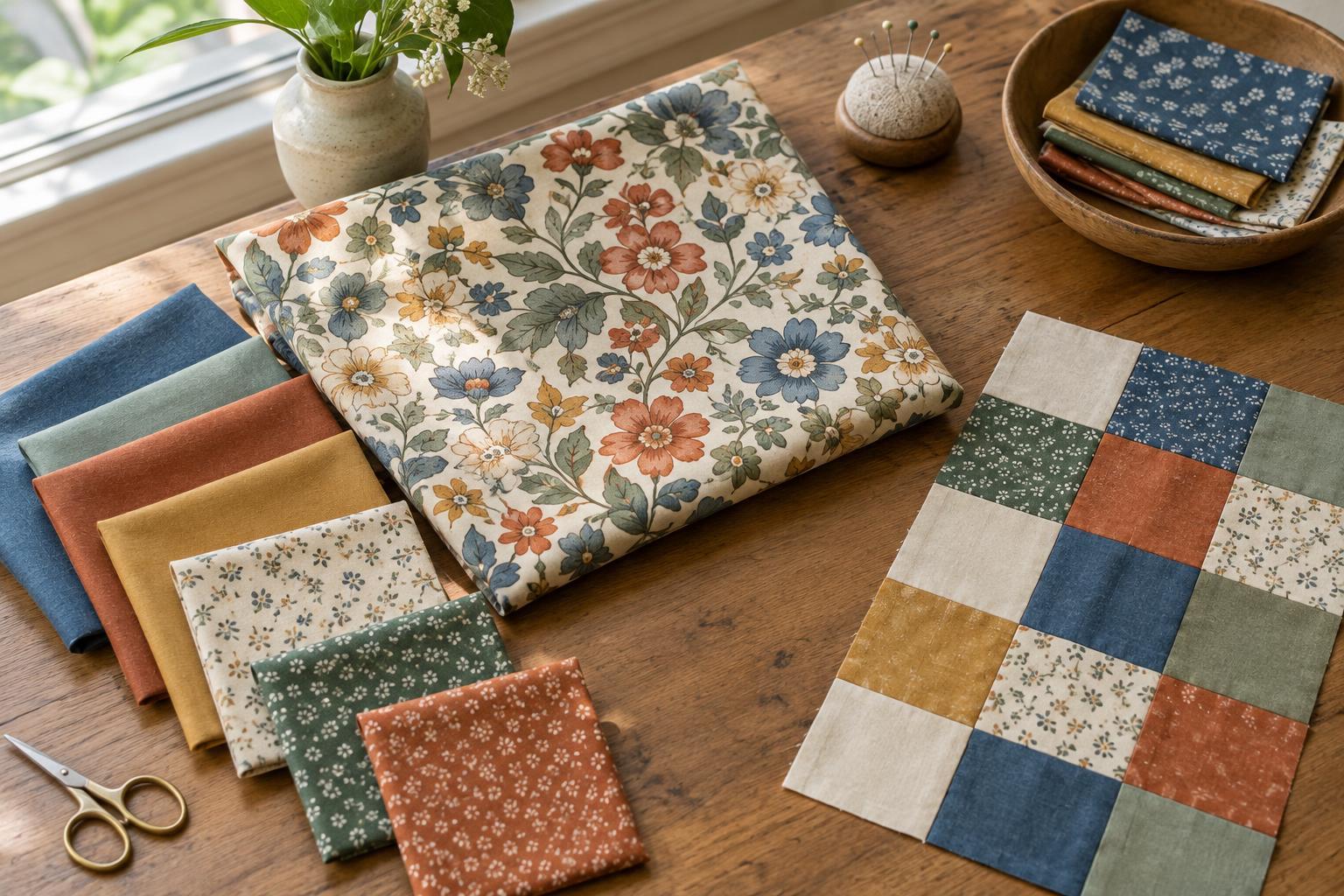
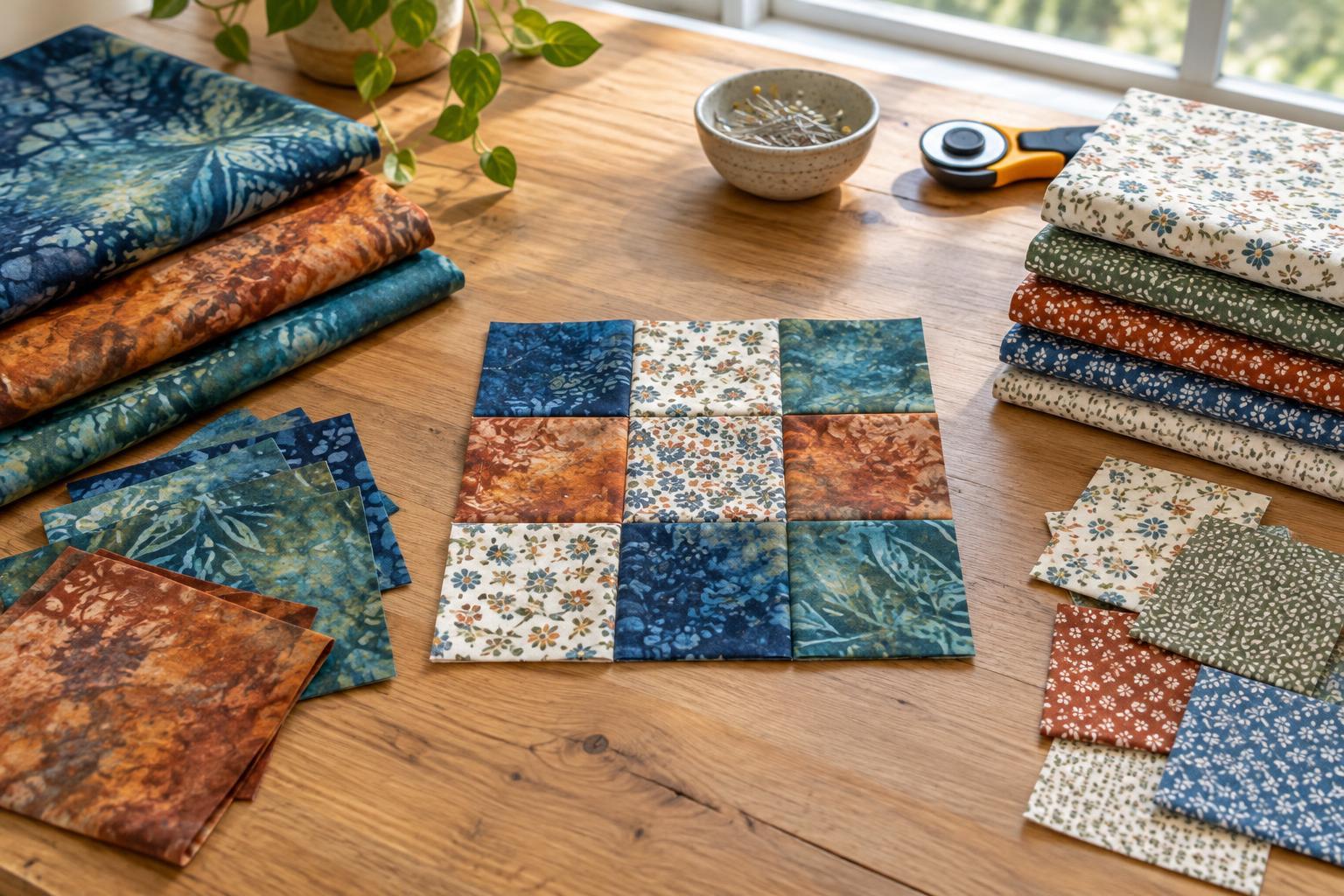
Batiks and standard quilting cotton are often both cotton fabrics suitable for patchwork. The main distinction is how their designs are created. Batik designs are commonly made through dyeing and resist processes, which can produce layered colour, irregular edges and variation across a single piece. Many standard quilting cottons get their designs from printing onto a woven base, giving them more predictable repeats and clearly defined motifs.
Those descriptions are useful starting points, not guarantees about every fabric on a bolt. Batiks range from quiet, nearly solid colours to busy patterns, while printed cottons can imitate the mottled look of dyeing. When choosing between them, examine the actual fabric: its colour across the full width, the clarity of its pattern and how it feels when folded. The project in front of you matters more than the label.
Plan for colour variation, not just the colour on the label
A batik that reads as blue from a distance may contain patches of violet, green or pale grey. That variation can add movement to a simple block, but it can also make a carefully planned colour boundary less distinct. Printed quilting cotton is often easier to use when you want a repeated motif or a consistent area of colour, though its design may change appearance depending on which part you cut.
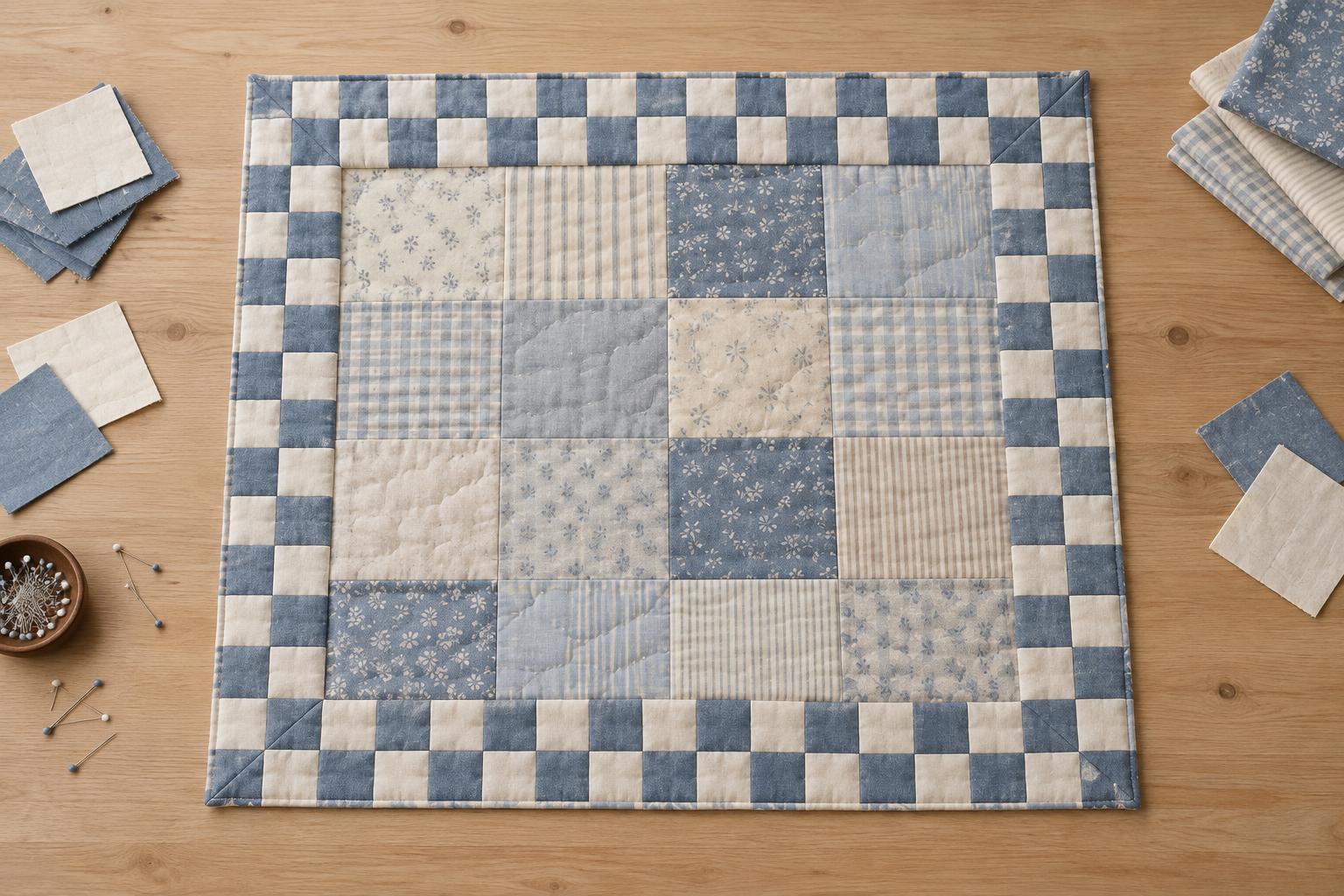
Before cutting, place candidate fabrics beside one another and step back. Look at their value—how light or dark they appear—as well as their hue. Two fabrics with different colours but similar values may merge in a block that relies on contrast. Try viewing a small grouping in greyscale if the contrast is hard to judge. Also consider scale: a large print may look lively in a border but lose its subject in small patchwork pieces. A finely textured batik can provide visual interest without competing as strongly with a focal print.
Neither type has to be used alone. A batik background can soften the geometry of crisp printed shapes, while a restrained print can give the eye a place to rest among several richly varied batiks. Make a small sample block if the interaction is difficult to predict from loose swatches.
Notice how the fabric behaves at the sewing machine
Some batiks have a tighter weave or a firmer feel than the printed cottons beside them. That can make them pleasant to cut accurately, but it may also make multiple seam allowances feel bulky. Other batiks handle much like any quilting cotton. Test a few pieces rather than assuming that a whole category will behave the same way.
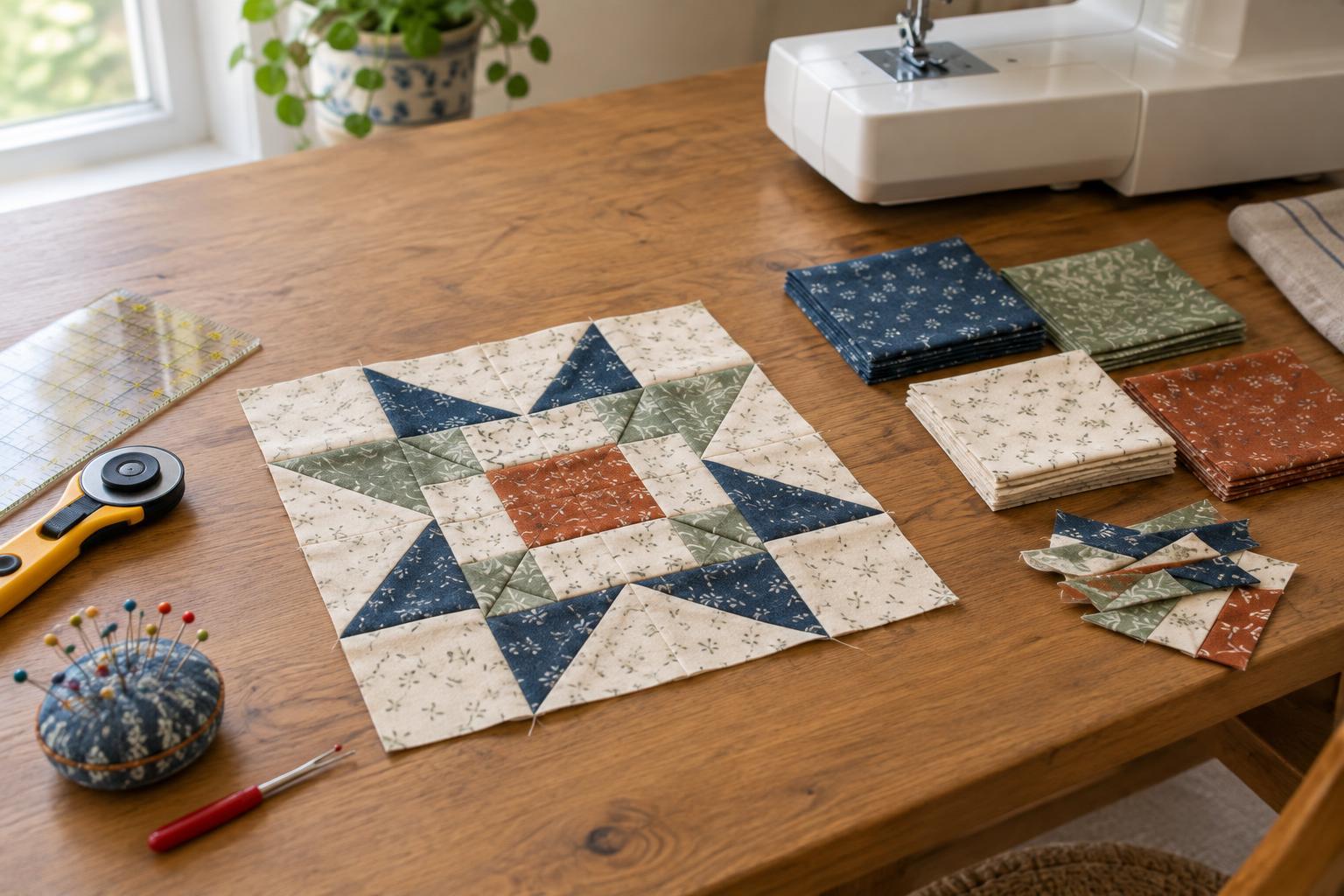
For either fabric, use a sharp rotary blade, measure from a consistent edge and sew a test seam to check your quarter-inch allowance. If a tightly woven fabric resists the needle or produces uneven stitches, try a fresh needle suited to woven cotton and test again on scraps. Press seams without dragging the iron across the block, which can distort small pieces cut on the bias. Where several seams meet, decide whether pressing to one side or pressing open gives the flatter result for that block.
If you are mixing fabrics with noticeably different body, make one complete test block before cutting the entire quilt. It will reveal whether the fabrics feed evenly and whether the finished block matches its intended size.
Check washing and colour care before committing
Any richly coloured fabric deserves a colourfastness check, whether it is a batik or a print. Dampen a small scrap and press it against a piece of white cotton to see whether colour transfers. If you plan to prewash, treat all the fabrics for a project consistently where possible, then press them before cutting. This helps you compare their behaviour after washing instead of discovering differences only when the quilt is finished.
For a quilt intended for frequent use, consider how much contrast there is between dark fabrics and pale neighbours. If a fabric sheds noticeable colour in a test wash, choose a different fabric or resolve the issue before including it next to white or cream pieces. Follow any care information supplied with the fabric. Testing a scrap is more reliable than assuming that one production method always holds dye better than another.
Choose for the job each fabric needs to do
Start with the design goal. For a block built around precise light-and-dark shapes, select fabrics that remain distinct from across the room, whether they are batiks or prints. For a quilt with large, open areas, a subtly changing batik can bring texture without requiring a prominent motif. If a recognizable floral or geometric print is central to the design, allow enough space in the pieces to show it.
You can keep the decision manageable by choosing one focal fabric, two or three supporting fabrics and a background, then cutting a few sample shapes from each. Arrange them as they will appear in the quilt rather than judging them only as folded yardage. Batiks and standard quilting cotton are both versatile choices; the better one is the fabric whose colour, pattern and handling support the particular quilt you want to make.