Start with how the fabrics behave
A patchwork quilt does not require every fabric to be identical, but the pieces should work together under the sewing machine and in use. Fabric weight is one part of that compatibility. A light fabric may feel soft and fluid, while a heavier one may hold a firm crease. When they meet in a block, one piece can stretch or shift more readily than the other, making it harder to keep edges and points aligned.
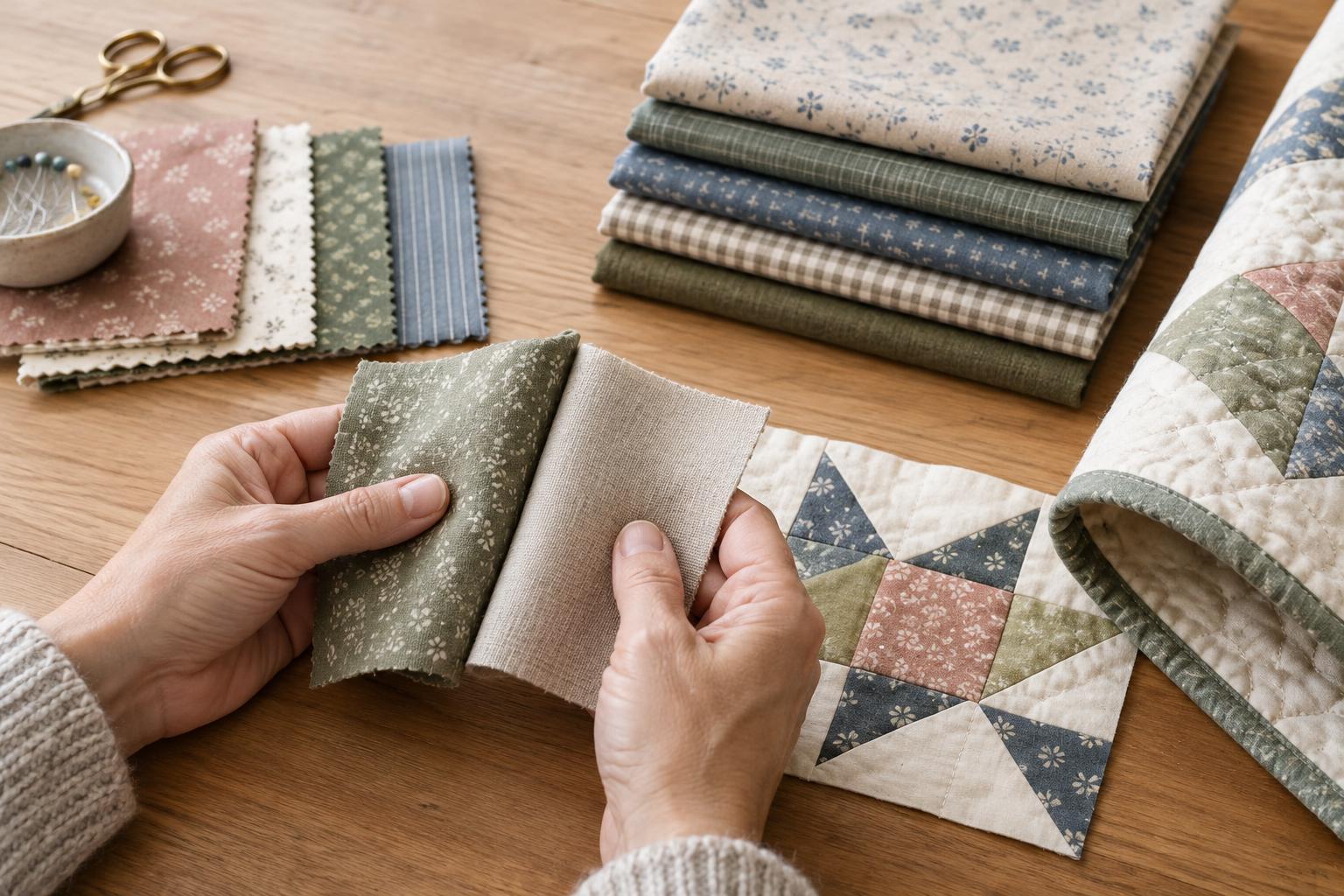
Weight alone does not tell the whole story. Weave, thickness, finish and stretch also affect how a fabric handles. Two fabrics that feel equally substantial may press differently; a loosely woven cloth may fray more than a tightly woven one. Before choosing a quilt design, place your candidate fabrics side by side. Fold them, press them and gently pull along their straight grain and bias. Notice which fabrics stay flat and which resist a crisp seam.
Build a dependable starting group
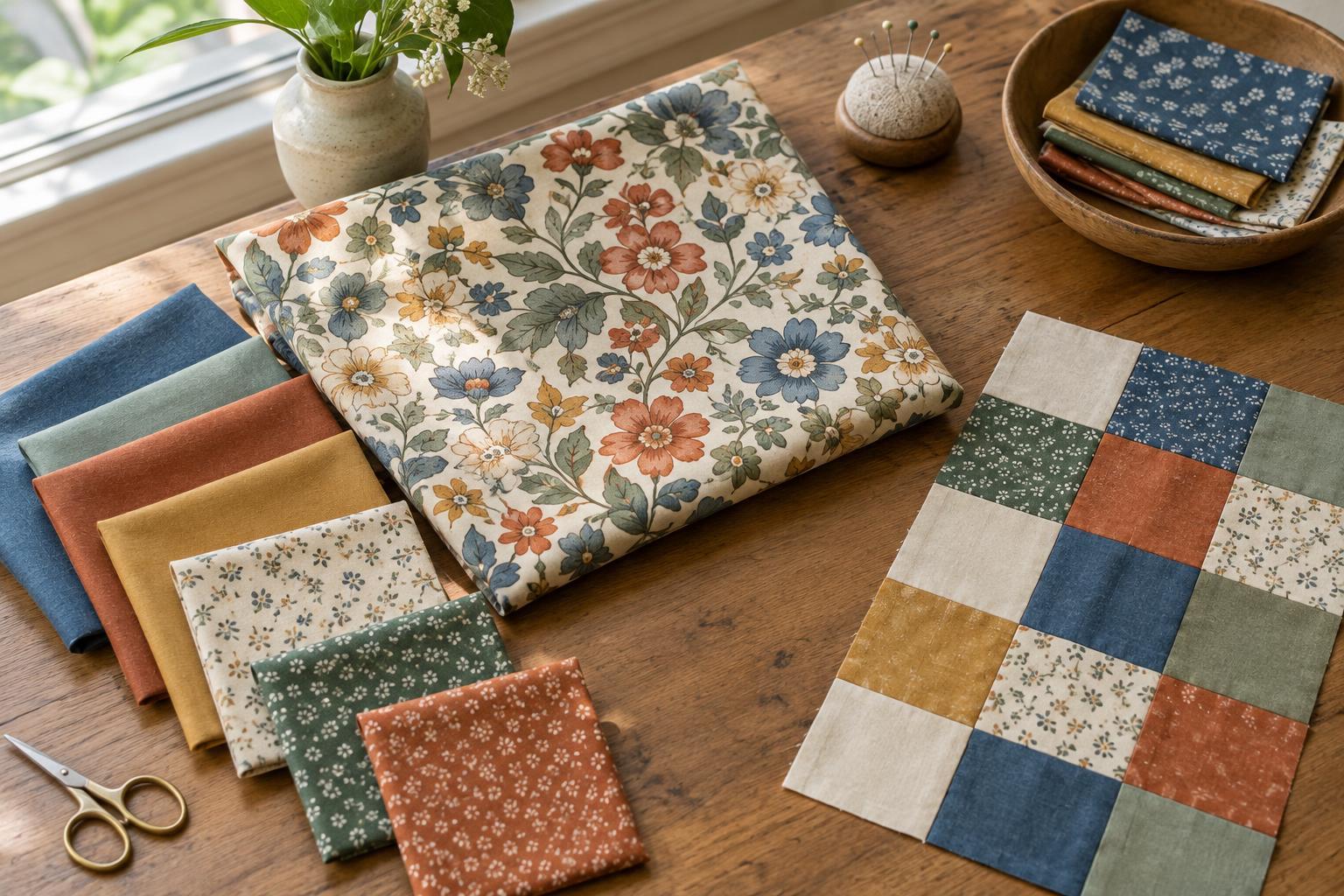
For straightforward patchwork, similarly weighted woven quilting cottons are a useful starting point. They tend to cut and piece in comparable ways, which helps when a pattern has many small units or intersecting seams. You can still vary colour, print scale and value without asking the fabrics to behave very differently. A dark, dense print and a pale solid may look striking together, but check that neither is so sheer that seam allowances show through.
If you want to use fabrics from different sources, sort them by feel before sorting them by colour. Set aside pieces that are noticeably flimsy, stiff, stretchy or bulky, then consider where they might fit. A small accent made from a contrasting fabric can be easier to manage than using it throughout every block. Reserve the most demanding combinations for larger pieces and simpler shapes, where minor differences in handling are less likely to distort a point.
Test mixed weights before cutting the whole quilt
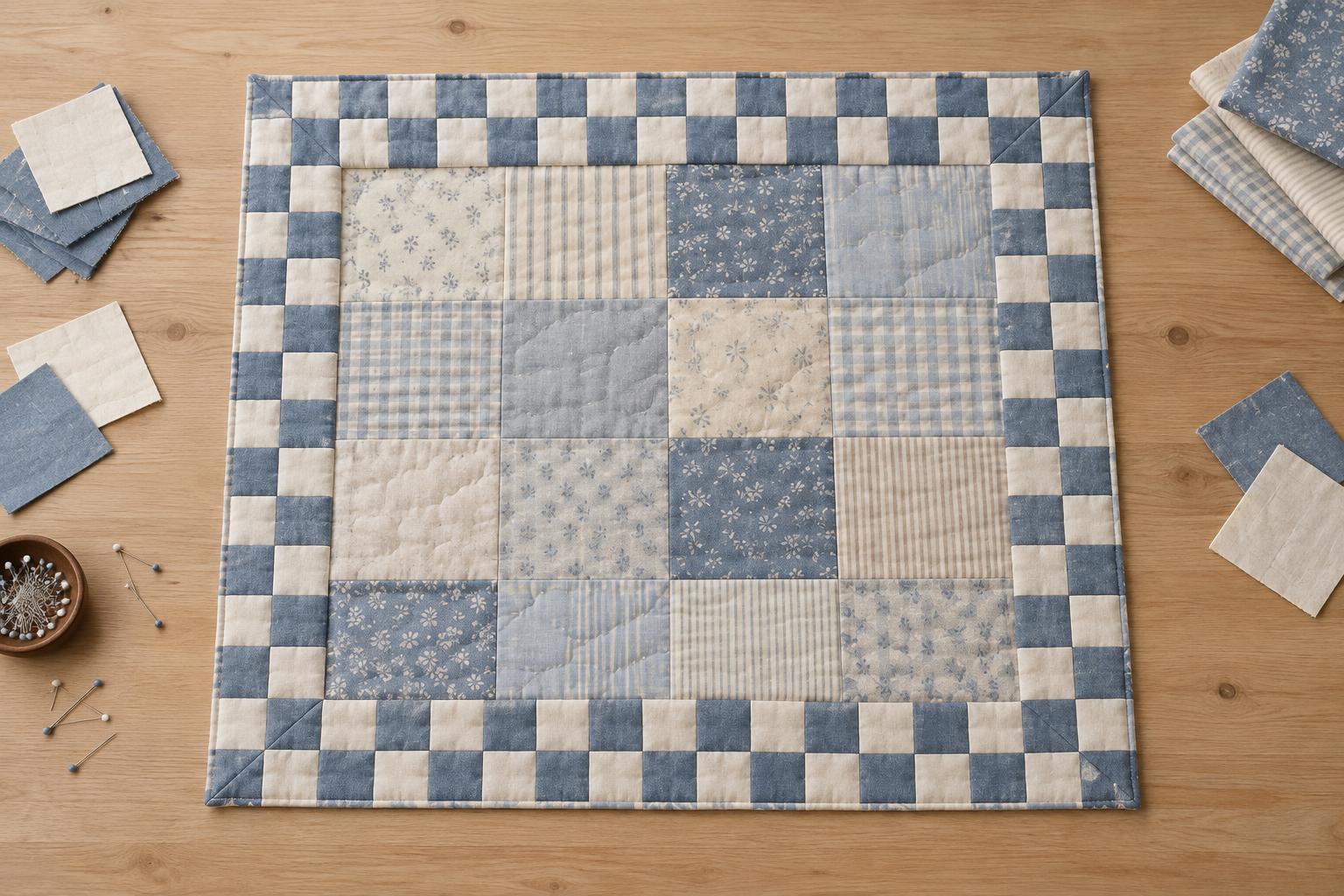
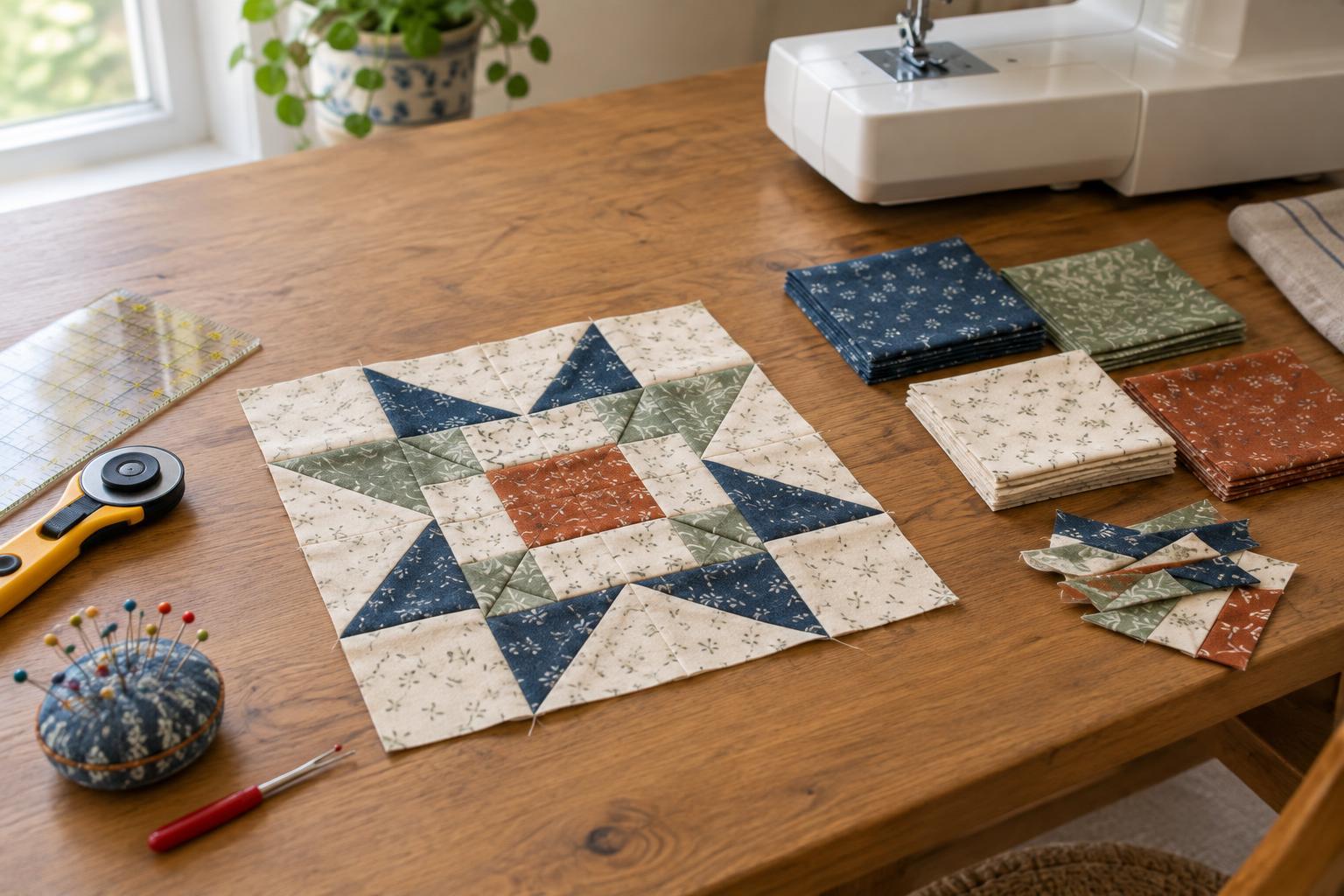
A sample block is the most useful check for a mixed-fabric plan. Cut and sew a few pieces using the seam allowance you intend to use for the quilt. Press the seams, then look at the block from the front and back. Do the edges lie flat? Are heavier seams forming ridges? Does a lighter piece seem to ripple beside a firmer one? Measuring the finished block will show whether the combination is practical for that design.
Think about washing at this stage, too. Fabrics may shrink or change texture differently after laundering. If you plan to prewash the quilt top fabrics, do so consistently, following the care guidance available for each fabric. If washing an unfamiliar fabric seems risky, test a small piece first. Pressing and sewing a sample after washing gives you a better sense of how the fabrics will behave together in the finished quilt.
Adapt the piecing to the fabric
When a lighter fabric needs more stability, careful handling may be enough: use an accurate cut, avoid pulling it through the machine and support the fabric as you sew. For a particularly delicate or loosely woven piece, a suitable lightweight stabiliser may help, but test it first. Added layers can change the feel of a block and create extra bulk, especially where several seams meet.
For heavier fabrics, choose a layout that avoids crowded seam intersections. Larger squares, broad strips and uncomplicated blocks leave more room for seam allowances. Press seams in the direction that produces the flattest result rather than following one rule for every block; sometimes pressing them open helps distribute bulk. If a fabric has noticeable stretch, keep that stretch in mind while cutting and joining it. A beautiful fabric is not necessarily a good match for tiny, precision-pieced units.
Consider the whole quilt, not just the top
The batting and backing affect how a pieced top feels once it becomes a quilt sandwich. A top with several heavy fabrics may already have a firm hand, while a top made mostly from light fabrics may feel more flexible. Choose the batting and backing with the finished quilt’s intended use in mind, and make a small layered sample if you are uncertain. Quilting through that sample can reveal bulky seams or areas that need a different approach.
Aim for compatibility rather than a perfect match on a label. Fabrics that press flat, hold their shape and form manageable seams can make a varied patchwork top. Testing a block before committing to the full cut list gives you the freedom to enjoy an unusual fabric—and the chance to simplify the design if it needs more space.