Know what has changed
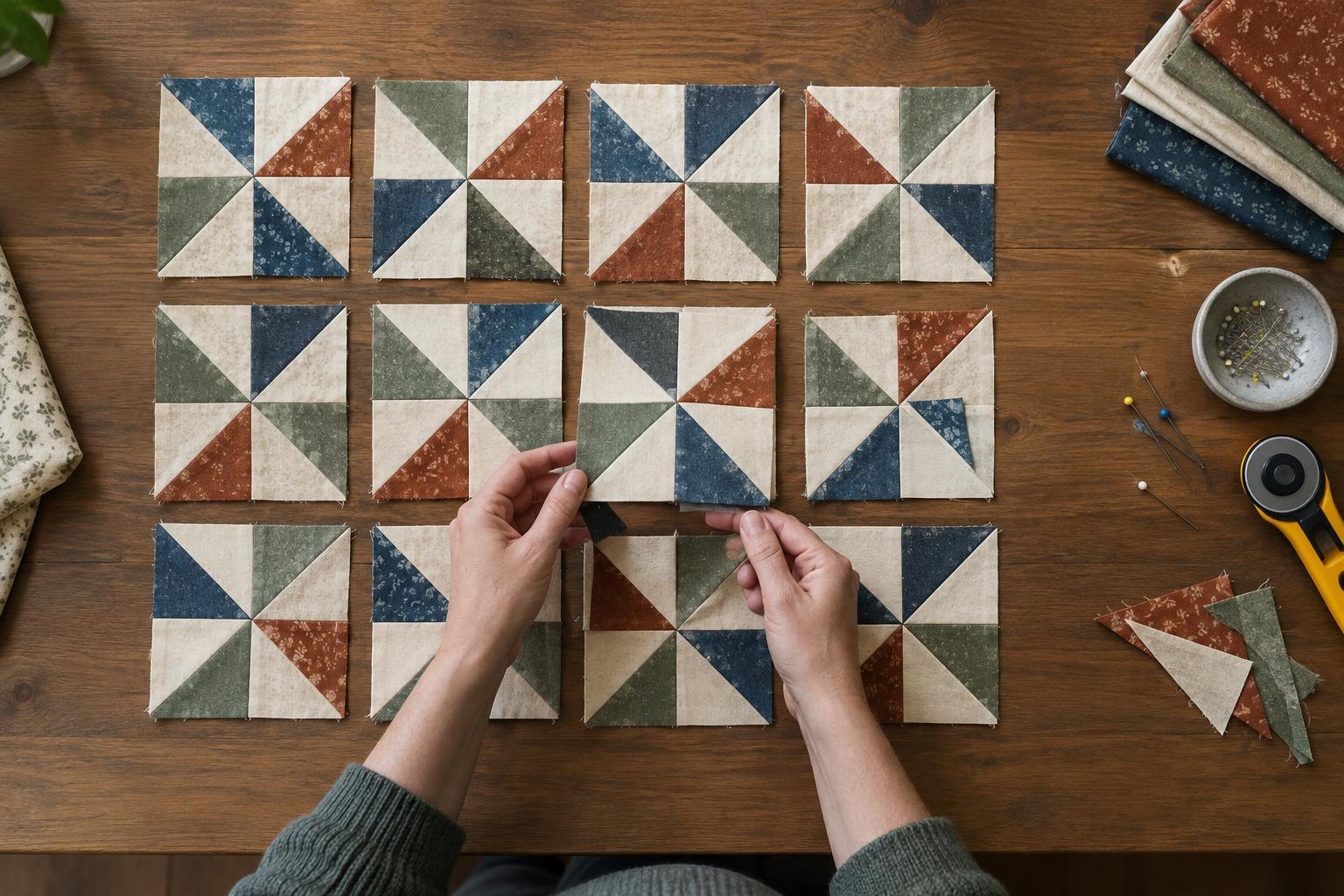
A reversed unit and a rotated block can create similar-looking surprises, but they need different fixes. A rotated block has been turned within the layout: its pieces keep the same relationship to one another, while the block faces a new direction. A reversed unit has been assembled as a mirror image of the intended arrangement. Turning the finished block will not always correct it, because the relationship between its pieces has changed.
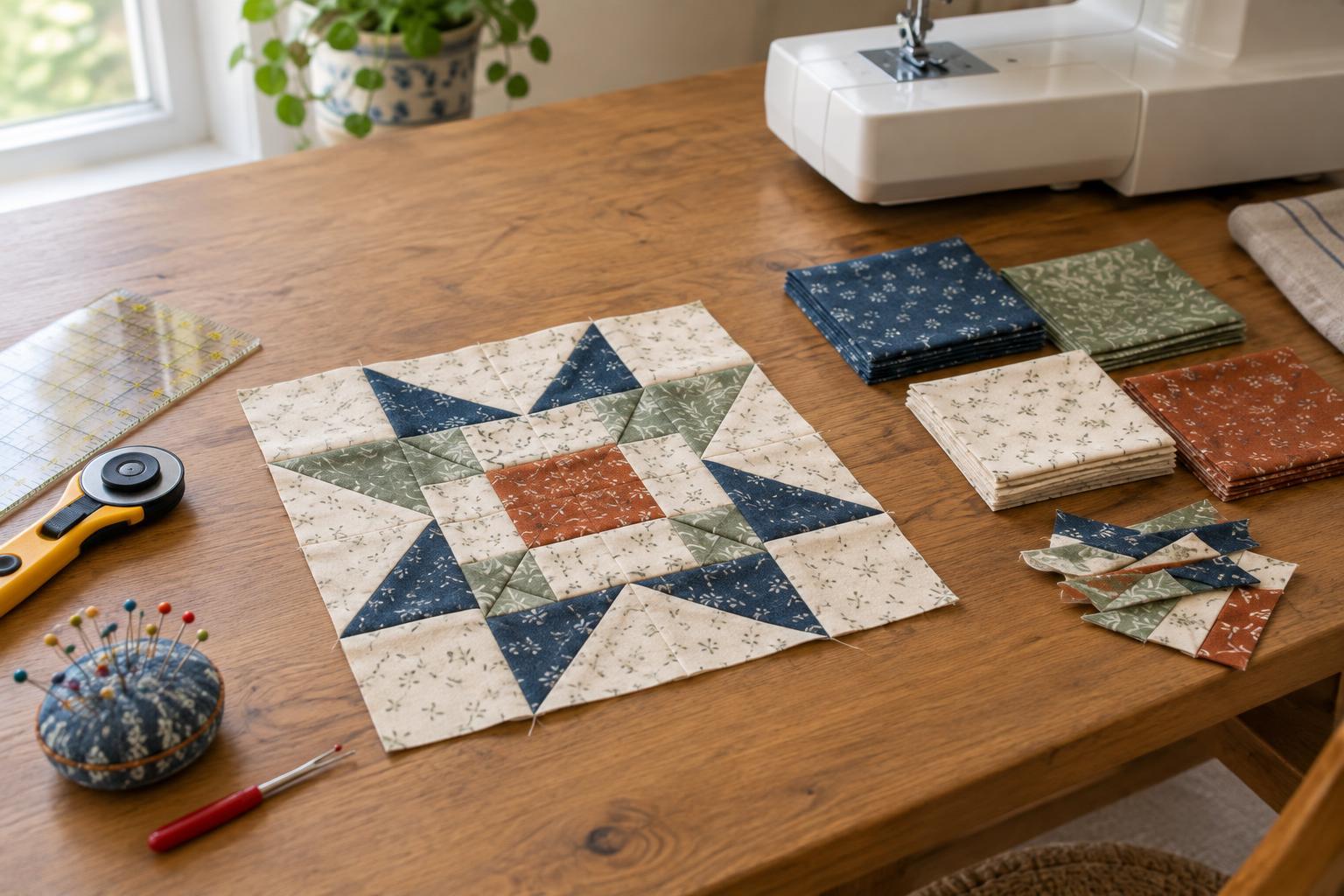
Imagine a block with a dark triangle pointing toward one corner. If every part of the block moves when you turn it, you are looking at a rotation. If the triangle points to the opposite side while another feature stays in place, a unit may be reversed. Symmetrical blocks can hide either difference, so look for an off-centre colour, a directional print or a seam line that has no matching counterpart.
Give the layout a clear reference point
Before arranging blocks, decide what counts as the top of the quilt. Place a small paper marker beyond that edge of the design wall or floor space. If you are following a pattern, keep its layout diagram nearby and orient it the same way. For an original design, make a quick sketch showing where prominent light and dark shapes should point. The sketch need not be precise; its purpose is to preserve your intended direction.
Check one block first and use it as a reference for the others. An asymmetric block might have a dark corner at the upper left or a diagonal seam rising toward the right. Compare blocks by that feature rather than by the overall colour impression. If alternating blocks are meant to face different ways, note the sequence on the sketch. That prevents an intentional rotation in one row from becoming a confusing exception in the next.
Inspect at three scales before sewing rows
Start close enough to see the units within each block. Follow a distinctive triangle, strip or printed motif around the block and compare it with the reference. A small paper arrow placed beside each block can help when the pattern has a strong directional flow. Keep markers outside the seam allowances so they cannot be sewn into the quilt.
Next, step back and examine the whole layout. Repeated shapes should form the lines, stars or secondary patterns you intended. A single rotated block often interrupts a diagonal or makes one dark patch stand out. A reversed unit may create a smaller break inside an otherwise correctly placed block. Taking a photograph can also help: the reduced view makes broad lines easier to see. Compare the photograph with your sketch, then return to the blocks to confirm any suspected mistake.
Correct the smallest thing that is wrong
If the block is simply rotated, turn it in place and check how all four edges meet their neighbours. If that fixes one line but breaks another, the problem may be inside the block instead. For a reversed unit, identify the affected seams before unpicking anything. You may need to remove and reassemble only one corner or row of units, rather than take apart the whole block. Press the corrected seams carefully and check the block’s size before returning it to the layout.
Not every unexpected orientation needs correcting. An isolated change may disrupt a repeated design, but a rotation can also create a pleasing rhythm when used consistently. Decide before joining the rows: place the proposed variation where you can see the whole top, then compare it with the intended layout. Keeping a change is easier when it looks deliberate across the quilt rather than accidental in one spot.
Keep the arrangement intact during assembly
Once you are satisfied, label the rows and record their direction. Paper labels pinned to the outer edge of each row can show its number and which end goes on the left. If you stack blocks for sewing, lift them in order and keep each stack oriented the same way. A photograph is a useful backup, but labels are easier to follow at the machine.
After sewing a row, lay it back in position before joining it to the next one. Check the reference features again, especially where blocks repeat with subtle variations. This brief pause catches turns introduced while carrying or pressing the work. The goal is not to eliminate every surprise from patchwork; it is to make sure the final arrangement reflects the choices you meant to make.