Two measurements for the same block
Quilt patterns often give a block both a finished size and an unfinished size. The unfinished size is the measurement across the block after you have pieced it but before you sew it into the quilt top. The finished size is the space that block occupies once its outside edges have been joined to neighbouring blocks or other pieces.
For a block assembled with quarter-inch seam allowances, the unfinished measurement is usually half an inch larger in each direction than the finished measurement. A block intended to finish at 6 inches square should measure 6½ inches square before assembly. That extra half inch is not a mistake: it provides a quarter-inch seam allowance on each of two opposite edges.
Think of the finished measurement as the distance between the seam lines, not the distance between the raw edges. The fabric outside those lines remains in the seam allowances, where it helps hold the pieces together.
Follow a quarter-inch seam through a block
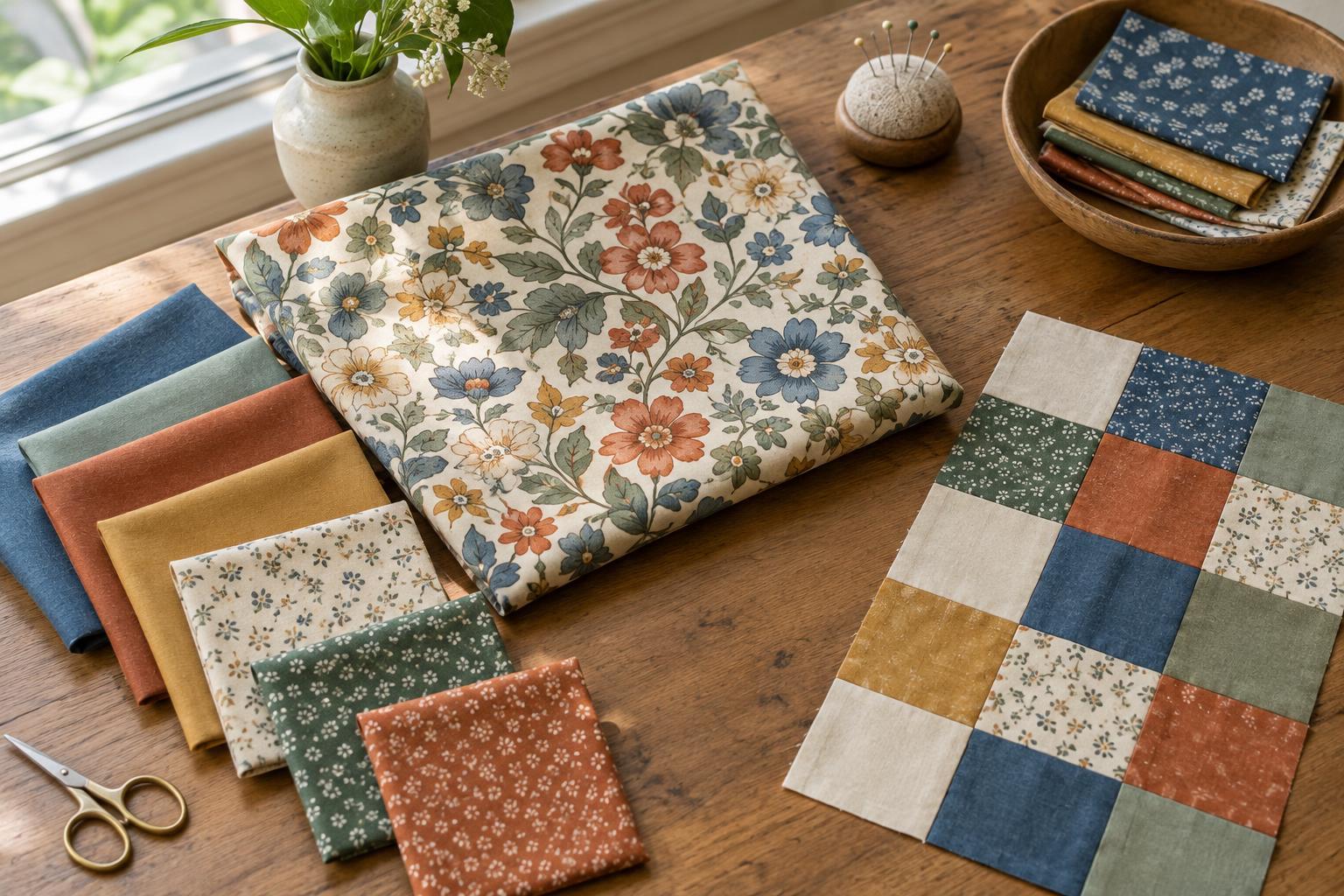
Imagine making a four-patch block from four squares cut at 3½ inches each. Sew two squares together along one edge with a quarter-inch seam. The pair measures 6½ inches across: you began with 7 inches of fabric width, and the joined seam used a quarter inch from each square. Make a second pair, then join the pairs. The resulting block should measure 6½ inches square before you add it to the quilt top.
When you sew that block to pieces on its left and right, another quarter inch at each outer edge enters a seam. Its visible width in the assembled top is then 6 inches. The same happens at its top and bottom edges. This is why adding two 3½-inch squares does not produce a 7-inch finished block.
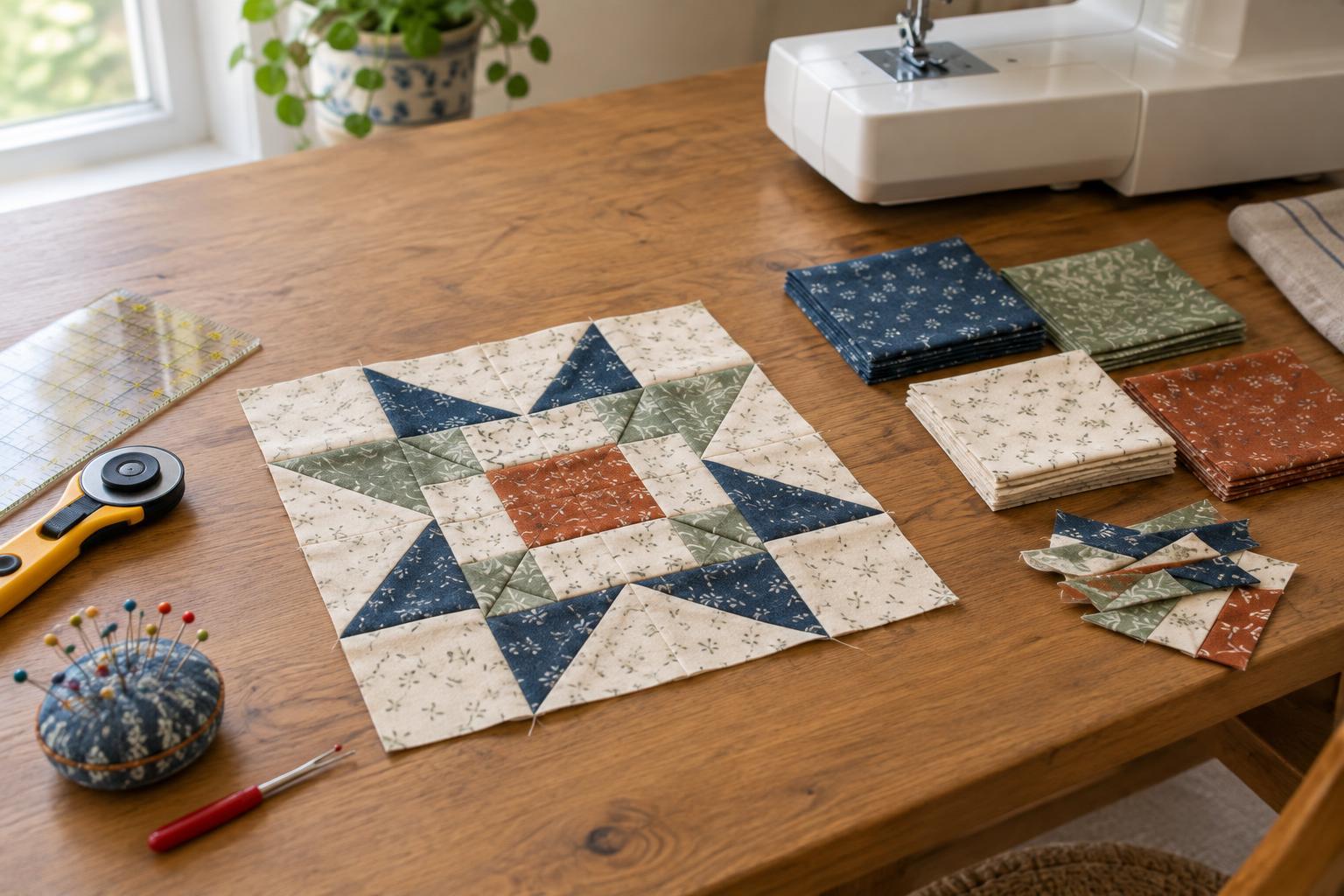
Patterns may also give an unfinished size for a smaller unit within a block. For example, a unit that will finish at 3 inches square in the block may need to measure 3½ inches square before it is sewn to the next unit. Read each measurement in relation to the next sewing step.
Use the pattern’s wording before you cut
Cutting instructions, unit sizes and block sizes answer different questions. A cutting instruction tells you the size of a fabric piece before sewing. An unfinished unit or block size tells you what to measure after a particular set of seams is sewn. A finished size tells you how much space that piece is designed to occupy after its remaining edges are joined.
Look for words such as “cut,” “trim to,” “unfinished,” and “finished.” If a pattern says to trim a half-square triangle unit to 3½ inches square, that is the size to check before joining it to other units; it will typically finish at 3 inches square. Do not add another half inch to a stated cutting or trimming size unless the instructions specifically tell you to.
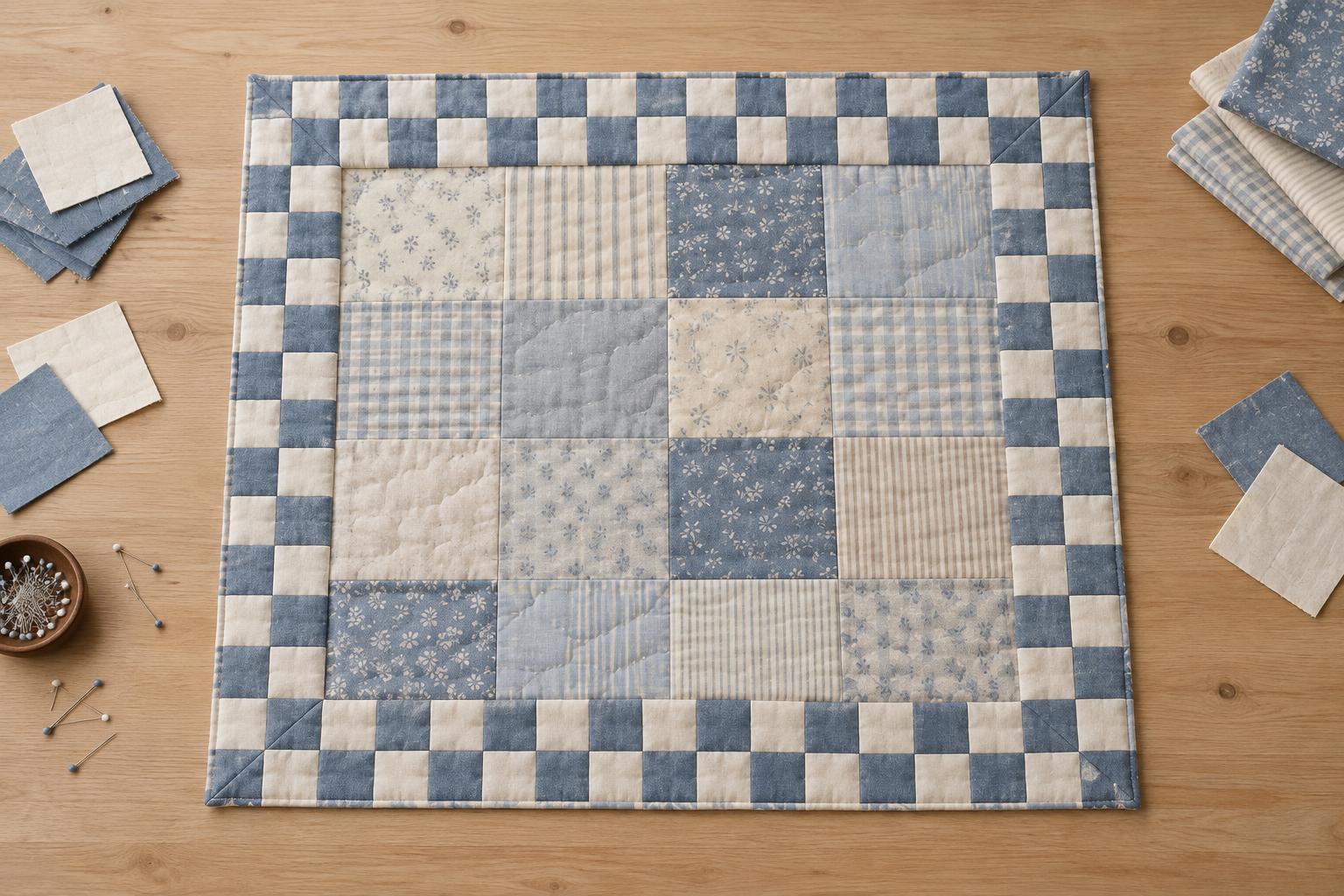
Sashing, borders and layouts can change the overall quilt dimensions without changing the finished size of an individual block. If the measurements seem inconsistent, sketch one row and mark its seam lines. Adding the finished widths of its blocks, sashing and borders is more reliable than adding their raw-edge widths.
Check your block before assembling the top
Piece a test block if you are using an unfamiliar pattern or a new sewing setup. Measure it through the centre in both directions after pressing, with the block lying flat. A block that is consistently too small may indicate that your seams are wider than the pattern’s quarter inch. Seams that are too narrow can leave a block too large.
The distance from the needle to a quarter-inch guide does not always produce the same result once fabric is folded and pressed. Sew two test squares, press the seam as you intend to press the project, and measure the joined pair. Adjust your guide or needle position if needed. Consistent seams matter as much as an exact measurement on any one stitch.
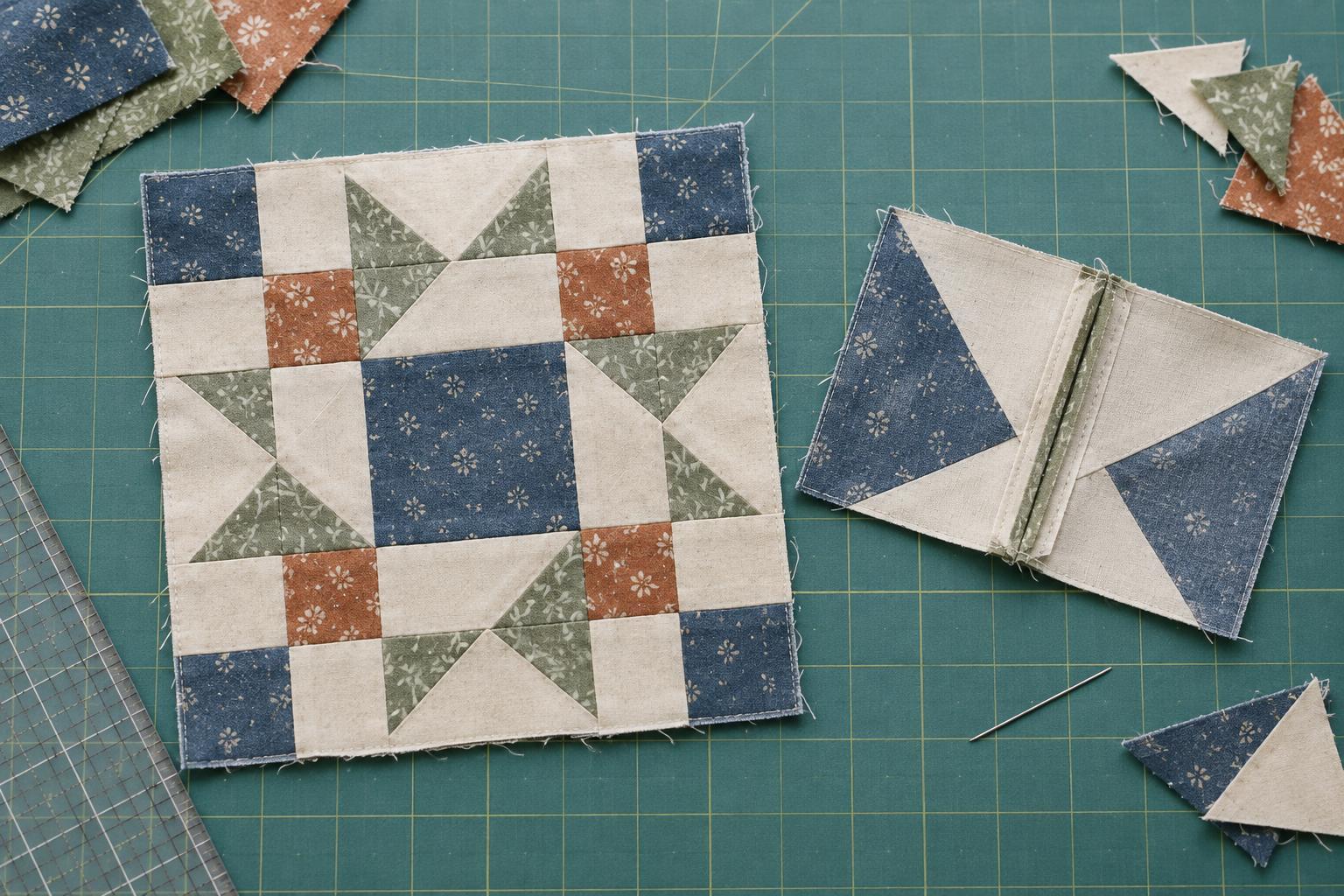
If only one part of a block is out of size, check the units before trimming the whole block. Stretching during sewing, especially along diagonal edges, can distort a unit. Press by lifting and setting down the iron rather than pushing it across the fabric. Trim only where the pattern allows enough extra fabric; trimming an undersized block cannot restore its lost seam allowance.
Keep the distinction visible as you work
A simple note beside your cutting area can prevent confusion: write the intended finished block size, then the unfinished size you need to measure before assembly. For a 12-inch finished square block made with quarter-inch seams, that checkpoint is 12½ inches square. Marking the checkpoint is especially helpful when you are making many blocks over several sessions.
Before joining blocks, compare their measurements rather than assuming they match because their pieces were cut alike. Small differences can accumulate across a row. Knowing which measurement belongs to which stage lets you spot a problem while it is still manageable—and lets the seam allowances do their intended job when the blocks come together.