What piecing means
Piecing is the process of sewing fabric shapes together to make a patchwork block or quilt top. You can sew those seams by hand or with a sewing machine. Neither method is automatically more suitable for a beginner: both ask you to cut carefully, keep a consistent seam allowance and check how the pieces fit together.
Start by considering the part of making you hope to enjoy. If you want a portable activity you can pick up for short sessions, hand piecing may appeal. If you want to assemble straightforward blocks efficiently at a worktable, machine piecing may feel more natural. You can also use both methods in one quilt, so your first choice need not be permanent.
What hand piecing feels like
Hand piecing needs only a few supplies: fabric, a needle, thread, scissors and a way to mark the sewing line. Cut pieces accurately, then mark a consistent seam allowance on the wrong side of each one. Align the edges, pin where needed and sew along the marked line with small, even running stitches. Secure the thread at the beginning and end of a seam so the pieces stay together as you handle them.
Working by hand gives you time to check each corner and adjust the fabric as you sew. It can be especially satisfying for small projects or shapes that require you to stop at a precise point rather than sew across the whole edge. The trade-off is time: a quilt top with many seams generally takes longer to hand piece. Hand sewing can also become uncomfortable if you grip the needle tightly or work for long stretches, so take breaks and find a comfortable position.
You do not need perfect-looking stitches to begin. Aim instead for seams that hold securely and meet where you intended. Make a small test seam, open it out and gently handle it. If the seam looks loose or the fabric puckers, adjust your stitch length or thread tension before making a block.
What machine piecing feels like
Machine piecing uses a straight stitch to join fabric pieces, usually with a quarter-inch seam allowance for quilt blocks. A machine can make repeated straight seams quickly, which is useful when a design contains many squares or strips. You will need space for the machine and enough familiarity with it to thread it, choose a straight stitch and sew at a steady pace.
Speed does not remove the need for preparation. Check the seam allowance on a scrap of fabric before starting: the distance from the fabric edge to the stitching line should be consistent. A presser foot or seam guide can help, but it is still worth measuring a test seam, since tools and settings vary. Guide the fabric without pulling it through the machine, and pause to realign pieces when necessary.
For some beginners, managing the machine and the fabric at the same time feels awkward at first. Practise sewing straight lines on scraps, then try two squares. Press the seam and check that the joined piece is the size you expected. This simple check can reveal a seam that is slightly too wide or narrow before the difference accumulates across a larger block.
Try the same block both ways
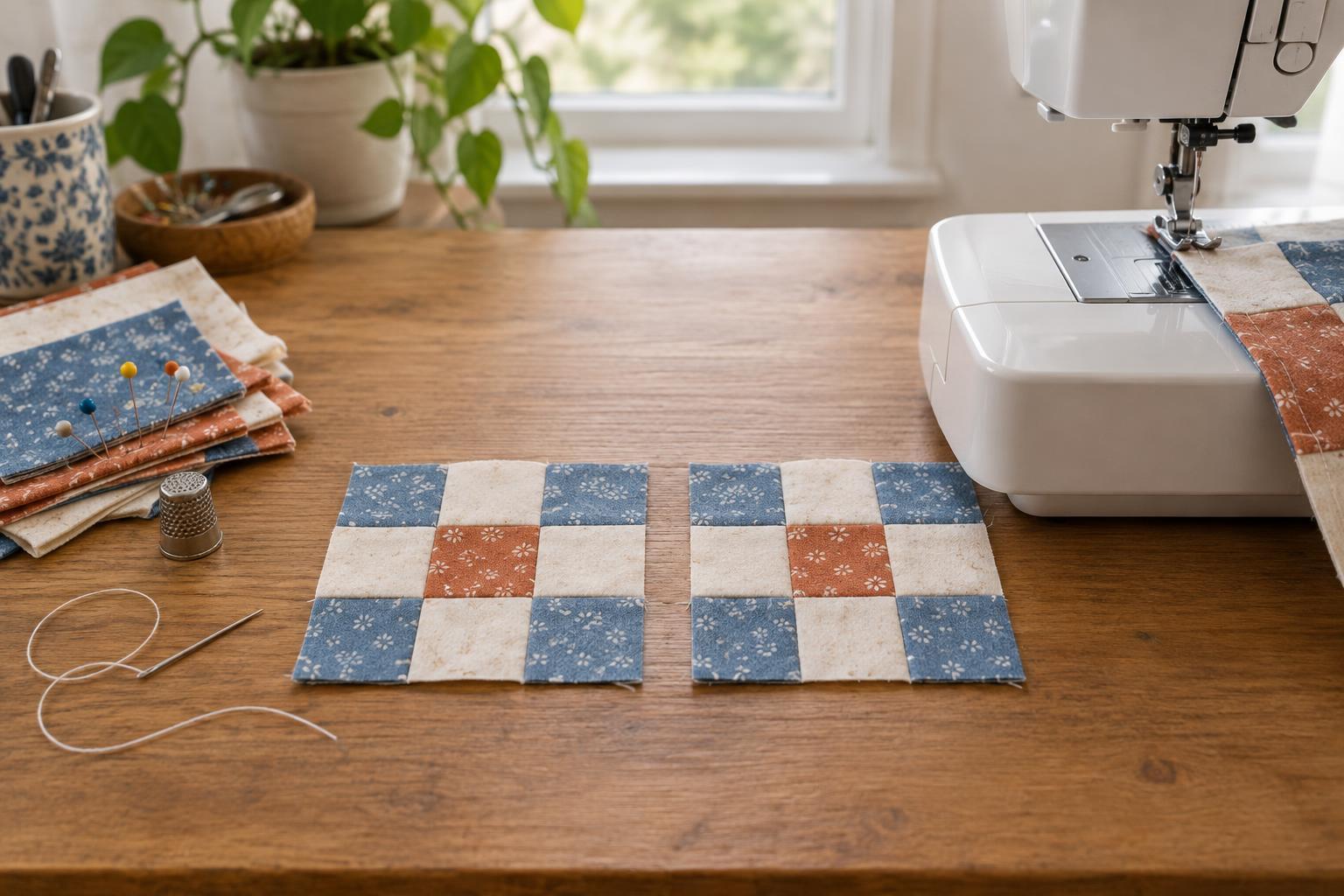
A small four-patch block offers a fair comparison. Cut four equal squares from two contrasting fabrics, alternating the colours in a two-by-two layout. Make a second set of four squares so you can hand piece one block and machine piece the other. Use the same seam allowance for both, and check that your cut squares are the same size before you begin.
Join each pair of squares into a row, then join the two rows. Before sewing that final seam, place the rows right sides together and align the centre seams. Press each completed block and compare them. Are the outer edges even? Do the seams meet at the centre? More importantly, which process felt comfortable enough that you would want to repeat it?
If one block turns out uneven, treat it as useful practice rather than a verdict on the method. Cutting, seam allowance and pressing all affect the result. Try changing one thing on your next block, such as marking a clearer hand-sewing line or slowing down at the machine.
Choose for the project in front of you
Hand piecing is a practical starting choice if you have limited space, prefer a quiet portable project or enjoy working one seam at a time. Machine piecing may suit you if you already have access to a machine and want to make a larger quilt from repeated blocks. Neither choice determines how the finished quilt must be quilted or bound; piecing is only one stage of the project.
For a first project, keep the design simple whichever route you take. A cushion front, small wall hanging or short row of four-patch blocks gives you room to practise without committing to hundreds of pieces. Choose the approach that helps you work carefully and enjoy returning to the project. As your skills grow, you can switch methods whenever a different shape, setting or pace calls for it.