Start with the quilt’s purpose
A vintage print can make a quilt feel personal, and reclaimed fabric can give useful textiles another life. Before cutting, decide what you expect the finished quilt to do. A bed quilt that will be washed regularly asks more of its fabric than a wall hanging or a keepsake handled only occasionally. That distinction helps you decide whether a beautiful but delicate piece belongs in the quilt at all.
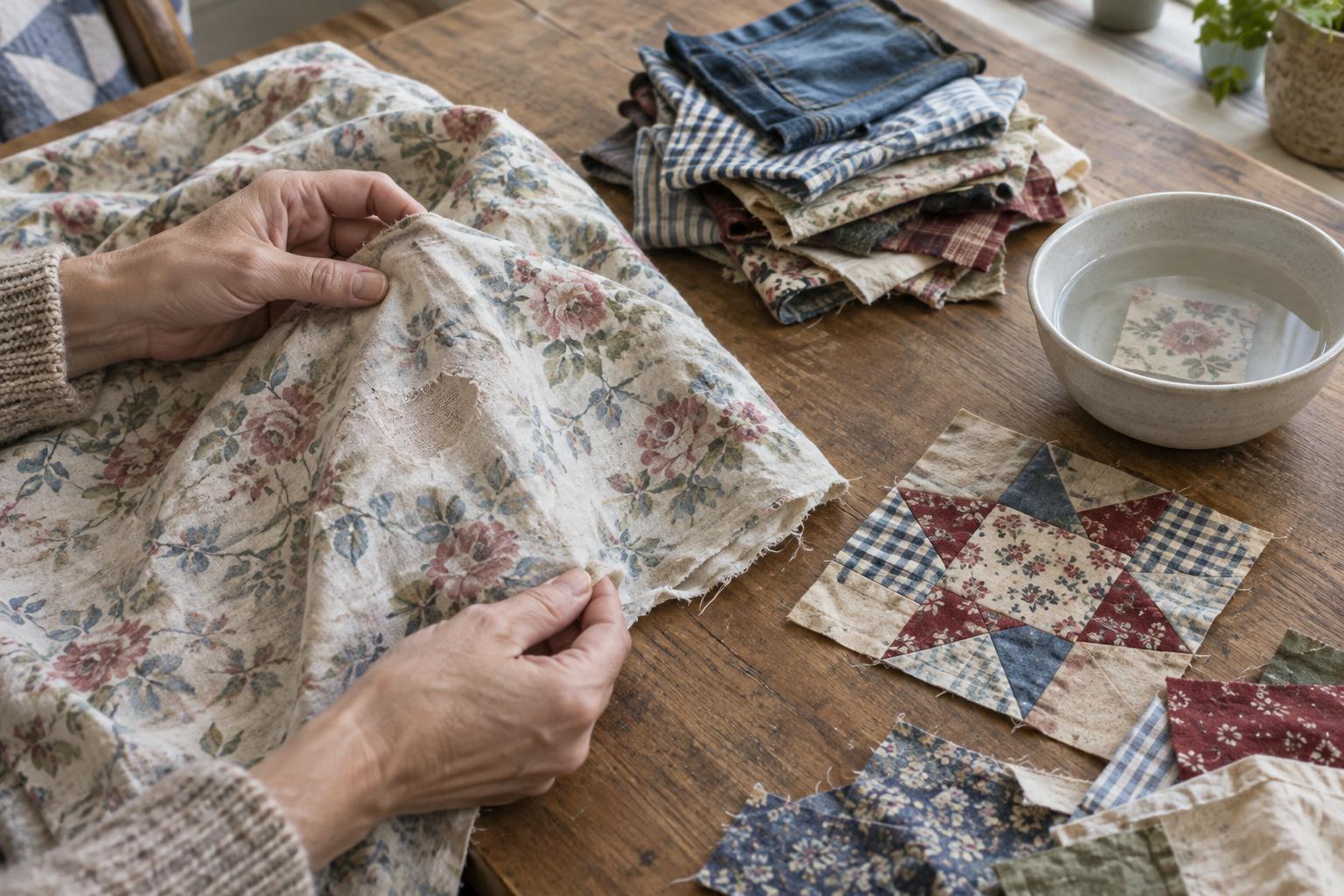
Set aside fabric with an unknown history until you have examined it. A shirt, tablecloth or old quilt top may contain areas that have aged differently, even when the overall piece looks sound. If a textile has strong sentimental value, consider photographing it and testing an inconspicuous area before cutting. You may prefer to preserve it intact and use a similar fabric instead.
Check strength across the whole piece
Open the fabric fully in good light. Look for thinning, tiny holes, frayed folds, stains, worn edges and patches that feel brittle or unusually soft. Check both sides: fading on the front and abrasion on the back can reveal different kinds of wear. On reclaimed clothing, pay particular attention to elbows, knees, collars and areas near old seams. The best-looking section is not necessarily the strongest.
Gently flex a small area and give the cloth a light tug in both directions. It should not split, shed fibers or distort dramatically under modest handling. Do not pull hard on an irreplaceable textile. Cut around weak spots with a generous margin, and remember that damage can extend beyond what is visible. A sound-looking scrap is worth making into a sample block before committing it to a larger quilt.
Consider fiber, weave and fabric behavior
Fabrics do not need to match perfectly, but they should behave well together. A firm woven cotton is generally easier to piece with another stable woven fabric than with a stretchy knit or a loosely woven cloth. Run your fingers along the grain and gently handle the fabric to see whether it stretches, twists, frays readily or holds a crease. Old labels can offer clues about fiber content, but an unlabeled piece is best treated as unknown.
Washable fabrics used together should ideally tolerate similar care. A reclaimed garment may include interfacing, coating or decorative finishes that affect how it presses and washes. Remove buttons and bulky seams before planning your cuts, and test pressing on a scrap with a suitable temperature. If a promising fabric shifts while you sew, careful cutting and a sample seam may help; a delicate stabilizer can change its feel, so try that on a test piece first.
Test cleaning and colour before mixing fabrics
Inspect for odors, residue and signs of pests before bringing a textile into your fabric storage. If it is sturdy and appears washable, clean it in a way that suits its likely fiber and finish, then dry it fully before cutting. Do not assume a fragile vintage piece will survive the same wash as newer quilting cotton. For a textile that cannot be cleaned confidently at home, leaving it out of a frequently used quilt may be the simplest choice.
Check colour transfer before placing a strong red, dark blue or other saturated print next to pale fabric. On a spare corner, dampen the cloth and press it against a clean white scrap, then look for transferred colour after it dries. This small test cannot guarantee how a fabric will behave through repeated washes, but it can reveal an immediate problem. If you are unsure, use the fabric in a project that will not need routine laundering.
Give each fabric a suitable role
Once a textile passes your checks, plan cuts around its sound areas rather than forcing it into a fixed cutting layout. Small pieces can become patchwork accents, appliqué shapes or labels. Save the most stable fabric for blocks and seams that will take regular handling. A weaker but meaningful textile might work better as a protected detail in a display quilt than as part of a bed quilt’s outer edge.
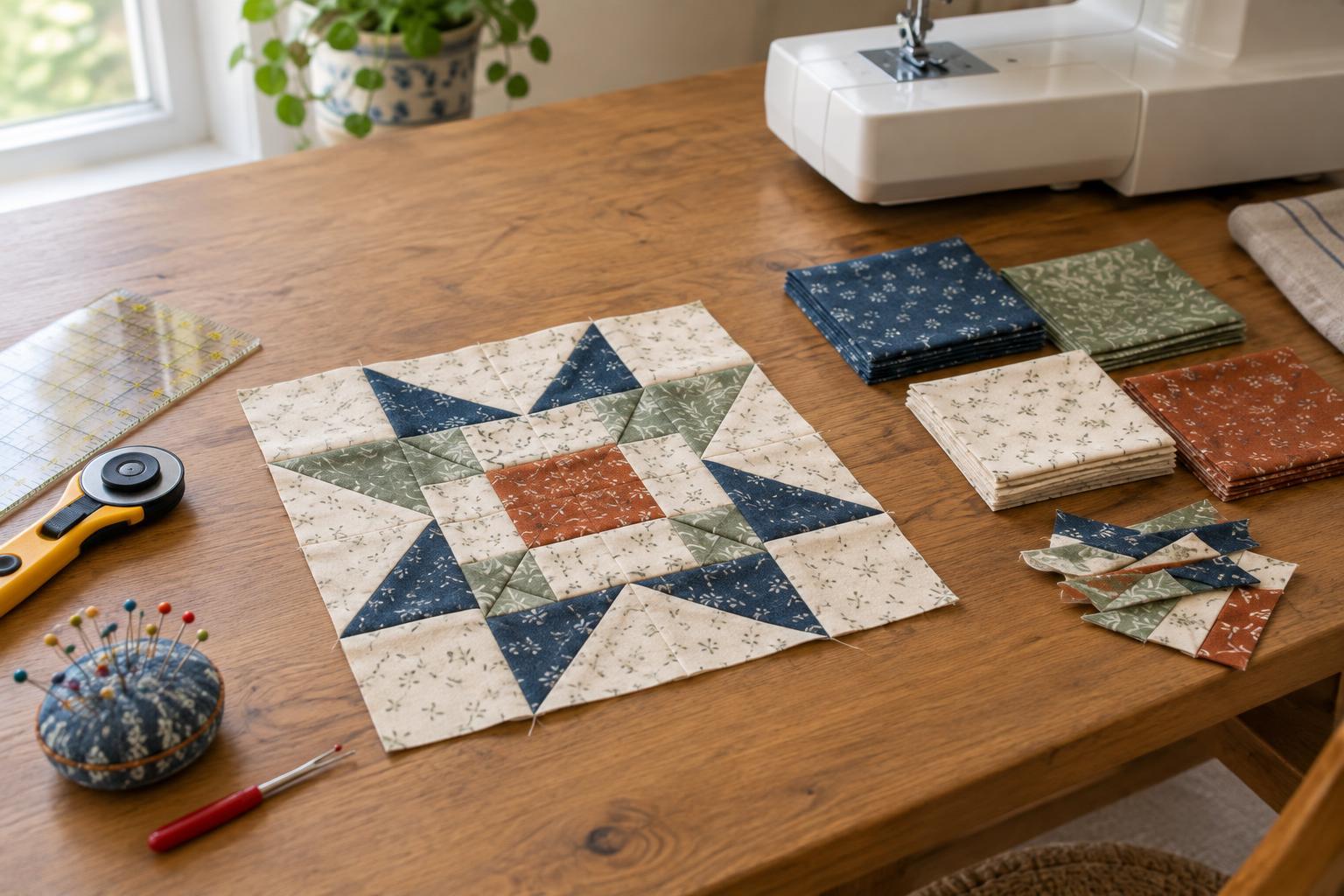
Make one sample block using the intended seam allowance, then press and handle it as you would during construction. Watch for puckering, fraying or unexpected stretching. Keep a note of where reclaimed pieces came from and any special care they may need; it can help when you wash or repair the quilt later. The aim is not to make old fabric behave like new fabric, but to choose a design that respects what it can still do.