Why quilt thickness changes the fit
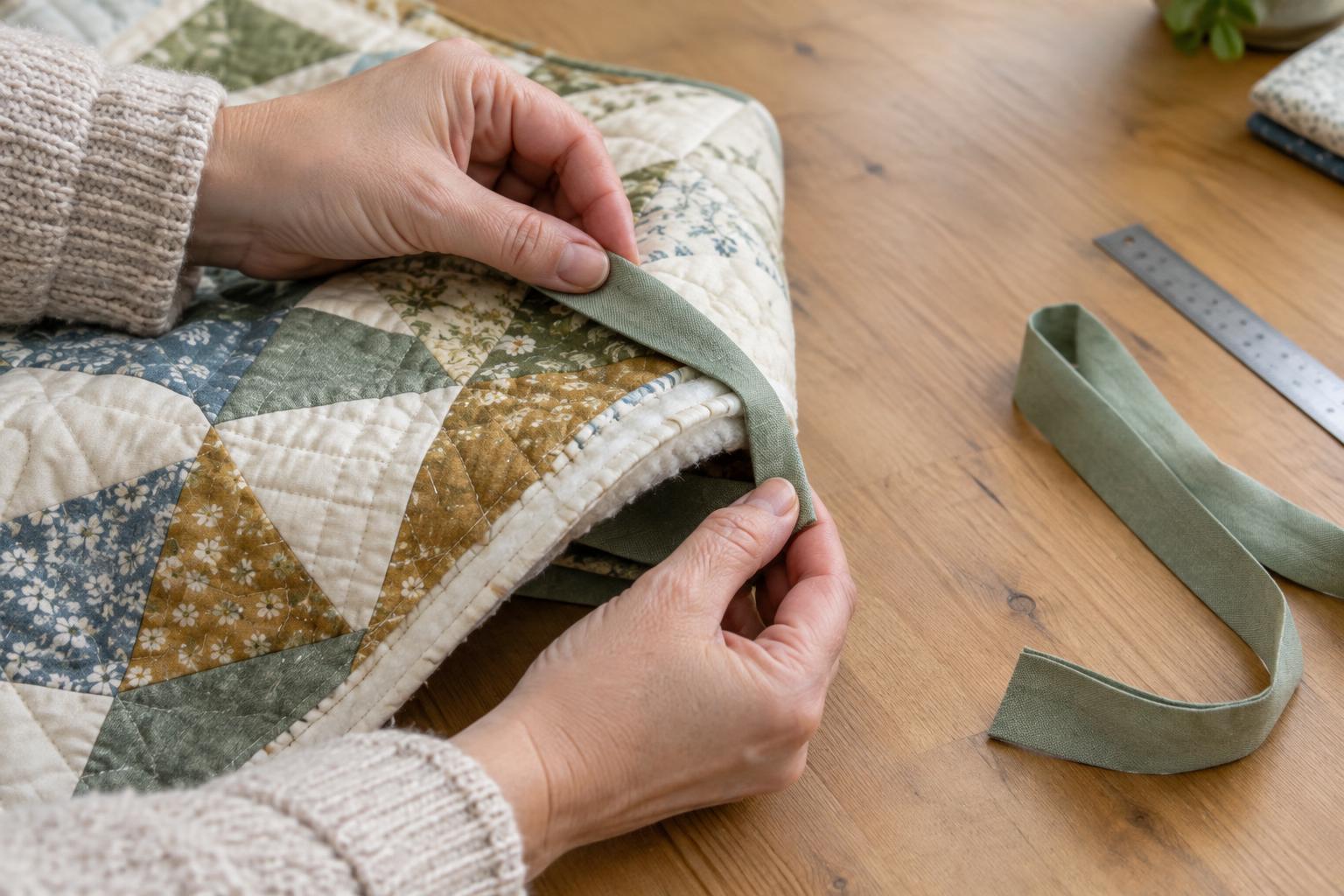
Binding does more than cover a raw edge. It travels from the stitching line on the front, around the quilt’s thickness and onto the back. A strip that wraps comfortably around a thin wall hanging may feel tight around a lofty quilt. If it is too narrow, the folded edge may not reach far enough past the stitching on the back. If it is too wide, it can form a loose, uneven border.
The batting is only part of the picture. Dense quilting can compress an edge, while pieced seams, appliqué or several layers meeting near the border can make local areas thicker. The width you cut also depends on your seam allowance and whether you want the binding to look narrow or generous. Treat familiar strip widths as starting points, not rules.
Start with a width, then consider the edge
For double-fold binding, many quilters start with strips around 2¼ to 2½ inches wide. A 2¼-inch strip can give a neat finish on a relatively thin, flat quilt when sewn with a consistent quarter-inch seam. A 2½-inch strip offers a little more room to turn around the edge and is a useful starting point for many quilts.
A loftier batting or unusually bulky edge may call for a wider strip, such as 2¾ inches. That does not mean the widest option will always look best: extra fabric can bunch at the corners or leave a broad flap on the back. Before increasing the strip width, check whether bulky seam allowances near the perimeter can be pressed flatter without distorting the quilt.
Test the fit before cutting every strip
A short trial is more reliable than choosing by batting type alone. Use a leftover section of the trimmed quilt edge if you have one, or make a small sample with the same backing, batting, top fabric and quilting density. Include a pieced seam in the sample if seams reach the edge of your quilt.
Cut a short strip at your proposed width, fold it lengthwise with wrong sides together and press. Sew its raw edges to the front of the sample using your intended seam allowance. Turn the folded edge over the quilt edge and check the back. It should cover the stitching line with enough overlap to hold it securely, without needing to pull the fabric tight. Look at the front as well: the binding should sit flat rather than roll or balloon.
If the binding falls short, try a slightly wider strip. If it feels loose, try a narrower one. Make these changes on the sample first, especially if you plan to stitch the binding by machine from the front: the folded edge on the back needs to extend beyond the line your stitches will follow.
Keep the seam allowance and corners in mind
Strip width and seam allowance work together. A wider seam places the attachment stitching farther from the quilt edge, so the binding must cover more distance when it turns to the back. If you change your seam allowance during binding, the finished width may vary along the perimeter. Mark or use a guide for the allowance you tested, and sew steadily around the quilt.
At a corner, the binding must fold over itself as well as wrap the quilt’s thickness. Check a corner on your sample if possible. The miter should lie reasonably flat on both sides, with enough fabric to cover the corner point but not so much that it forms a lump. Take extra care where a thick pieced seam meets a corner; pressing that seam before attaching the binding can make the turn easier.
Make the final choice for your finishing method
If you will hand-stitch the folded edge to the back, a small amount of extra overlap gives you room to place stitches without stretching the binding. If you will machine-stitch from the front, check the back carefully during the trial: an edge that only just reaches the attachment stitching may escape the final line of stitches. For either method, aim for a binding that wraps snugly and lies flat.
Once the sample works, cut all strips to the same width and join them before attaching the binding. Recheck the fit occasionally as you sew, particularly where the quilt edge becomes thicker. A few minutes spent testing can prevent a full perimeter of binding that is difficult to turn—or one that covers more of your quilt than you intended.