Why a wet quilt needs support
A quilt is a set of layers held together by stitching. When those layers are wet, their added weight can pull on the seams, quilting stitches and binding. The risk is greatest when a large quilt hangs from one edge or is lifted by a single corner. Even a sturdy everyday quilt may lose some of its shape if it is left to sag while saturated.
Before drying, check the care instructions if you have them. Look at the condition of the fabric, seams and batting, too. A newer, firmly stitched quilt may tolerate handling that would be unwise for a fragile or older one. If you see loose seams, weakened fabric or colours that may run, avoid experimenting with a full wash or forceful drying method. A delicate or valuable quilt may need specialist textile-care advice.
Move the quilt without pulling it
If the quilt has just been washed, let excess water drain before moving it. Do not wring or twist it: that concentrates stress in a small area and can distort the layers. Instead, gather it gently from underneath. For a large quilt, a clean sheet can act as a sling. Spread the sheet beneath the quilt, bring up its sides and lift the bundle rather than the quilt’s edges. Having another person help makes it easier to keep the weight evenly supported.
To remove more moisture, lay the quilt on clean, dry towels and roll the towels and quilt together loosely. Press along the roll without twisting it. Unroll and repeat with dry towels if needed. This step can shorten drying time while keeping the quilt supported. Handle a fragile quilt as little as possible; moving it repeatedly can put strain on stitching that is already weak.
Set up a flat place to dry
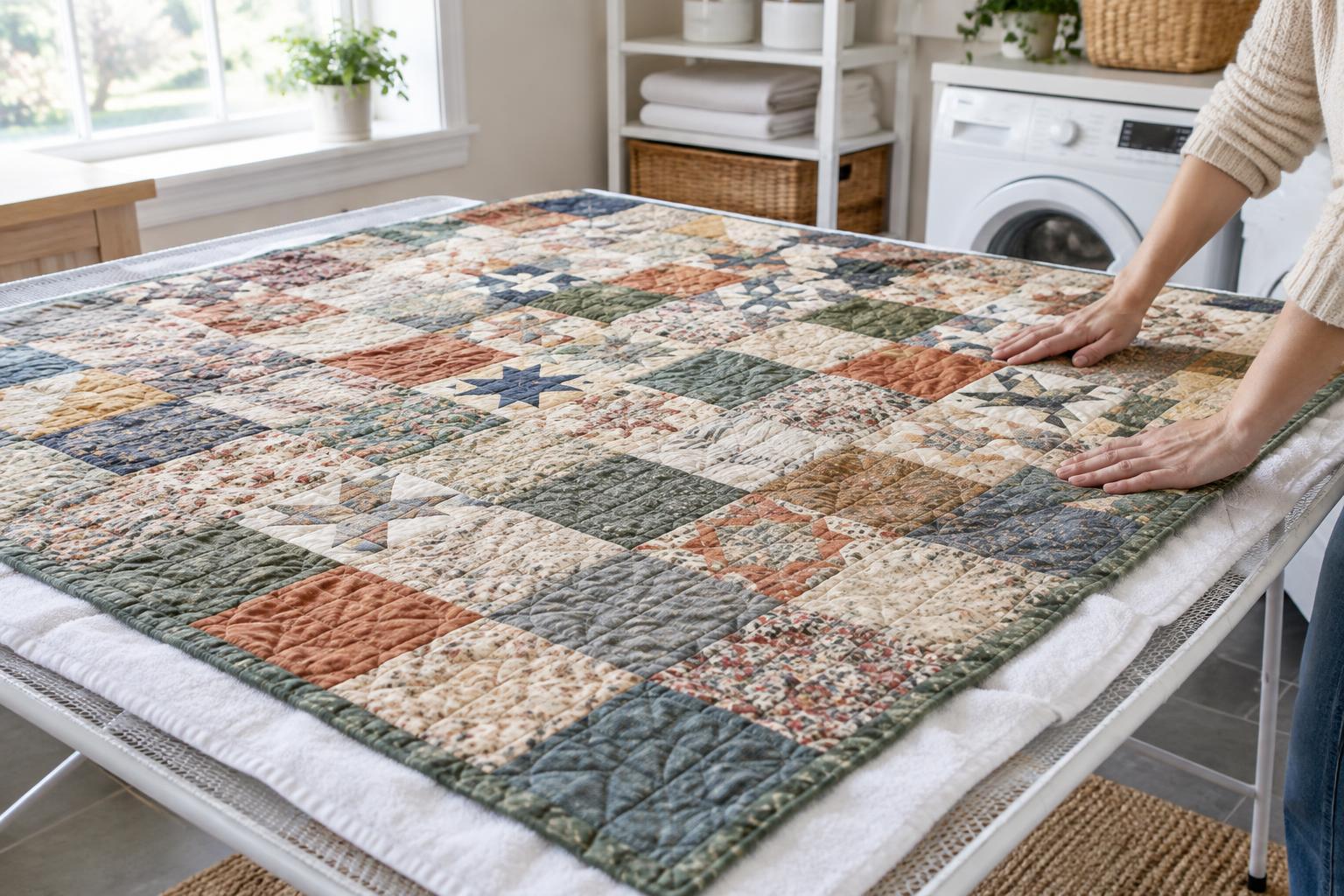
Flat drying spreads the quilt’s weight across a broad surface. Choose a clean area where it can stay undisturbed and where air can circulate. A drying rack can work if its supports are close enough together that the quilt does not droop between them. Otherwise, use a clean sheet or towels over a suitable flat surface. Keep the quilt away from surfaces that could transfer colour, dirt or moisture, including unfinished wood.
Spread the quilt gently into its natural shape without pulling it taut. Smooth obvious folds with your hands, then check that the binding and corners are supported rather than dangling. If towels beneath the quilt become damp, replace them. Where practical, carefully turn the quilt so both sides can dry. One way to turn a large quilt is to place a clean sheet over it, hold the layers together and roll or flip the bundle with help. Avoid tugging on a wet edge.
Good airflow matters as much as the surface beneath the quilt. Leave space around it, and use a fan in the room if needed rather than blowing it forcefully at one spot. Prolonged direct sunlight may fade some fabrics, so a shaded, well-ventilated place is usually a gentler choice.
When hanging or machine drying may be suitable
Hanging a fully wet quilt over a narrow line concentrates its weight along the fold. That can leave a crease or strain the stitching. For a small, sturdy quilt that is already only slightly damp, a broad rail with a clean sheet over it may be reasonable. Support as much of the quilt as possible, and avoid pegs or clips that pinch the fabric. If the quilt begins to sag, return it to a flat surface.
Some sturdy, washable quilts can go in a tumble dryer, but first follow any care instructions and consider the fabrics, batting and embellishments. If machine drying is appropriate, a gentle setting and periodic checks can help you catch bunching or uneven drying. Do not use heat as a shortcut for a quilt whose materials or construction are uncertain. Flat air-drying is the more cautious option when you do not know how a quilt will respond.
Check every layer before storing
A quilt can feel dry on its surface while moisture remains in the batting, dense quilting or folded edges. Feel several areas on both sides, including the binding and any thick seams. If a section feels cool or damp, give it more time with airflow and support. Turn it again if necessary, and make sure the surface beneath it is dry.
Only fold or store the quilt once it is thoroughly dry. Trapped moisture can lead to unwanted odours and damage during storage. Taking the extra time to support the quilt from the first lift to the final check helps preserve the shape you worked to make.