Start with the quilt design, not the shopping list
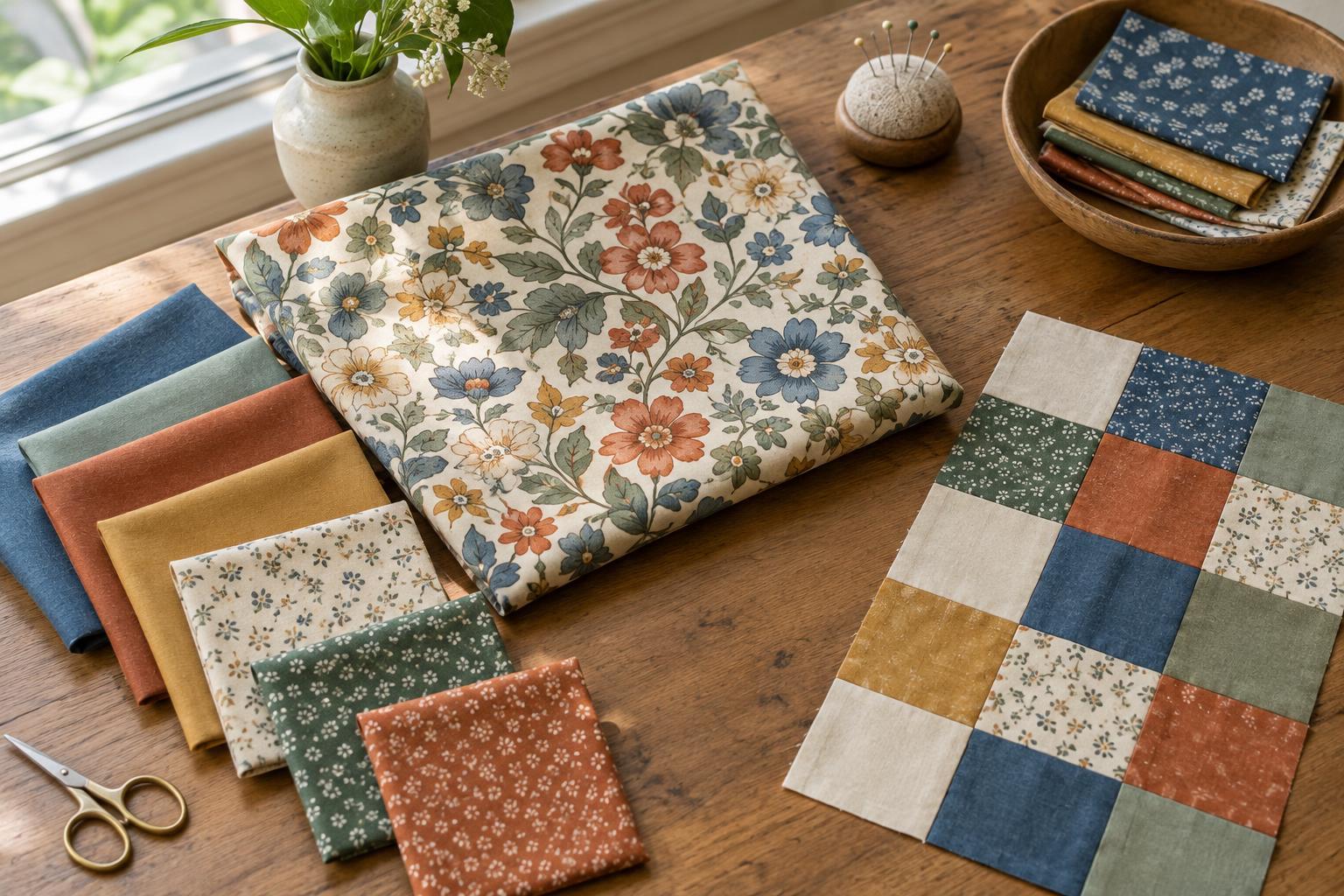
A palette can look balanced in a stack of fabric but behave differently once it is cut into blocks. Before estimating yardage, sketch the quilt top or list its blocks, finished dimensions and repeated units. Assign each fabric a role: background, light, medium, dark, accent or border. A role is more useful than a colour name because it tells you how often that fabric appears.
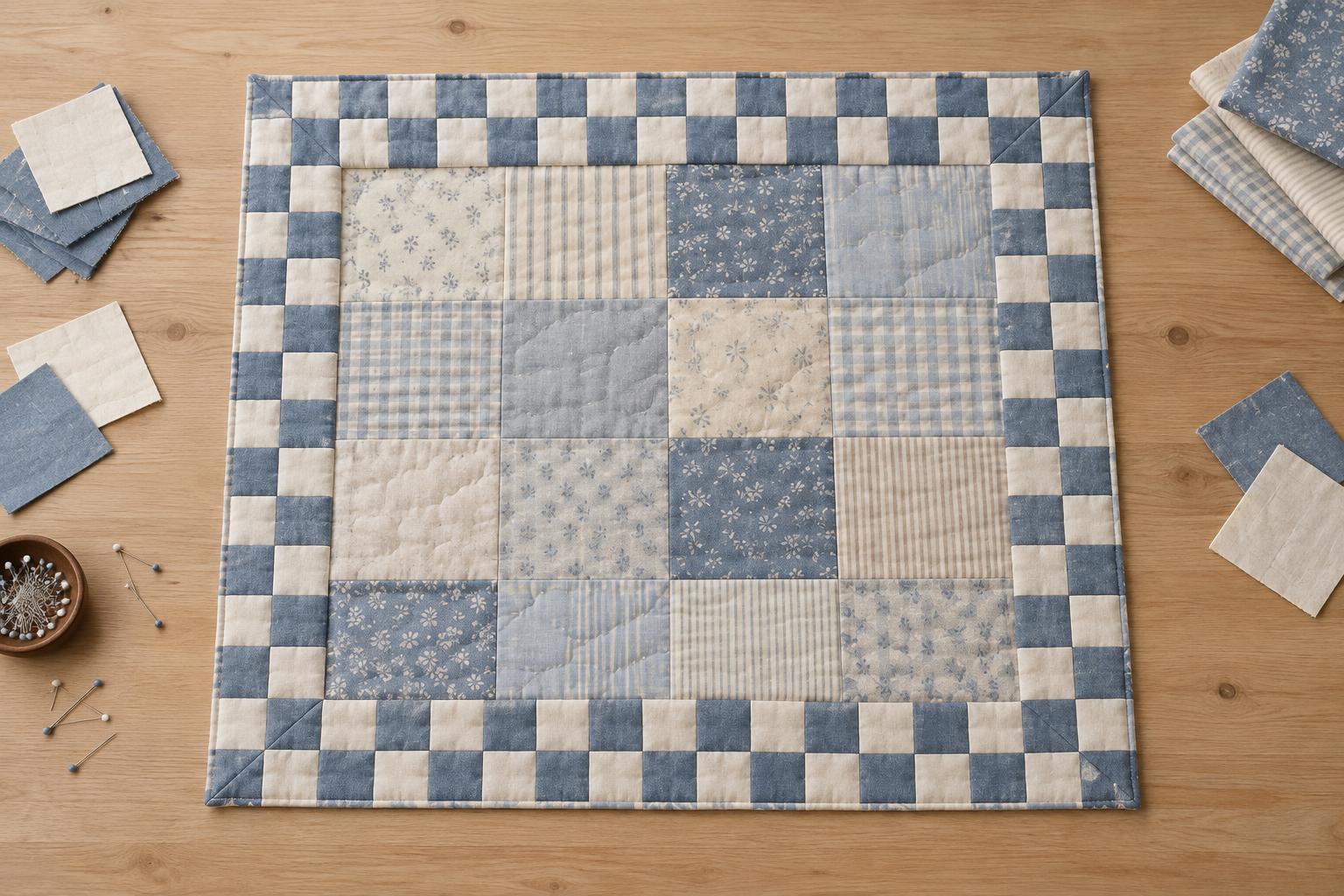
Estimate the quilt top separately from backing, binding and batting. Borders and sashing also need their own measurements if they are part of the design. If you are following a pattern, start with its cutting list and note any fabrics you plan to swap; a change in colour placement can change how much you need of each fabric.
Turn colour roles into a cutting list
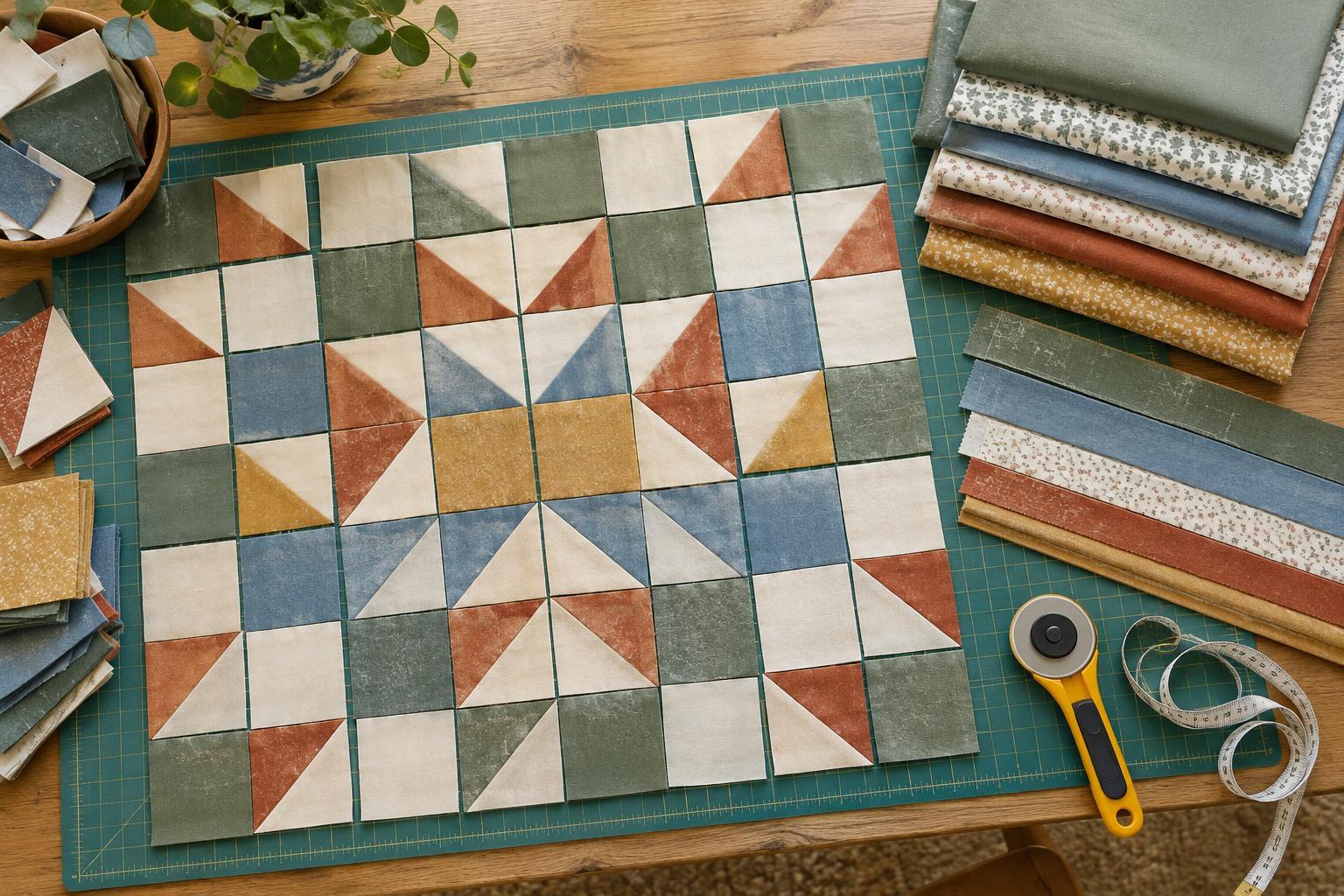
Count how many pieces of each size you need in each palette group. Record cut dimensions, not finished dimensions: seam allowances are included in cut pieces. For example, a square that will finish at 3 inches in the quilt is commonly cut at 3½ inches when using a ¼-inch seam allowance.
Next, consider the usable width of your fabric. Quilting cotton is often sold at about 42–44 inches wide, but the width available after removing selvages can be less. Using 40 inches as a planning width is a cautious starting point; measure the fabric if you already own it. For each piece size, ask how many fit across that usable width, then how many strips you must cut to get the required count. Directional prints, large motifs and fussy cutting may require more fabric than a simple grid suggests.
Work through a simple palette example
Suppose a quilt top has 80 four-patch blocks arranged eight across and ten down. Each block finishes at 6 inches, making the top 48 by 60 inches before any borders. Each block contains two background squares and two coloured squares, all cut at 3½ inches. That means you need 160 background squares and 160 coloured squares.
At a planned usable width of 40 inches, you can cut 11 squares from one 3½-inch-wide strip. Each palette group therefore needs 15 strips: 160 divided by 11 rounds up to 15. Those strips require 52½ inches along the length of the fabric, or just under 1½ yards. This is a cutting minimum for one continuous background fabric and one continuous coloured fabric, not a comfortable shopping quantity.
For those two single-fabric groups, 1¾ yards each provides room for a few extra strips. The calculation does not include backing, binding or borders. If the coloured half will use several prints, calculate the squares assigned to each print separately: leftover width on one print cannot make up for a shortage in another.
Divide yardage among fabrics without losing the balance
Once you know the total pieces needed for a colour role, decide how concentrated that role should be. One accent fabric might appear in every block, while five medium prints might share the remaining pieces. Write an actual piece count beside each fabric rather than dividing total yardage evenly. Equal cuts are only helpful when the design uses the fabrics equally.
Check each fabric’s cutting layout on its own. A quarter-yard cut is roughly 9 inches long across the full fabric width, so it can provide two 3½-inch strips if the cut is accurate and the fabric can be squared up without losing too much length. A fat quarter has different proportions: it may be more convenient for varied shapes, but it will not yield the same number of full-width strips. When a fabric must run consistently through many blocks, a continuous length may be easier to plan than several small cuts.
Add a margin, then check the final list
A cutting estimate leaves little room for squaring fabric, correcting a miscut or choosing around an unwanted part of a print. Add a modest allowance to each essential fabric and round up to an available cut size. Consider a larger allowance for directional fabric, planned fussy cutting or complex shapes. Extra yardage is most valuable for a background or focal fabric that would be difficult to replace with something visually similar.
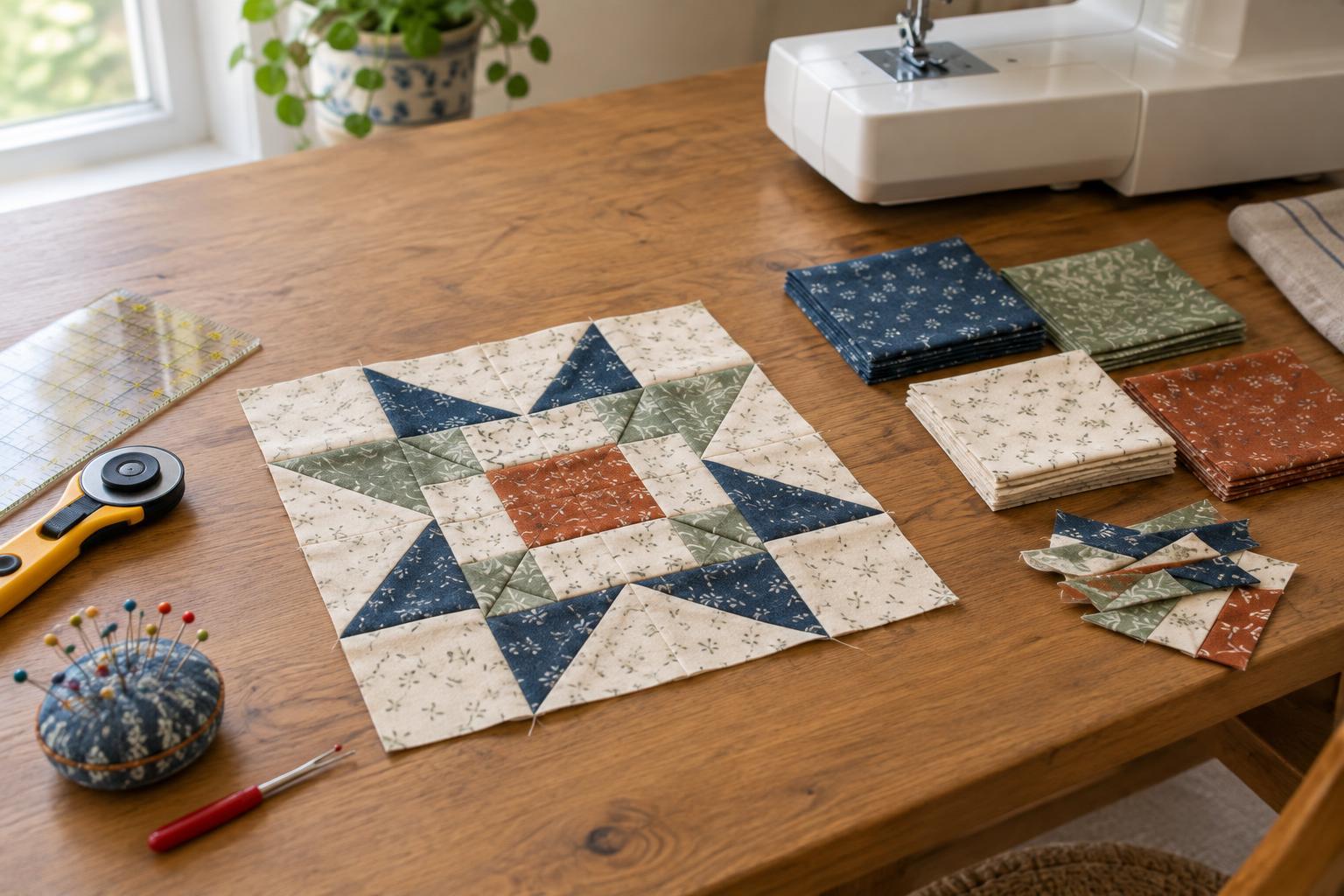
Before buying, check that every fabric has a role and every role has enough pieces. Recheck border lengths, binding strips and backing measurements as separate tasks. If the palette still feels uncertain, make one sample block using the planned fabrics. It can reveal whether the colour balance works before you cut the rest of the quilt.