Prepare each layer before you begin
Layering a quilt means placing the backing, batting and quilt top together in the order they will be quilted. The aim is not to pull everything drum-tight. It is to make each layer lie flat, with enough room to secure it without trapping folds.
Press the quilt top and backing, paying particular attention to seam intersections and backing joins. Trim loose threads that might show through light fabric. Check the batting for creases and follow its care instructions if it needs time to relax. A backing and batting that extend beyond every edge of the top give you a margin for small shifts during quilting; check any size requirements if someone else will quilt it.
Choose a clean, smooth work area large enough to support the quilt. Clear the floor if you plan to work there, or use a table and move the quilt across it in sections. Keep pets, shoes and anything that could snag the fabric away from the layers.
Place the backing, batting and top
Lay the backing down first, with its right side facing the work surface. Smooth it with your hands from the centre toward the edges, straightening the grain and easing out ripples rather than stretching the fabric. If you are working on a floor, you can secure the backing edges with small pieces of tape suitable for the surface. Use only enough tension to keep it from shifting.
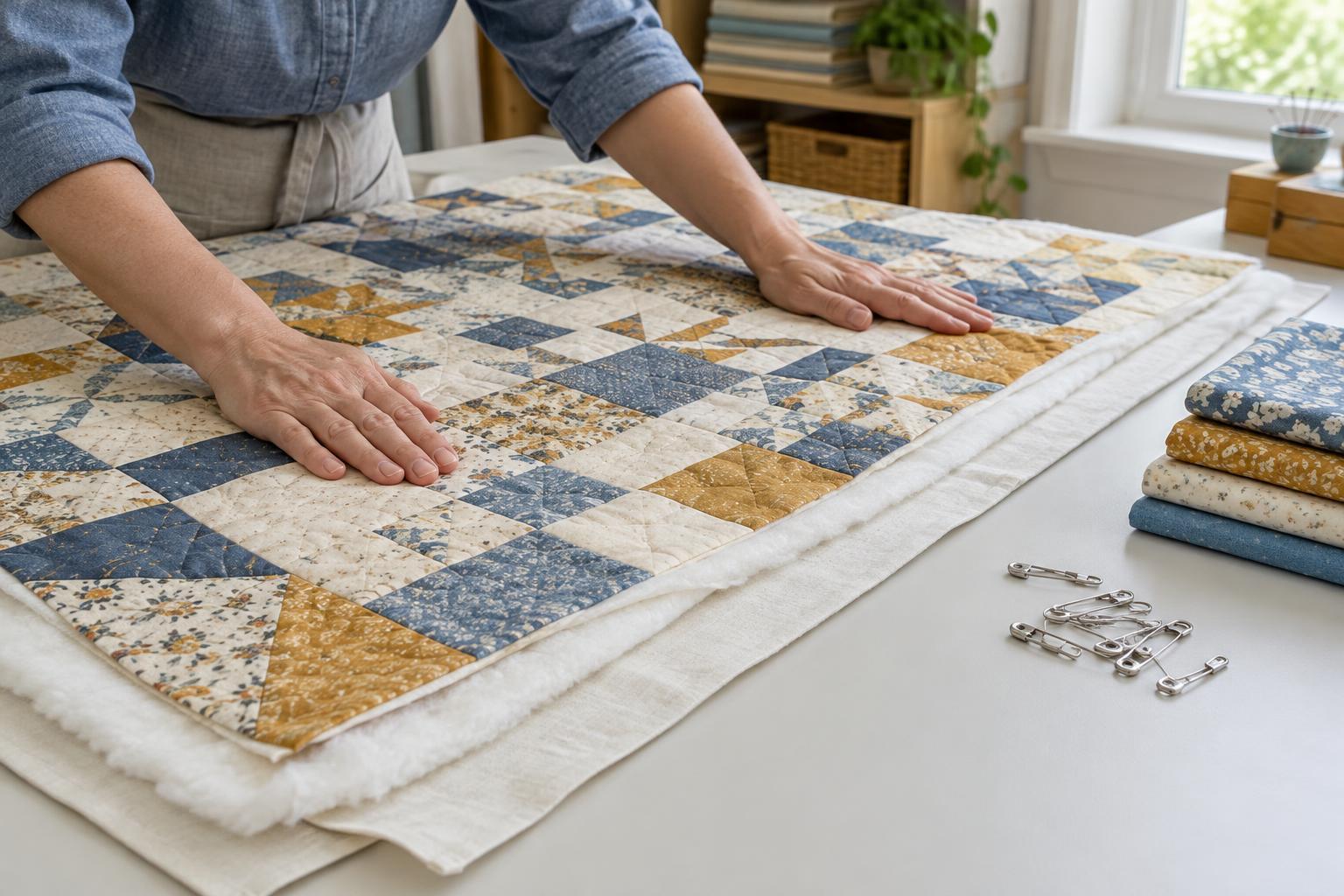
Centre the batting over the backing. Let it settle naturally, then sweep your hands outward to remove waves. Place the quilt top on the batting with its right side facing up. Check that the backing and batting remain visible beyond all four edges. A measuring tape can help you confirm the top is centred, but an even-looking margin is usually more useful than repeatedly shifting the layers to correct a tiny difference.
Pause to look across the surface from a low angle. Raised ridges can be easier to spot this way than from directly above. Lift and replace a layer if necessary; trying to push a large fold to the edge may create another fold underneath.
Smooth gently, one area at a time
Starting near the centre of the quilt top, use open palms to smooth toward one edge, then return to the centre and work in another direction. Move the fabric lightly instead of tugging it. Pulling the top flat can distort patchwork blocks, while pulling the backing can leave it eager to spring back after basting.
If you are using a table, support any part of the quilt that hangs over an edge so its weight does not drag the layers out of place. Work on the area in front of you, secure it, and then reposition the quilt. Before continuing, feel beneath the work for folds in the backing. A flat-looking top does not always mean the underside is smooth.
Pay extra attention around thick seam intersections, borders and any area where the fabric wants to ripple. Small adjustments made now are easier than removing stitches later.
Baste before the layers can shift
Basting temporarily holds the quilt sandwich together while you quilt it. You can use curved safety pins, long temporary hand stitches or a basting spray intended for quilting. Choose a method that suits your workspace and quilting plan. If using spray, follow its label for ventilation and application, and protect the surrounding surface.
Begin securing the layers near the centre and work outward. Place pins or stitches often enough that the fabric cannot move freely between them; larger areas of uninterrupted fabric may need closer attention. With each new area, smooth the top and check the backing underneath before adding more basting. Keep pins clear of the path where you intend to stitch, and remove them before a sewing-machine needle reaches them.
Once basted, lift the quilt carefully and inspect both sides. If you find a pleat, release the nearby basting, smooth that area again and resecure it. Correcting one section is usually easier than starting over.
Keep the sandwich flat until quilting
A basted quilt can still develop wrinkles if it is handled roughly. Fold or roll it loosely rather than compressing it into a tight bundle, and support its weight as you move it to the machine or quilting space. Check the backing again as you begin quilting, especially where the quilt rests in your lap or over a table edge.
Layering becomes easier with practice because you learn how your fabrics and batting behave. The useful habit is simple: prepare the pieces, let each layer lie naturally, smooth from the centre, and check both sides as you secure them. That careful start gives your quilting stitches a flatter surface to hold together.