Why quilt weight affects stitching
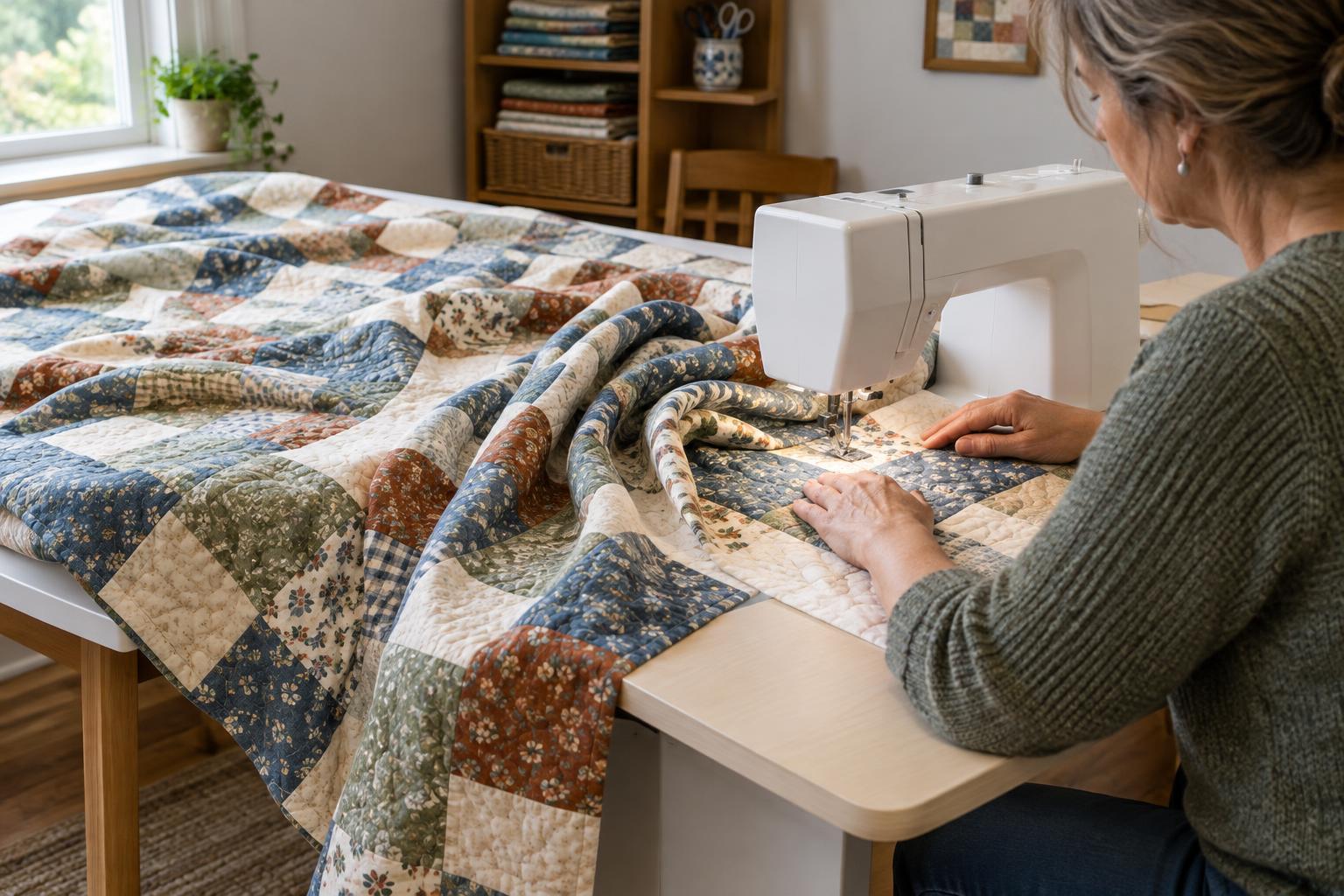
Machine quilting asks you to move a layered quilt while keeping the area under the needle reasonably flat. On a large project, fabric hanging off the table can pull against the stitches. Bulk gathered in the machine’s throat space can make it difficult to steer. You may find yourself pushing harder, taking uneven stitches or repeatedly stopping to rearrange the quilt. These problems do not necessarily mean your quilting technique is wrong; they may mean the quilt needs more support.
Before stitching, check that the quilt sandwich is securely basted and lies as smooth as you can reasonably make it. Loose layers are harder to control when you fold or turn the quilt. Choose a quilting design that suits both the project and the space available in your machine. Straight or gently curving lines may be easier to manage than a design that requires frequent rotation of a heavy quilt.
Build a workspace that carries the weight
The sewing machine should not be the only thing holding up the quilt. Clear as much table space as possible to the left of the needle and behind the machine. If you can, place another stable surface nearby at a similar height. The aim is to keep most of the quilt resting on a surface rather than hanging over an edge, where gravity will pull it away from the needle.
Sit where you can reach the stitching area without lifting your shoulders or stretching your arms. Keep the machine’s foot control, power cord and ventilation clear as you add supporting surfaces. A smooth, unobstructed tabletop lets you reposition the quilt without snagging its backing. Before you begin a line of stitching, look at where the quilt will travel next: a section supported now may otherwise slide off the table halfway through the line.
Fold the quilt to fit, rather than forcing a tight roll
A tight roll can be useful, but it is not the only way to manage excess fabric. Try folding the portion to the right of the needle into loose, flat folds that fit within the machine’s throat space. Accordion-style folds can be easier to adjust as you work and may create less resistance than a firm roll. Keep only as much quilt in that space as the next section of stitching requires.
Support the rest of the quilt on the table, arranging it in soft folds around the machine. Avoid packing fabric so tightly against the machine that it presses back toward the needle. When a fold begins to resist movement, stop with the needle safely positioned, then rearrange the quilt. Pulling a bulky section through while the machine is stitching can distort the layers or bend the stitching path.
If you need to turn the quilt, pause and free enough fabric to make the turn without dragging the whole project around at once. For some designs, changing the direction in which you work across the quilt is less tiring than repeatedly rotating it.
Guide the quilt in small, manageable areas
Divide the work into sections you can comfortably reach and see. You might begin near the centre and work outward, rearranging the folds as each area is finished. This helps keep the unquilted layers from shifting excessively, especially on a project with widely spaced quilting lines. Check your planned quilting spacing against the needs of your batting before committing to a sparse design.
For straight-line quilting, a walking foot can help feed the layers together, but the quilt still needs support from the table. Let the feed dogs move the fabric; guide its direction without pushing or pulling it through. For free-motion quilting, move the quilt with steady, modest hand movements and reposition your hands often. Either way, slow down when you approach a thick seam intersection. A test sandwich made from the project’s fabric and batting can help you check how your chosen needle, thread and stitch settings behave before you handle the full quilt.
Stop and reset before the quilt becomes a struggle
Frequent pauses are part of quilting a bulky project. Stop to smooth the area ahead of the needle, check that the backing has not folded underneath and remove basting pins before they reach the presser foot. Move loose folds back onto the table when they start to hang over an edge. If your hands are gripping the quilt tightly, take a moment to relax and arrange the fabric so its weight rests on the work surface again.
Work in sessions that let you stay comfortable and attentive. A break can be more useful than trying to finish one more long line while wrestling with the quilt. The goal is not to hold the entire project under perfect control at once. Support its weight, make a clear path for the section under the needle and reset that path as often as needed.