Pause before you pick up the seam ripper
Sewing two patchwork pieces in the wrong order or with the wrong sides together is frustrating, but the seam can often be removed without harming the fabric. First, set the work on a flat, well-lit surface and identify exactly which stitches need to come out. If only part of a long seam is wrong, you may not need to unpick the whole thing. Check for backstitching, thread tails and seams that cross the one you want to remove.
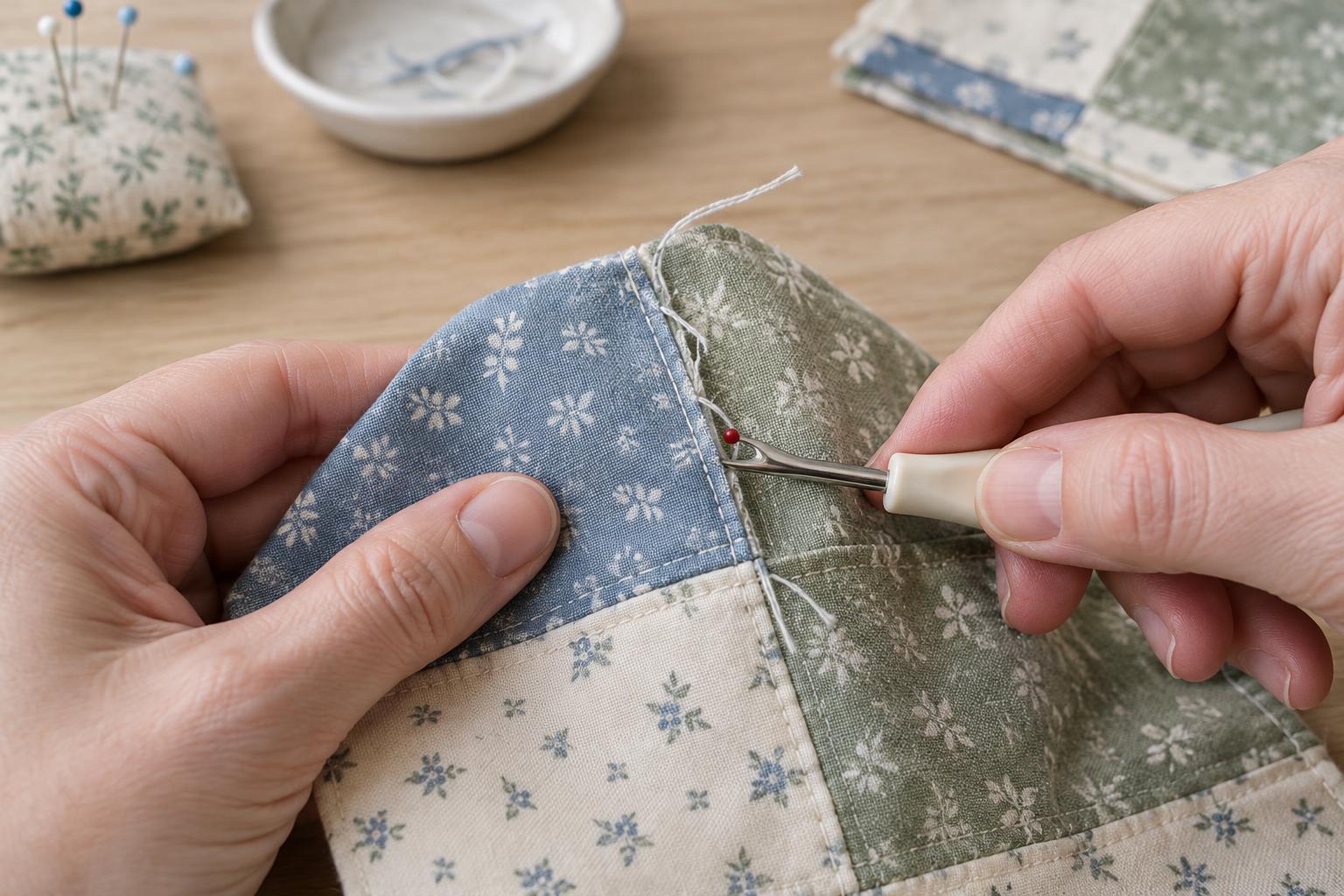
Use a sharp seam ripper with a fine point, or small embroidery scissors if you can see the thread clearly. Good lighting makes it easier to distinguish thread from fabric, especially when they are similar colours. Support the patchwork with your free hand rather than holding it taut. Pulling the pieces apart before the stitches are cut can strain the weave or distort an edge.
Cut stitches in small, controlled steps
Start on the side where you can see the stitches most clearly. Ease the seam ripper’s point beneath one stitch, keeping the tip close to the thread and away from the fabric. Cut that stitch, then move a few stitches along and cut another. For a short seam or delicate fabric, cutting individual stitches may be the safest approach. Avoid running the blade rapidly along the seam: it is easy for the point to catch the cloth.
Once several stitches are cut, turn the work over and gently lift a loose length of thread. It should come away with little resistance. If it does not, stop and cut more stitches instead of tugging. Work back and forth between the two sides until the pieces separate. At a seam intersection, slow down and look closely so you remove only the mistaken seam, not the stitching that holds a neighbouring unit together.
Give delicate edges extra support
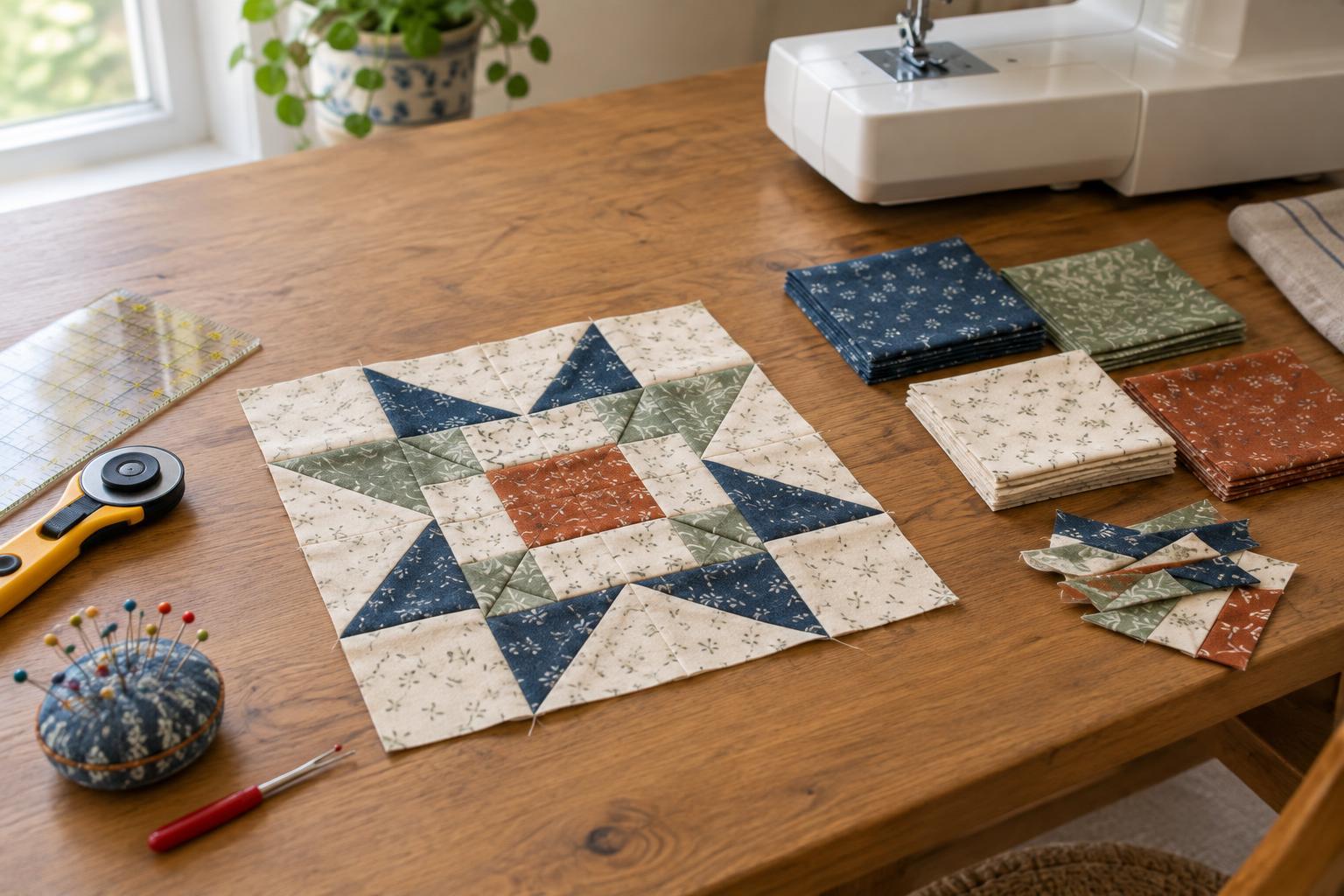
Some patchwork pieces need a lighter touch. Triangles often have edges cut on the bias, which can stretch more readily than edges cut along the straight grain. Support these pieces flat on the table while you unpick, and avoid pulling them away from each other. Small pieces can also be hard to grip without distorting them; a pointed pair of tweezers can help lift a thread, provided the tips do not snag the cloth.
Very short stitches, dense backstitching and multiple layers at an intersection may take longer to remove. Resist the urge to force the seam ripper beneath a tight cluster. Instead, turn the work to find a stitch you can reach safely and cut threads one at a time. If you notice a nick or hole in the fabric, stop and assess the piece before resewing. Depending on its position and size, replacing that patch may give a sounder result than hiding the damage in a seam.
Clear the threads and check the fabric
After the pieces are apart, remove loose thread ends from both sides. Fingers or tweezers work well for longer strands; a gentle pass with a lint roller can pick up smaller fragments if it does not pull at a loosely woven fabric. Look along the former seam for caught stitches before pressing. If a thread still joins the pieces, cut it rather than pulling them apart.
Check that the seam allowances and raw edges have kept their shape. Stitch holes in many woven quilting cottons become less noticeable after the fabric is handled and pressed, but results vary with the fabric, needle and thread. Lay each piece flat and press by lowering and lifting the iron rather than sliding it across the edge. Follow the fabric’s care needs and avoid excess heat or steam on materials that may react poorly.
Resew only when the pieces lie flat
Before stitching again, confirm the order, orientation and right sides of the patches. Line up the original edges without stretching them to make the old stitch holes match. If the fabric has distorted, check the piece against your pattern measurements and trim or replace it only if needed. Pin or clip the pieces so an important point or intersection stays aligned, then sew using the seam allowance specified for your project.
Press the new seam as the pattern directs and check the unit while it is still small. A quick check now is easier than discovering the same mistake after several more rows are attached. Unpicking is a normal part of patchwork: working slowly, cutting thread rather than pulling fabric, and giving edges proper support will help you correct a seam without turning a small error into a larger one.