Why spot-cleaning can leave a ring
A water mark is not always a new stain. As a damp patch dries, dissolved dirt, detergent or minerals in the water can move towards its outer edge. Once the moisture evaporates, that material may remain as a faint ring. Dampness can also draw an existing mark farther into the fabric or batting, making it more noticeable than before.
The aim is to use as little liquid as possible while removing both the stain and any cleaning residue. Work slowly, and treat the result as a balance: repeated wetting in pursuit of a perfectly invisible spot can cause more change than a small, faint mark.
Check the quilt before you begin
Look at the fabric, stitching and filling around the stain. If the quilt is old, fragile, heavily embellished or made with fibres you cannot identify, avoid experimenting with water. The same caution applies if the stain covers a large area or has soaked through several layers. A textile conservator or a cleaner experienced with quilts may be a better choice.
For a sturdy, washable quilt, test the affected fabric in an inconspicuous place. Press a clean white cloth lightly against it with a tiny amount of water, then check the cloth for transferred colour. Test any cleaning solution separately in the same way and let the test area dry before judging it. If dye moves, stitching loosens or the fabric changes texture, stop. Never assume that a fabric is colourfast because it has survived previous washes.
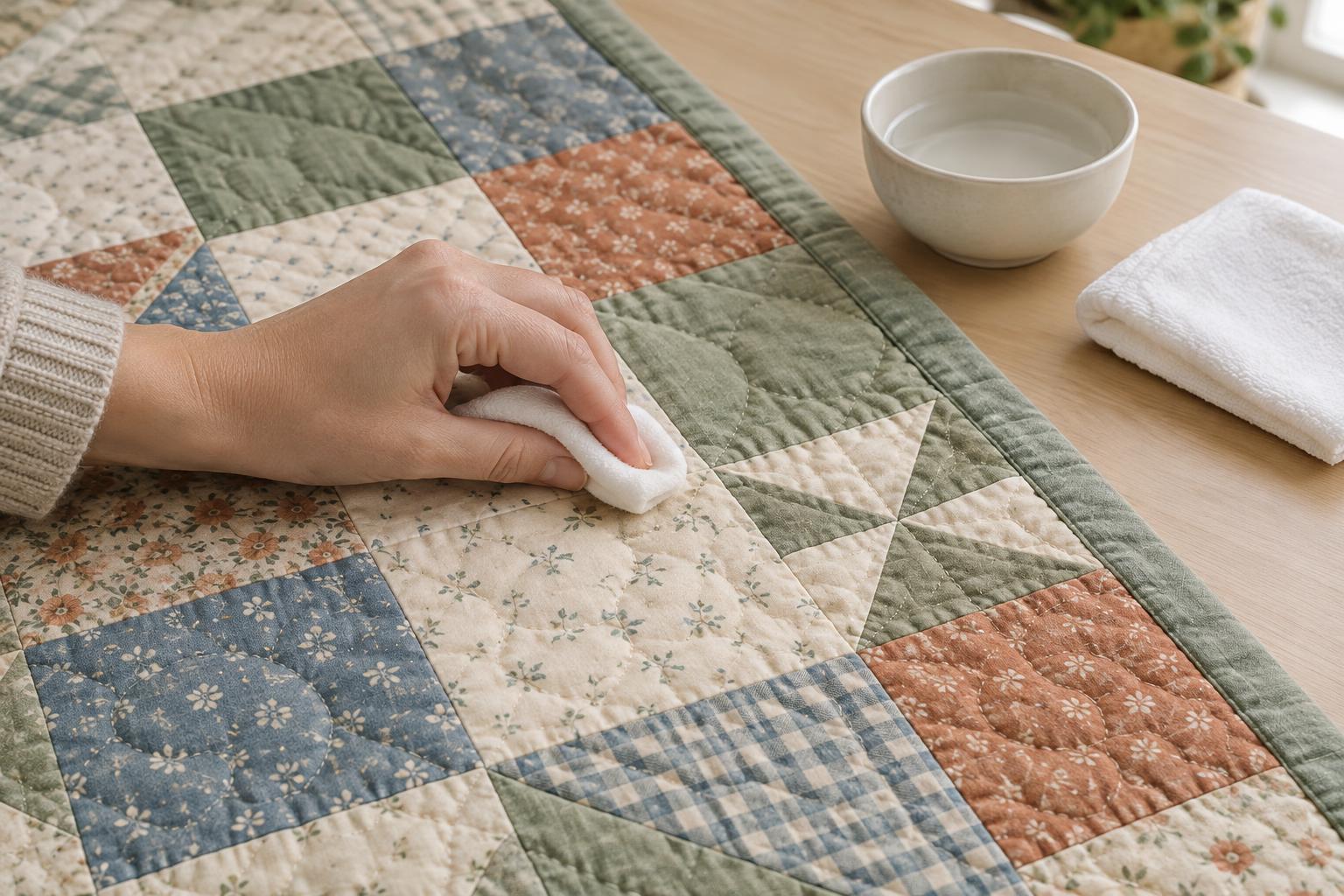
Set up a clean work surface with a dry white towel beneath the stained area. Have several white cloths or cotton pads ready, along with a small bowl of distilled water. Distilled water can reduce mineral deposits, though it cannot prevent a ring caused by soil or detergent. Keep coloured towels away from the damp quilt in case their dye transfers.
Lift the stain with minimal moisture
If there is loose material on the surface, lift it gently with a spoon edge or soft brush before adding water. Do not scrape at embroidery or rub debris into the weave. For a fresh liquid spill, blot first with a dry white cloth, changing to a clean part of the cloth as it absorbs moisture.
Dampen—not soak—a clean cloth with distilled water. Blot from the outside of the stain towards its centre, using a fresh area of cloth as it picks up soil. Keep the towel underneath positioned to absorb moisture rather than letting it spread through the quilt layers. Avoid vigorous rubbing, which can roughen fabric and distort stitching.
If water alone does not help and the quilt has passed a test, try a very small amount of mild, unscented liquid detergent diluted well in water. Apply the solution to the cloth, not directly to the quilt. Blot briefly, then stop and inspect the area. More detergent is not necessarily more effective; leftover soap is one reason a cleaned patch can dry with a visible edge.
Rinse gently and dry evenly
Use a fresh cloth lightly dampened with distilled water to blot away the cleaning solution. Repeat with clean portions of the cloth until you no longer see or feel residue, without saturating the batting. If a hard boundary of damp fabric has formed, lightly feather its edge with a barely damp cloth so the transition is less abrupt. This calls for restraint: the goal is to soften a small edge, not enlarge the wet patch across a whole block.
Press the area between dry white towels to draw out moisture. Do not wring or twist the quilt. Lay it flat on a clean, dry surface with air circulating around it, and replace the towel beneath if it becomes damp. Keep it out of strong direct sunlight, which may affect some dyes. Avoid heat from an iron or tumble dryer while you assess the stain; heat may make some marks harder to remove.
Wait until the quilt is completely dry before deciding whether to repeat the treatment. Batting can hold moisture after the surface feels dry, so allow extra time for a thick quilt. If a ring remains, another careful rinse may help if detergent residue is the cause. If repeated attempts do not improve it, stop rather than continually wetting the same area.
Make the next clean-up easier
Keep simple notes about fabrics or dyes that transfer colour during testing, especially on quilts you use regularly. For future spills, prompt blotting with a dry cloth often limits how much liquid reaches the batting. Store quilts only when fully dry, and check an occasional-use quilt before putting it away. A little prevention and a patient drying process can do more for a quilt’s appearance than aggressive stain removal.