Prepare the quilt before putting it away
A quilt can spend months or years in storage, so its condition when you put it away matters. Check both sides for crumbs, loose threads, stains and signs of wear. Food residue and dirt can become harder to remove over time and may attract pests. If the quilt needs cleaning, choose a method suitable for its fabrics, batting and construction. A fragile or older quilt may be safer with minimal handling than with a full wash.
Make sure the quilt is completely dry before storing it. Even slight dampness trapped between layers can encourage musty smells or mildew. After washing or airing, give the quilt enough space and time to dry throughout, including its binding and thicker seams. Remove any pins or clips, and repair small areas of loose stitching if they could catch when the quilt is moved.
Choose a stable, breathable storage place
A clean cupboard or shelf in a regularly used part of the home is often more suitable than an attic, basement or garage. Aim for a place without persistent dampness, strong sunlight or large swings in temperature. Light can fade fabric, while heat and moisture can affect fibres and encourage unwanted growth. Keep quilts away from radiators, exterior walls that feel damp and places where water could leak.
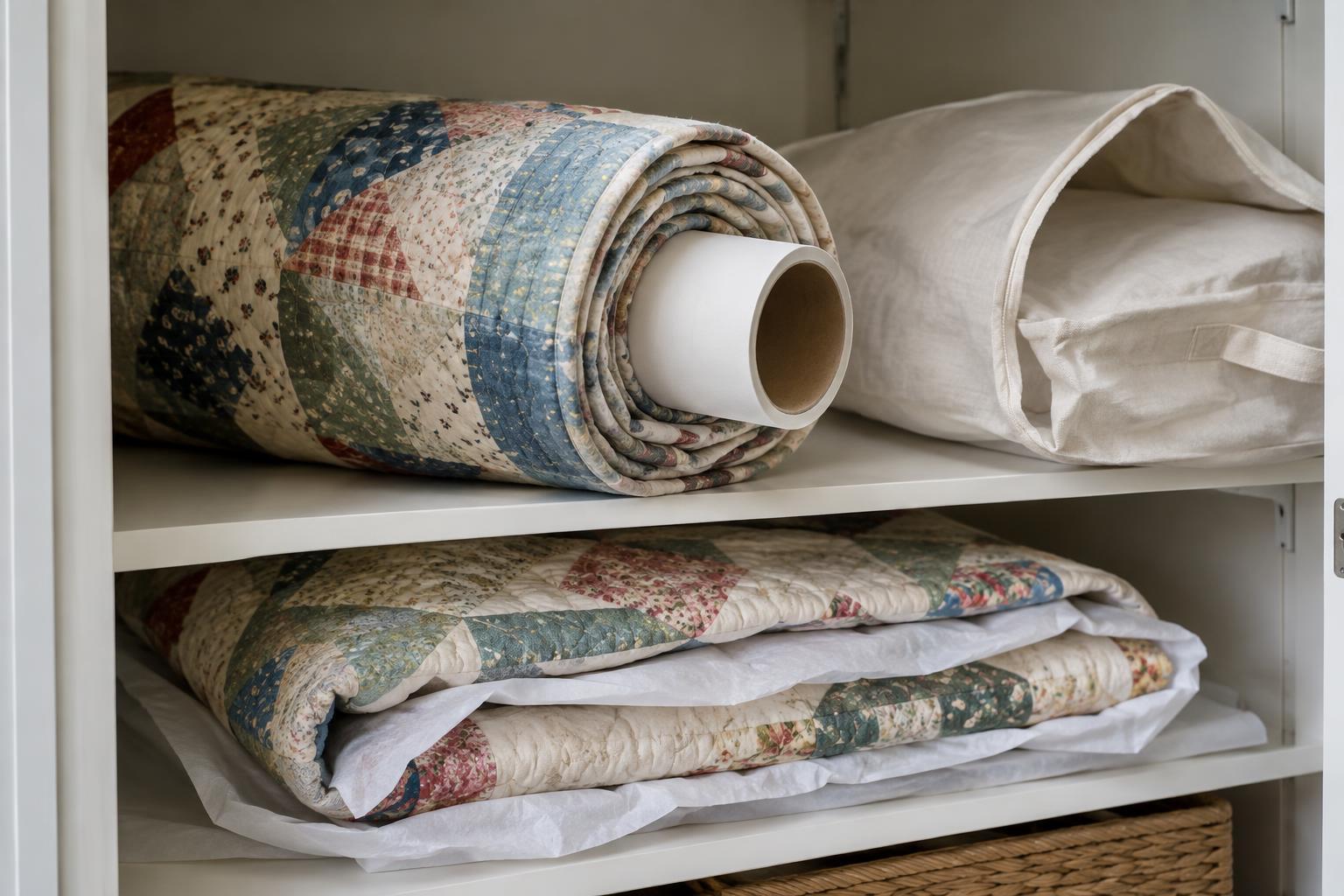
Protect the quilt from dust while allowing air to circulate. A clean cotton sheet, washed cotton pillowcase or breathable fabric bag can provide a useful cover. Avoid sealing a quilt in an airtight plastic bag for long-term storage, particularly if there is any chance of moisture being trapped inside. If you use a box, choose one large enough that the quilt is not tightly compressed; line surfaces that might touch the fabric with clean, acid-free tissue or a washed cotton layer. Heavy objects should not be stacked on top.
Store flat or rolled when space allows
Flat storage avoids the sharp bends that create lasting creases. Spread the quilt on a clean, supported surface, with a protective fabric layer underneath and another loosely over the top. This works best when the quilt can lie without being squeezed by other items. If several quilts share a shelf, avoid making a tall, heavy stack that presses on the lower ones.
Rolling is another option for a quilt that cannot lie flat. Use a wide, sturdy tube with a protective barrier between the tube and the quilt, then roll loosely rather than pulling the fabric tight. A clean fabric cover can help keep dust off the finished roll. Store it where it will not be crushed or roll off a shelf. For a quilt with raised embellishments or a delicate surface, pay attention to which side faces out and whether any decoration is under pressure.
If you must fold, soften the folds
Folding is practical for many household quilts, but repeated pressure in the same places can leave pronounced lines and strain fabric or stitches. Make broad, loose folds instead of sharp, compact ones. Place soft rolls of acid-free tissue or clean cotton along the fold lines to give the fabric a gentler curve. Do not stuff the quilt so tightly into a container that the folds are pressed flat.
When you take a folded quilt out to check it, fold it differently before returning it to storage. Moving the fold lines spreads the pressure across the quilt rather than concentrating it in one area. There is no need to keep unfolding a sound quilt constantly; an occasional check and change of folds is a manageable routine. Handle fragile quilts with extra support so their weight does not pull on weak seams.
Check stored quilts and adjust as needed
Storage is not entirely hands-off. Look in on quilts from time to time for dampness, unusual odours, pests, fading or new areas of stress. Check the storage space as well as the quilt: a dry cupboard can become less suitable if ventilation changes or a leak develops. If you find a problem, address its cause before returning the quilt.
When bringing a quilt out for use, let it relax on a clean bed or table. Mild folds may ease with time, without ironing or pressing. If a quilt has brittle fabric, significant staining or sentimental value and you are unsure how to handle it, avoid experimenting with aggressive cleaning or heat. The simplest storage plan is one you can maintain: keep the quilt clean and dry, give it room, protect it from light and pressure, and revisit its condition occasionally.