Start by identifying when stitches are skipped
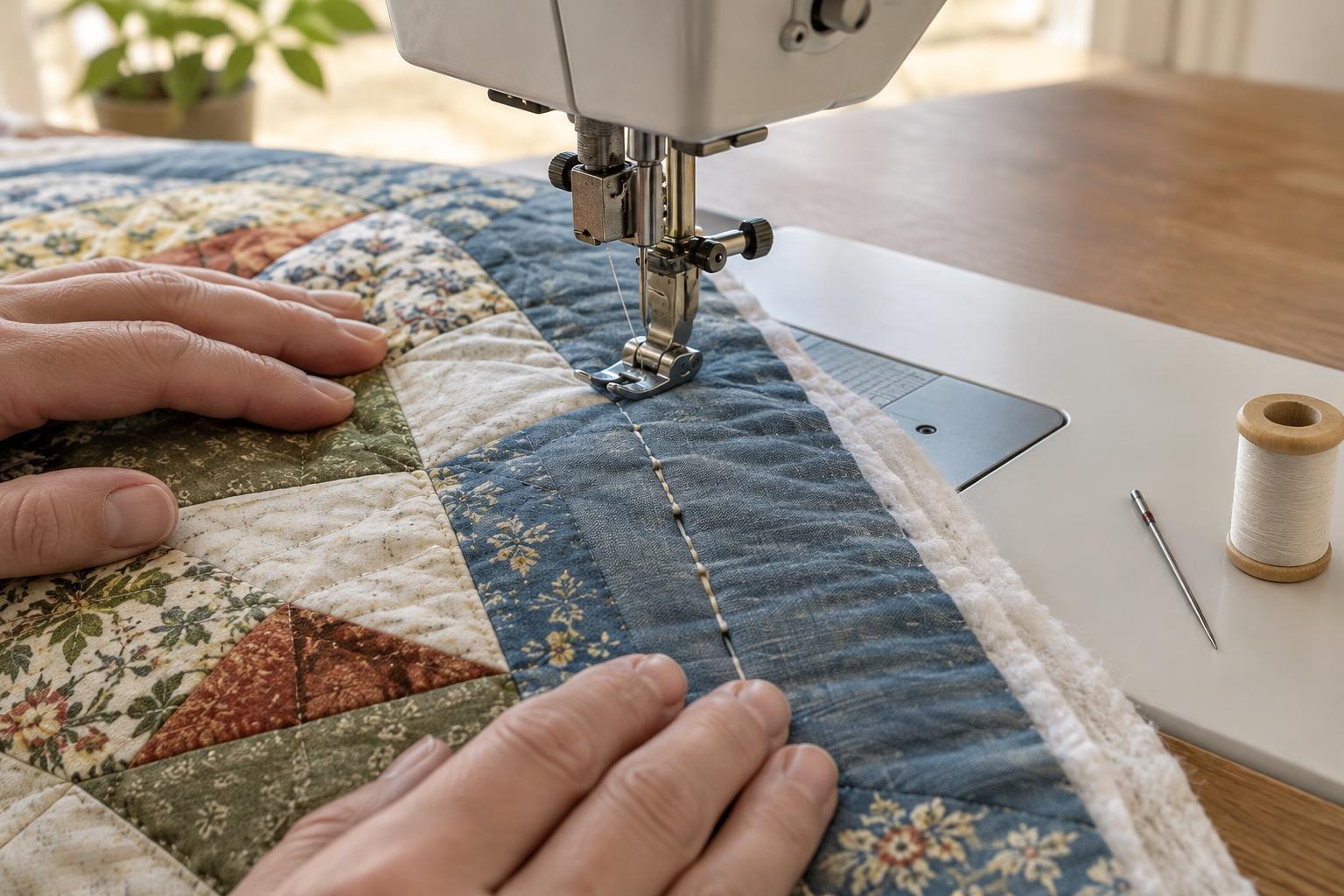
A skipped stitch is a gap where the needle entered the quilt but the top and bobbin threads did not form a stitch. One occasional gap and a repeated run of gaps may point to different problems. Before changing several settings at once, note where the skips occur: on straight lines, at turns, over thick seams, or only during free-motion quilting.
Stop and test on a small quilt sandwich made with the same backing, batting, top fabric, and thread as your project. If possible, include a seam like the one causing trouble. This lets you try one change at a time without adding more gaps to the quilt. A successful test on a single scrap of fabric may not reveal a problem that appears only when the machine handles all three layers.
Check the needle first
A dull, bent, or damaged needle is a common place to start. Replace it with a fresh needle suited to your fabric and thread, even if the old one looks sound. Make sure it is inserted in the correct direction and pushed fully into place according to your machine’s instructions. A needle that is slightly loose or incorrectly seated can interfere with stitch formation.
Needle size matters as well as condition. If the eye is too small for a thick or textured thread, the thread may not move freely through the fabric layers. If the needle is too fine for a dense quilt sandwich, it may deflect as it passes through. Try a compatible quilting or topstitch needle, following the thread maker’s guidance where available, and test the result on your sample sandwich.
Rethread and inspect the thread path
If a new needle does not help, rethread the machine from the beginning. Raise the presser foot while threading the top path so the thread can settle between the tension discs, then check that it passes through every guide. Remove and reinstall the bobbin as directed in your machine manual. Check that the bobbin unwinds in the specified direction and that no loose thread end is caught beneath it.
Look at the thread itself. Thread that snags, sheds heavily, or has become tangled around the spool pin can feed unevenly. Check that the spool turns or unwinds as your machine expects and that the thread is not catching on a notch in the spool. Test with a different spool if you suspect the thread is contributing to the problem. Change only one element at a time so you can tell what made a difference.
Consider the quilt sandwich and your handling
If stitches skip mainly at bulky intersections, the presser foot may be tipping as it crosses the height change. Slow down, keep the quilt supported on the table, and use a suitable foot or a leveling aid if your machine and project allow it. Avoid pulling the quilt through the machine; that force can bend the needle slightly away from its usual path. Smooth the layers before stitching, but let the machine feed them at its own pace.
During free-motion quilting, skips may appear when your hands move the quilt much faster than the needle cycles, or when you change direction sharply. Try a steadier machine speed and move the sandwich at a pace you can control. Check that the free-motion foot is installed and set up as your machine requires. Good lighting can help you watch the area just ahead of the needle rather than tugging at stitches already made.
Know when to clean, retest, or seek help
Lint around the bobbin area can cause feeding problems, so clean accessible areas as your machine manual recommends. Switch the machine off before removing the needle plate or working near the needle, and avoid disassembling parts the manual does not tell you to remove. Reassemble everything carefully, then stitch a fresh test line through your sample sandwich.
If skips continue after a fresh needle, careful rethreading, and a realistic quilt-sandwich test, note exactly when they happen. Persistent skips across different fabrics and threads, especially with unusual noises or needle strikes, may call for a machine technician rather than further adjustment at home. Once the cause is resolved, inspect the affected quilting line: you may need to remove the loose section and restitch it so the quilt has a continuous, secure line.