Decide whether the quilt needs a full wash
A full wash is not always the first step. If the quilt is dusty, airing it indoors or gently removing surface dust may be enough. If one small area is soiled, a careful spot clean may avoid wetting the entire quilt. Wash when it is needed rather than following a fixed schedule, especially for a quilt with delicate fabrics or older stitching.
Before adding water, spread the quilt on a clean surface and inspect both sides. Look for loose seams, worn patches, open binding, and quilting stitches that have come undone. Washing can pull on an existing weak point, so make simple repairs first if you can. Check any care information that came with the fabrics or batting; their requirements may affect the safest washing method.
Prepare for water and colour changes
If you are unsure whether a fabric will release dye, test a discreet area with a clean white cloth dampened with cool water. Press rather than rub, then check the cloth for colour. This test cannot guarantee that a whole quilt will wash without bleeding, but it can reveal an obvious risk. If colour transfers readily, avoid an untested full wash. A colour-catching sheet is not a substitute for checking uncertain dyes.
Choose a mild detergent and use only a small amount. Excess detergent can be difficult to rinse from layers of fabric and batting. Skip bleach and harsh stain treatments unless you know they are suitable for every part of the quilt. Empty the washer or basin of anything that might snag a seam, and make sure there is enough room for the quilt to move without being tightly packed.
Choose a washing method that supports the quilt
For a sound, frequently used quilt made with washable materials, a gentle machine cycle may be practical. Use cool water, a low-agitation setting, and a low spin speed if your machine allows it. Wash the quilt by itself. A machine with a central agitator may tug at fabric and seams more than a drum that turns the quilt gently, so use extra caution with a large or loosely stitched quilt.
Hand washing gives you more control over a fragile quilt, provided you can safely manage its weight when wet. Fill a clean basin or tub with cool water and diluted mild detergent. Lower the quilt in while supporting its length, then press the water through it gently. Do not scrub seams, twist the quilt, or pull it up by one corner. Drain and refill with clean water as needed, continuing to support the quilt while rinsing.
Some quilts should not be washed at home. If an older or particularly valued quilt has weak fabric, unstable colours, unusual embellishments, or unknown materials, pause rather than testing it with a full soak. A conservator or cleaner experienced with textiles may be better placed to assess it.
Lift and dry without pulling on the seams
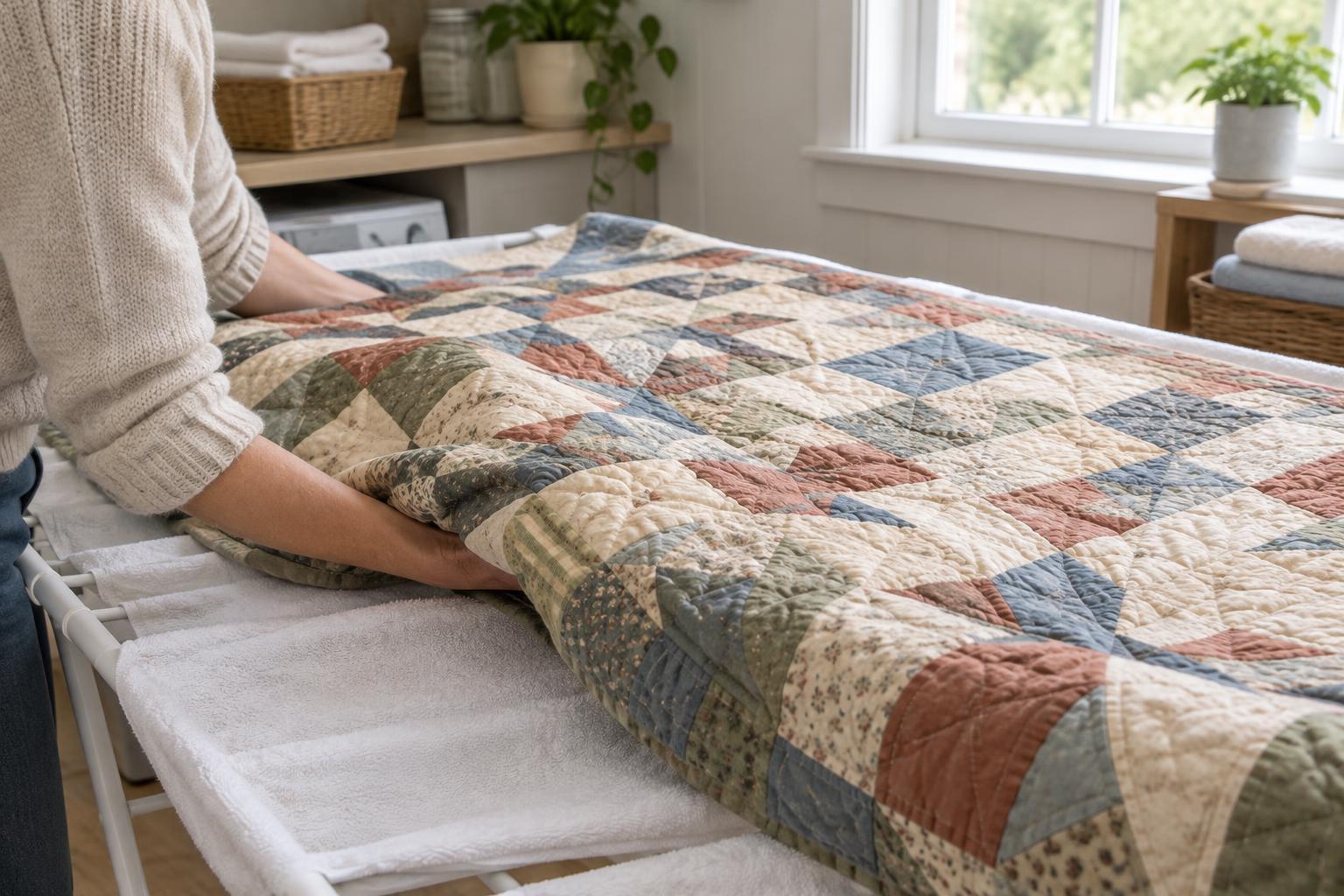
A wet quilt is heavier than a dry one, and lifting it by an edge concentrates that weight on the binding and nearby seams. Gather it into your arms so its weight is distributed, or use a clean sheet underneath it as a sling. After hand washing, let as much water drain away as possible before moving it. To remove more moisture, place the quilt between clean towels and press gently; do not wring it.
If space allows, lay the quilt flat to dry on a clean, well-supported surface with good airflow. Smooth it into shape without stretching it. Turn it or replace damp towels when practical so trapped moisture can escape. Avoid hanging a soaked quilt from a line, which puts sustained strain on its upper edge. Keep it out of prolonged direct sun, which can fade some fabrics.
A sturdy quilt may tolerate a dryer on a low-heat or air setting if its materials allow it. Check it periodically rather than leaving it to overheat or remain damp in a tight bundle. However you dry it, make sure the centre and binding are fully dry before folding the quilt.
Give clean seams an easy life between washes
Store a clean, completely dry quilt where air can circulate and it will not be crushed. Fold it loosely, and change the fold lines occasionally if it will be stored for a long time. A breathable cotton cover can help keep dust off; avoid sealing a quilt away while any moisture remains.
The simplest way to reduce washing-related wear is to handle the quilt gently every time: support its weight, repair small openings promptly, and choose the least intensive cleaning that solves the problem. Those habits protect the seams as well as the fabrics around them.