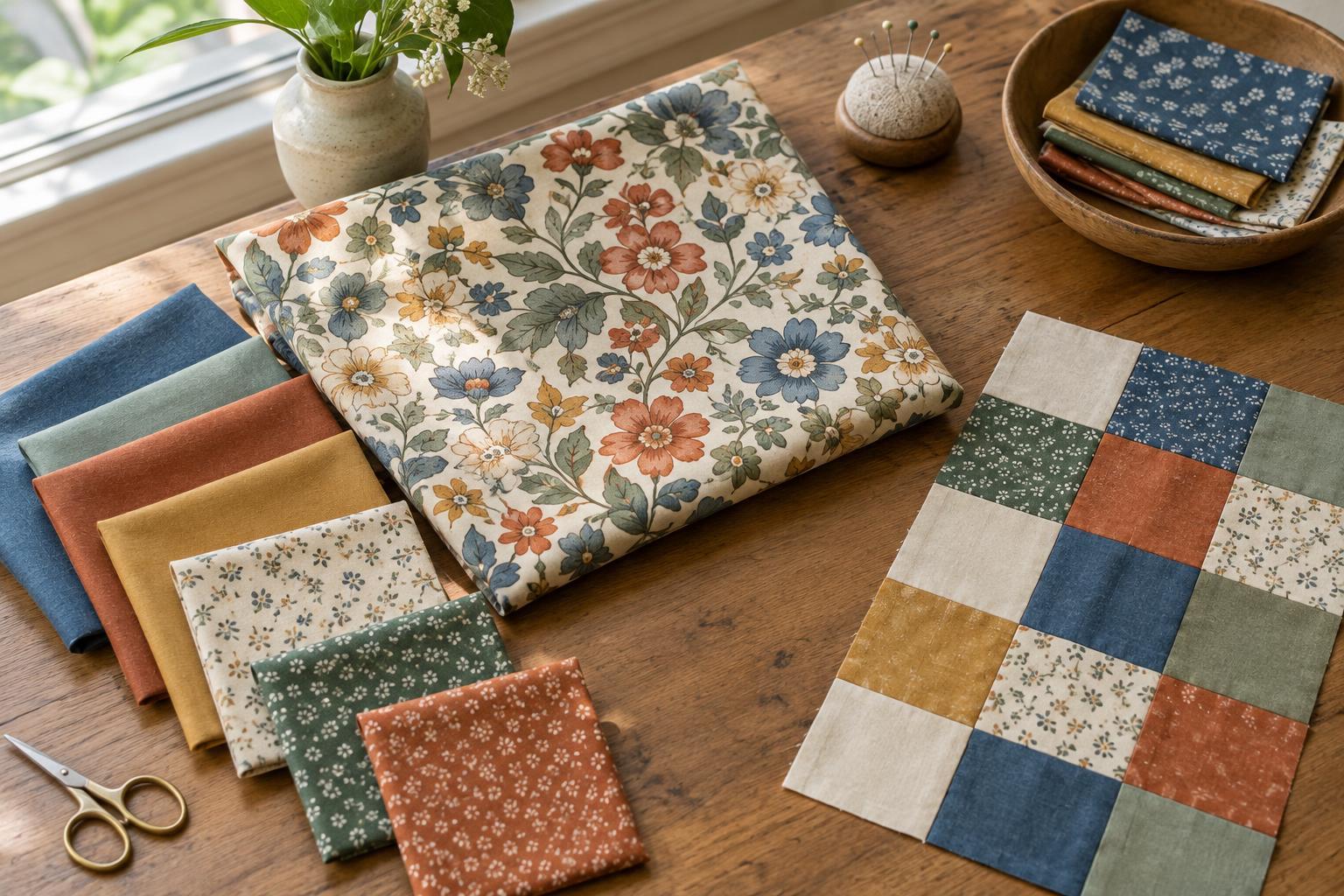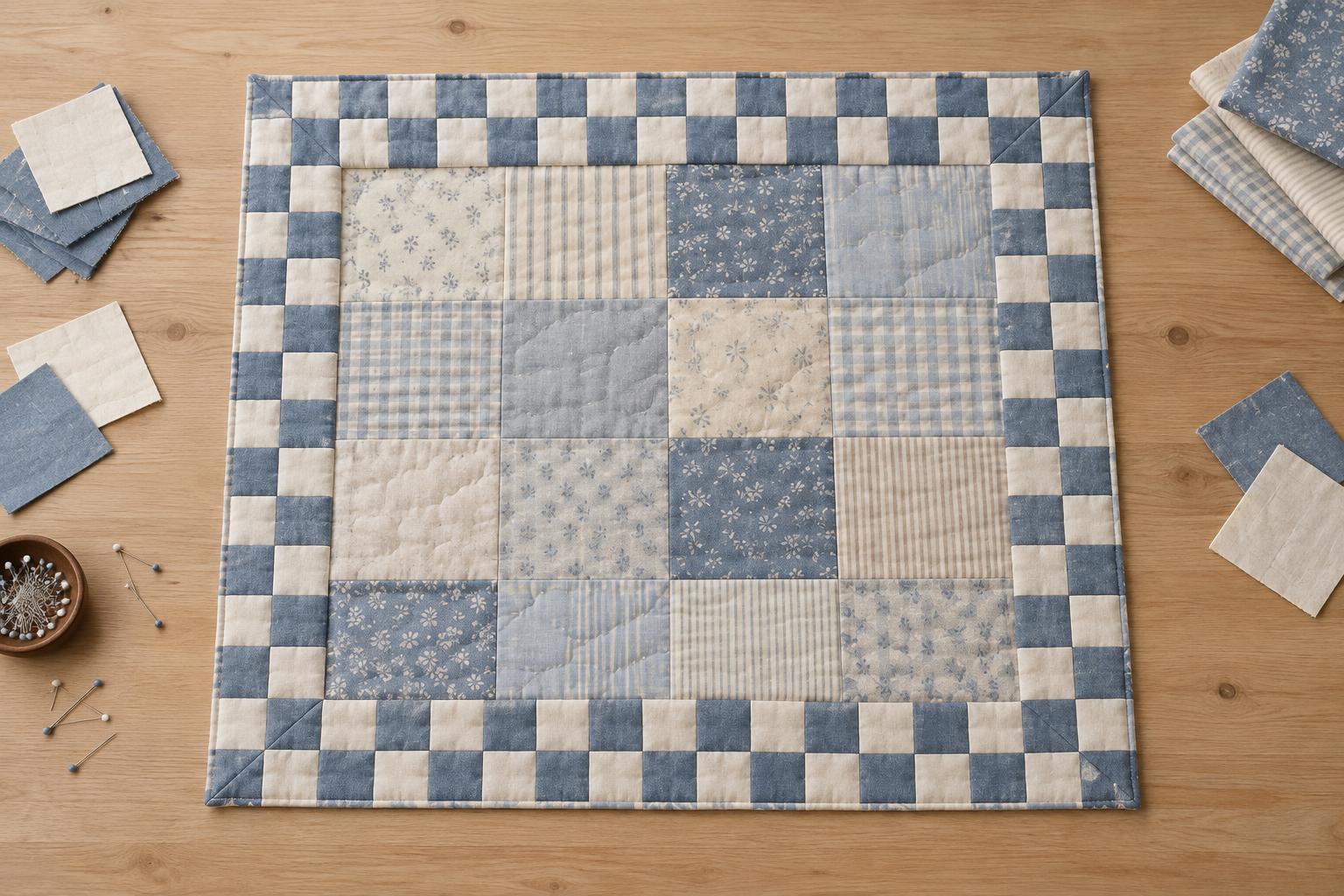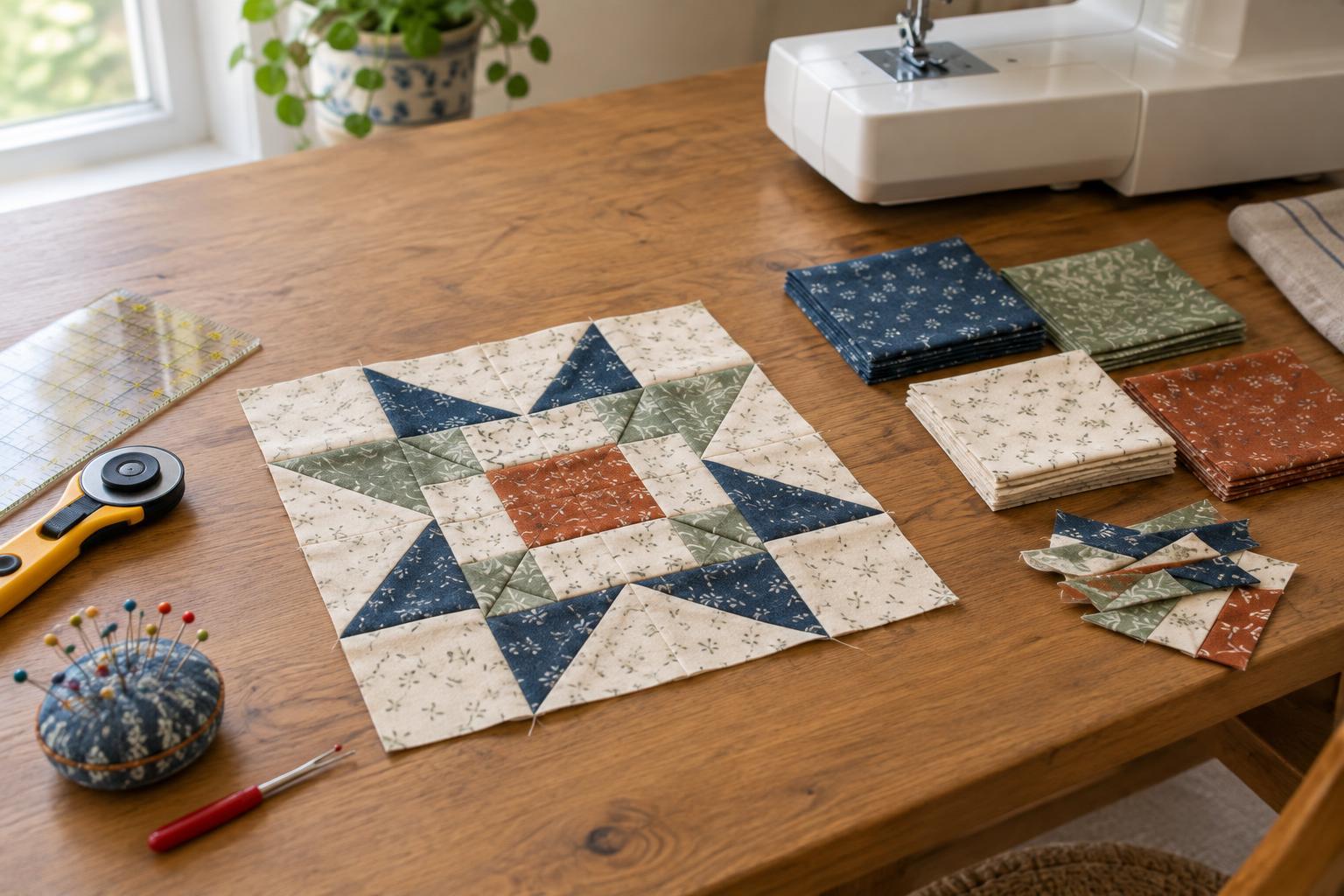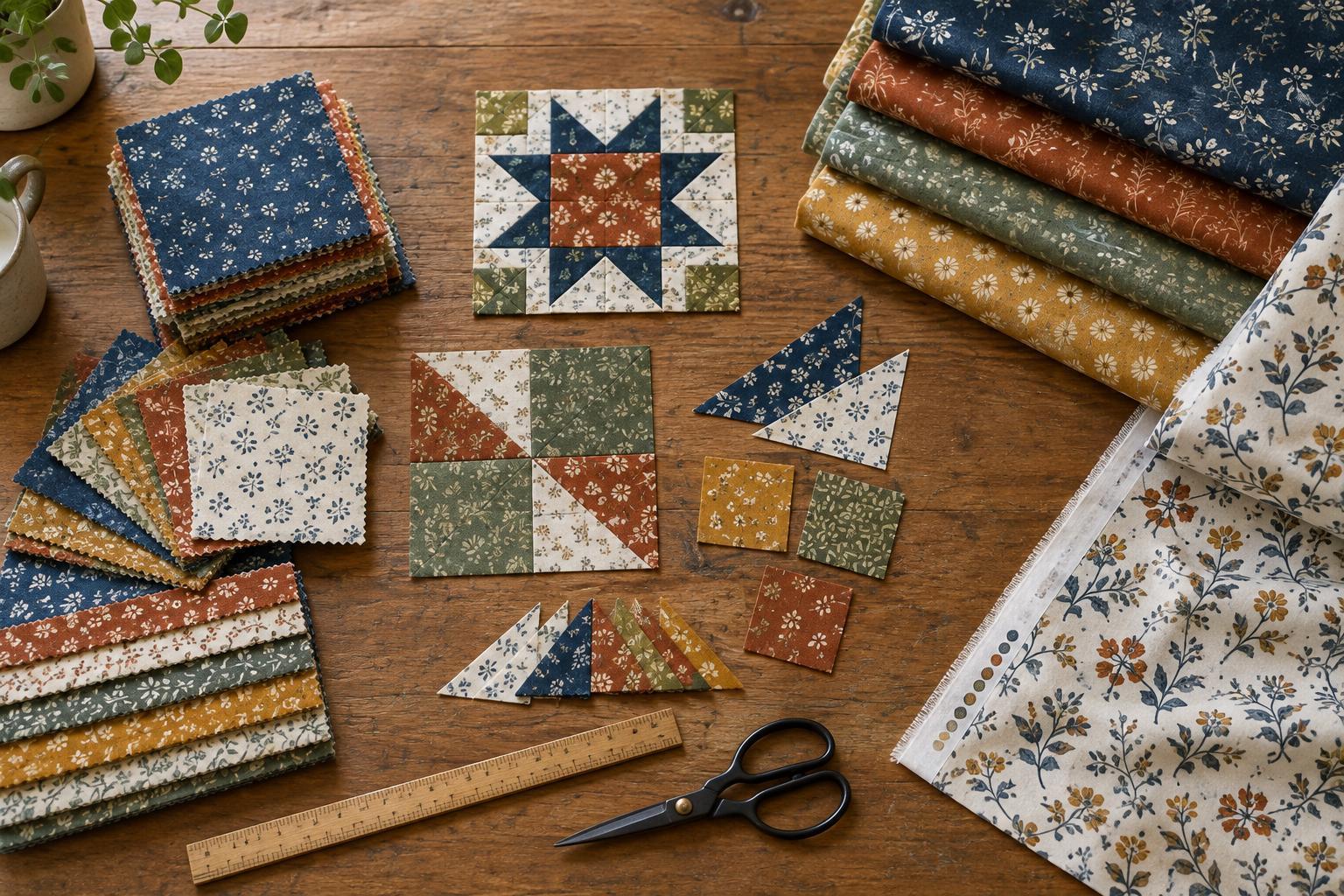
Start with the pieces your quilt needs
A fabric plan begins with the shapes you intend to cut, not with the appeal of a bundle. Precuts are pieces sold in a prepared format, such as strips, squares or coordinated assortments. Yardage is fabric bought as a continuous length. Either can work well, but they solve different problems: precuts offer ready-made portions and variety, while yardage gives you room to decide exactly where each cut will go.
Before choosing, list the patch sizes, number of colours and any pieces that must remain continuous. A quilt made of repeated small squares may suit a coordinated precut pack. A pattern with long borders, wide background pieces or large motifs may call for yardage. If a pattern names a particular precut format, check its cutting directions rather than assuming any bundle with a similar label will contain the right number of usable pieces.
When precuts make planning easier
Precuts are useful when you want several fabrics without buying a longer length of every print. A coordinated assortment can give a scrappy quilt a shared colour direction, and prepared strips or squares can reduce the first round of cutting. They are especially convenient for blocks built from many repeated, relatively small units.
Convenience does not eliminate measuring. Pack contents and dimensions can differ, and a piece may have a pinked edge that makes its exact boundary less obvious. Check how the pattern defines its measurements and whether its seam allowance leaves enough room for accurate cutting. Precuts also limit your ability to reposition a pattern piece around a large print or an unwanted part of a design.
If you plan to wash fabric before sewing, consider how small pieces will behave. Precuts may fray or change size enough to affect a cutting plan. One practical approach is to leave them unwashed and handle them consistently, while following the care guidance for the fabrics you use. For a quilt combining precuts with other fabric, think through preparation before you cut everything.
When yardage gives you more control
Yardage earns its place when a design needs long strips, generous backgrounds, binding or room to match a print. It also lets you cut identical pieces from a chosen part of the fabric. That matters when you want a motif centred in a block or want directional prints to face the same way throughout the quilt.
A continuous length is not the same as unlimited usable fabric. Width can vary, and selvages are usually excluded from the cutting area. Straightening an edge, aligning a print or cutting around a flaw may use additional fabric. For a project with a precise cutting list, check the pattern’s assumed usable width and compare it with the fabric in hand before deciding how much to buy.
Yardage can simplify a limited palette, too. If one background appears across many blocks, a single fabric may look more consistent than several similar prints from a bundle. On the other hand, buying a length of every colour for a small, varied project can leave more remnants than you intended. Leftovers are useful only if they suit the sewing you expect to do later.
Match the format to colour, print and grain
Think about how much of each fabric will show in the finished quilt. Small patches break up a bold print; large patches let it read clearly. A precut assortment can help you test a range of lights, darks and accent colours, but it may include prints that play nearly the same role. Lay pieces out before sewing and check contrast at the distance from which the quilt will usually be seen.
Print direction and fabric grain can affect the cutting plan. Stripes, words and one-way motifs need deliberate placement; a precut piece may not be oriented the way your block requires. Yardage offers more options for rotating a template or choosing a different area of the print, although those choices may require extra fabric. For either format, keep the pattern’s grain and cutting instructions in view rather than rotating pieces solely to save material.
Use a simple check before you commit
Make a small cutting map for each fabric role: background, main prints, accents, borders and binding. Note the required piece sizes and counts, then mark which can come from a precut and which need a continuous length. If the pattern allows it, a mixed plan often works well: use a bundle for varied patchwork and yardage for the background or finishing pieces.
Finally, compare usable fabric with the cutting plan, not just the stated amount on a package. Allow for test cuts, print placement and the occasional cutting mistake without assuming every scrap will become a finished patch. The better choice is the format that lets you cut the quilt you pictured with manageable effort and a comfortable margin for error.