Start with the fabric, not just the fibre label
Most fabric sold as quilting cotton is woven from 100% cotton. Its familiar feel and stable weave make it a straightforward choice for cutting patches, matching seams and pressing blocks flat. A polyester blend contains polyester alongside another fibre, often cotton. Blends vary considerably: two fabrics with the same fibre percentages may still feel and behave differently because of their weave, weight and finish.
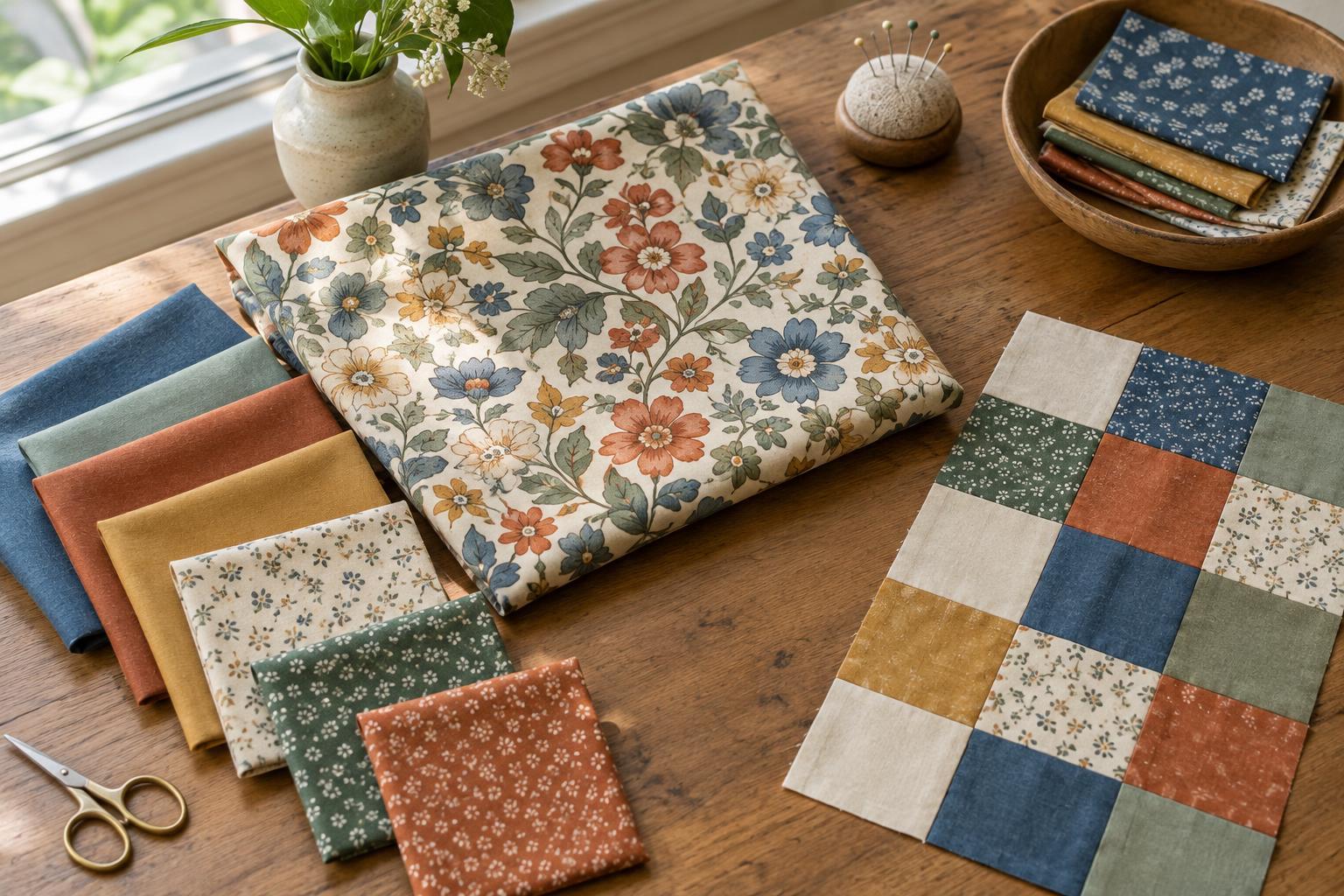
Before choosing either fabric, handle it as you would while making a quilt. Does it lie flat on the cutting mat? Can you see through it? Does it spring back after folding, or hold a crease? A firm, even weave is often easier to piece accurately than a loose or stretchy one. If you are shopping for a particular project, compare candidate fabrics side by side rather than assuming the fibre label tells the whole story.
How cutting, piecing and pressing can differ
Quilting cotton generally accepts a crisp pressed crease, which helps when setting seams and aligning patchwork. It may also wrinkle while you work. Some polyester blends resist wrinkling and can feel smooth, but they may not hold a crease as sharply. A slippery or loosely woven blend can shift under the ruler or presser foot, making small pieces and points harder to control.
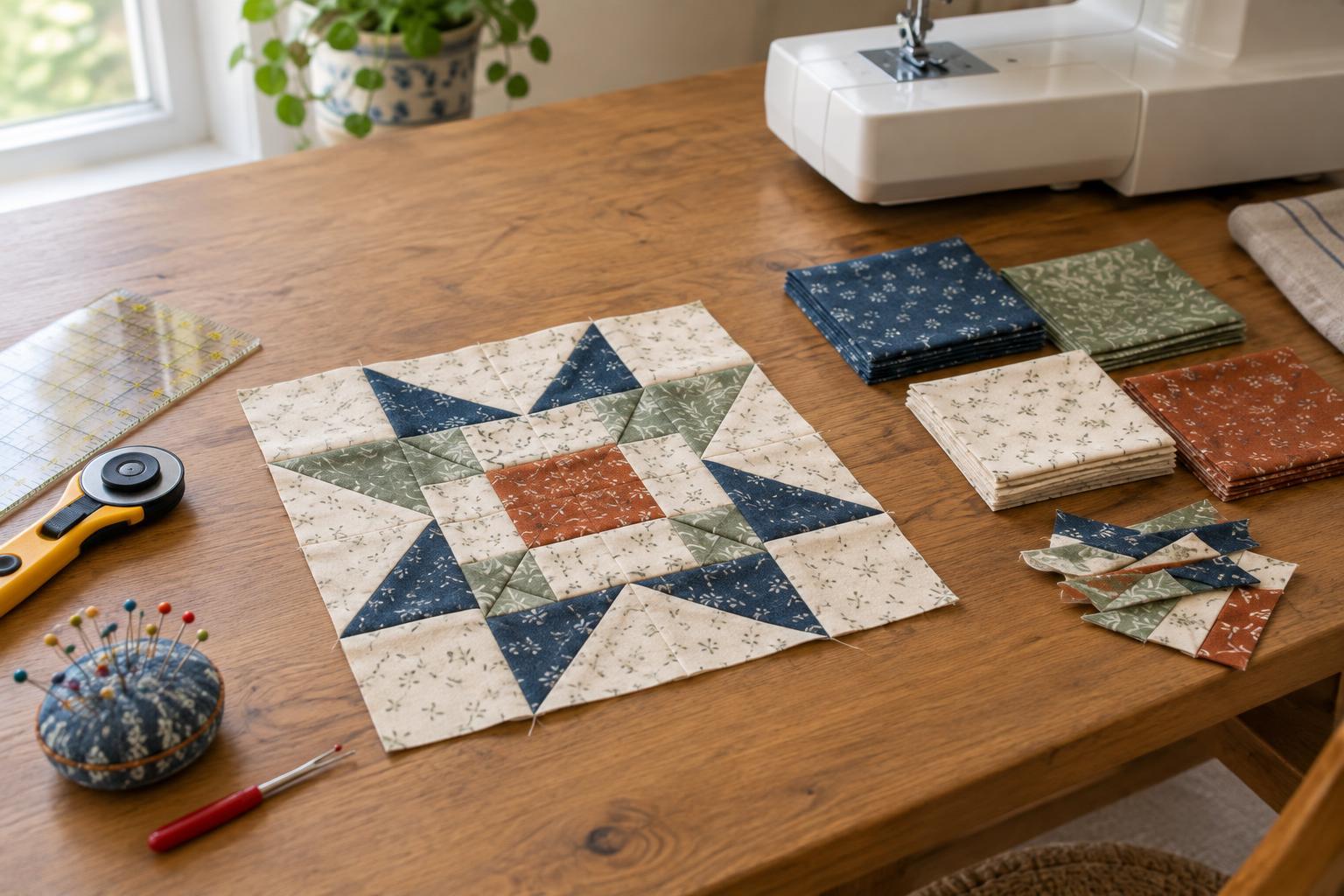
For either fabric, cut a test block before cutting the whole quilt. Check whether the pieces keep their shape, the seams feed evenly and the finished block measures as expected. If a blend shifts, try a fresh rotary blade, careful pinning or clips, and a steady feeding pace. Press rather than dragging the iron across the block. Polyester can be sensitive to high heat, so follow the fabric’s care guidance and test the iron on a scrap before pressing visible pieces.
Think about washing and long-term use
Cotton may shrink when washed, especially if it has not been washed before cutting. Polyester-containing fabrics often shrink less, although the amount depends on the whole fabric, not just its fibre content. If fabrics in the same quilt change size differently, the surface may pucker after laundering. Some quilters welcome that texture; others want a flatter finish.
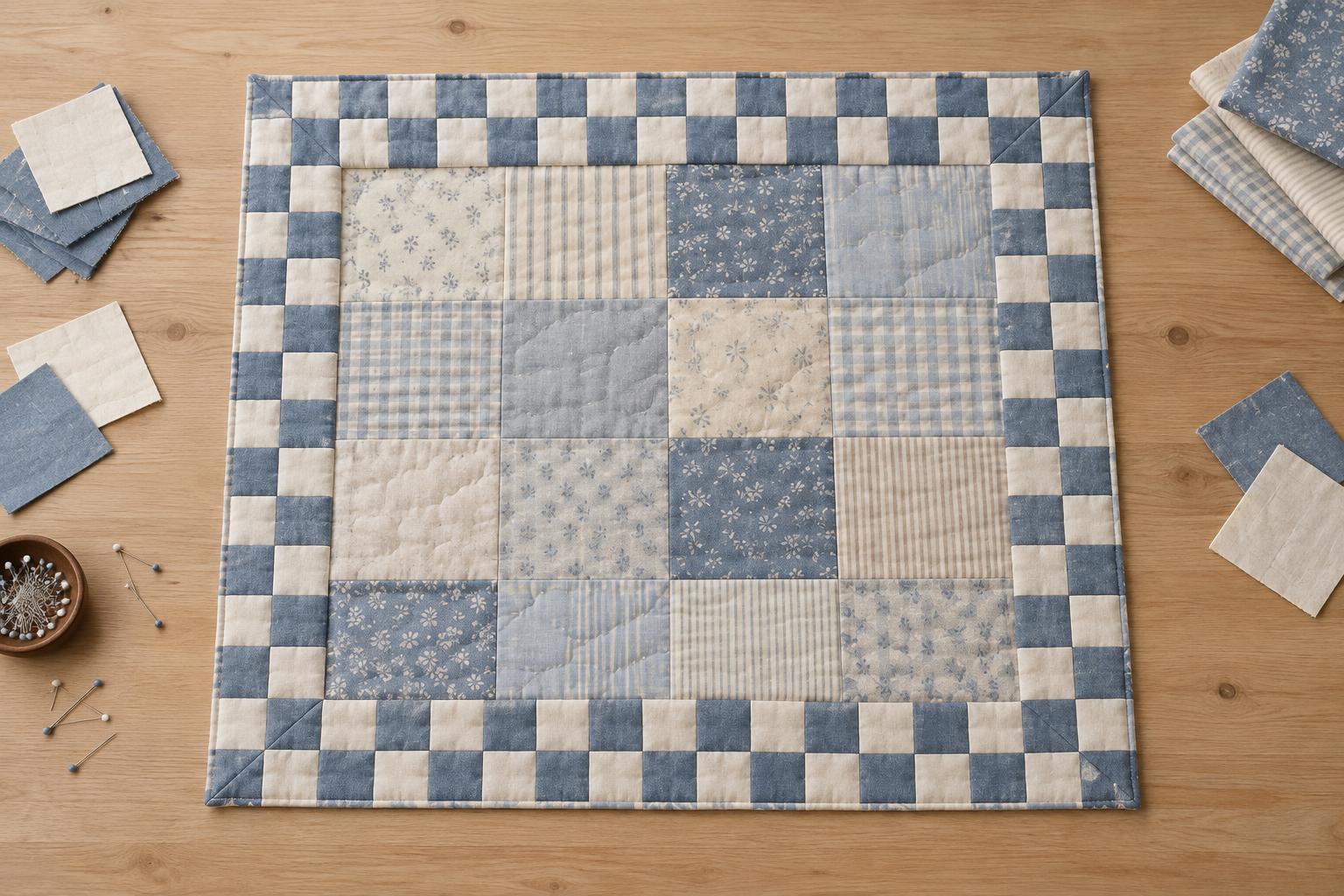
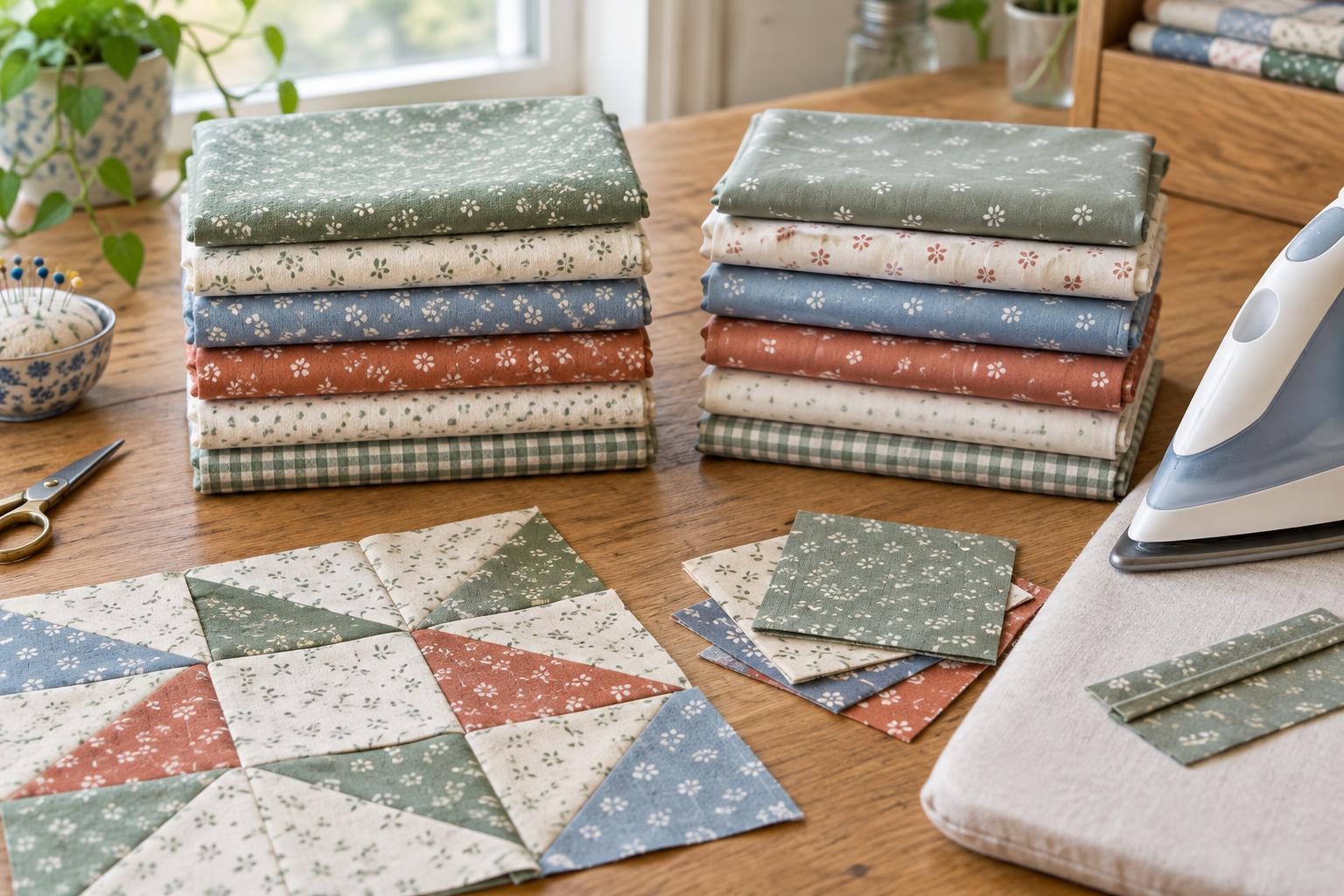
Choose a preparation method you can use consistently. You might prewash all fabrics you plan to combine, then dry and press them before cutting. Alternatively, if you prefer to piece with unwashed fabric, make a small sewn sample and wash it as you expect to wash the finished quilt. Include the proposed backing and batting if their behaviour matters to your decision. A sample reveals more about colour transfer, shrinkage and texture than a label alone.
Match the fabric to the quilt’s purpose
For precise patchwork with many small pieces, a stable quilting cotton is a dependable starting point. A suitable polyester blend can also work well, particularly when it has a comparable weight and weave. For a quilt that will be handled and washed frequently, consider how every layer feels together. The top, batting, backing and binding all contribute to the quilt’s drape and comfort.
Fibre content also affects how you plan to care for the finished quilt. If a top includes polyester blends, use washing and ironing settings appropriate to the most heat-sensitive material in the quilt. Check printed designs and special finishes too, as they may need gentler treatment than the base cloth. For binding, choose fabric that folds neatly and feels durable at the edge; a test strip can show whether a candidate is too bulky or difficult to press.
Mix fabrics with a simple test plan
You do not have to keep cotton and polyester blends in separate quilts. The useful question is whether the particular fabrics work well together. Start with pieces of similar weight and stability. Sew a sample using your intended seam allowance, then press it and check for twisting, stretching or bulky seam intersections. If one fabric behaves very differently, use it in larger, simpler pieces or reserve it for another project.
Colour planning deserves the same practical approach. View fabrics together in daylight and under the lighting where you usually sew, then step back to check contrast. A smooth blend can reflect light differently from a matte cotton, changing how light and dark patches read. Once you are happy with both the appearance and the sewn sample, record how you prepared the fabrics. That small note makes it easier to care for the quilt and repeat a combination you enjoy.