Start with a stable cutting station
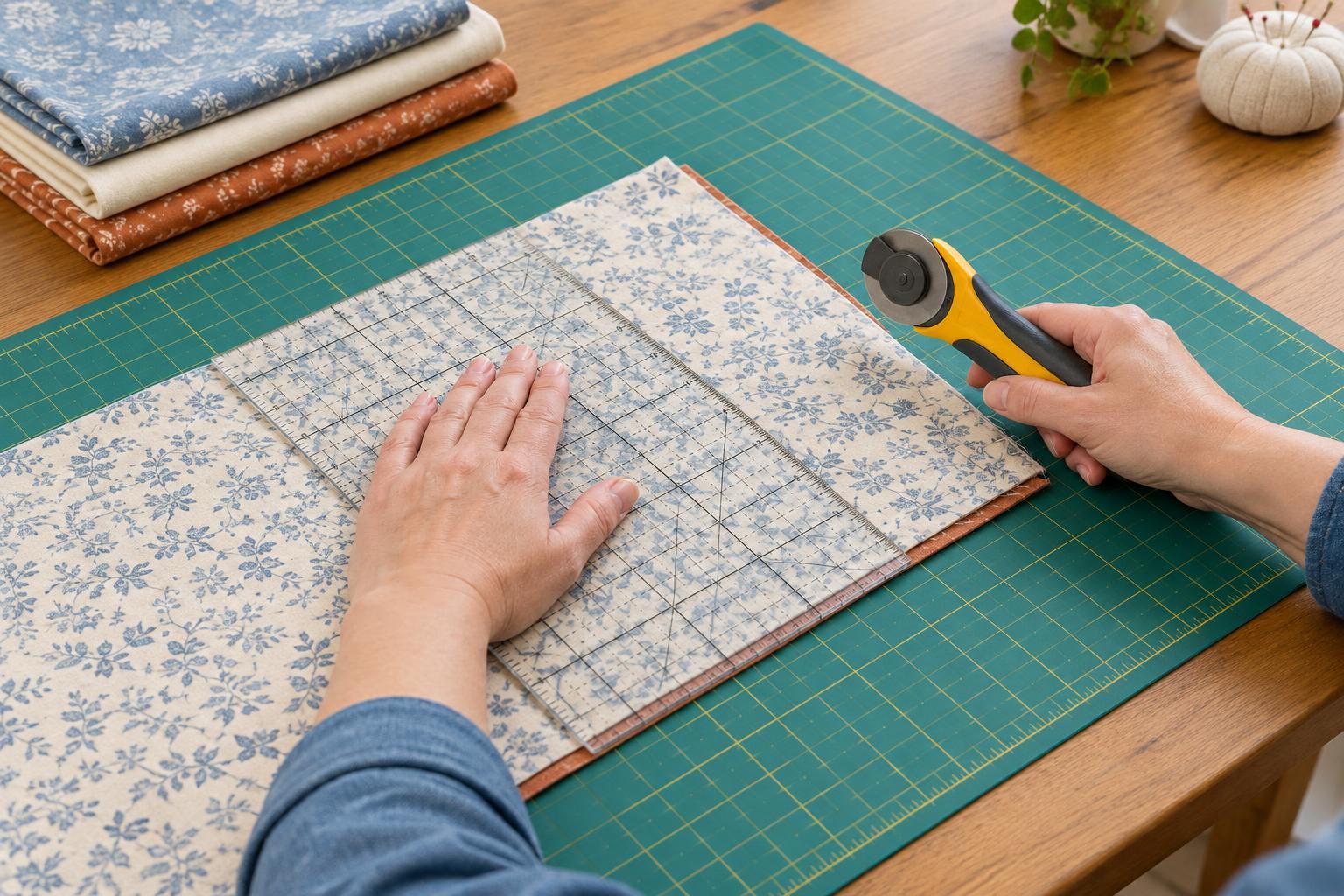
A rotary cutter works best when the cutting mat lies flat on a sturdy surface. Clear away fabric scraps, pins and other tools before you begin. If the mat shifts when you press on it, stabilize it before cutting; a moving mat can carry the ruler and fabric with it. Give yourself enough room to complete a cut without leaning across the table or reaching beyond a comfortable distance.
Position the fabric fully on the mat, with the line you plan to cut visible and accessible. Keep your cutting hand on the side of the ruler that leaves the blade travelling away from your body and your other hand. If the layout makes that awkward, move the fabric or turn the mat before you start. It is safer to reset the work than to twist your wrist or cut toward yourself.
Place the ruler before you place your hands
Smooth the fabric without stretching it, then align the ruler with the edge or measurement you need. Check both ends of the ruler before picking up the cutter. A ruler that is slightly out of position at one end is easier to correct now than halfway through a cut.
Hold the ruler firmly with your non-cutting hand, keeping fingers well inside its edges rather than hooked over the side next to the blade. Spread your fingers enough to steady the ruler, but only as far as you can do comfortably. On a long cut, do not reach past the hand holding the ruler. Stop with the blade closed, move your ruler hand to a safe position farther along, check the alignment again and continue. If the ruler tends to slip, a clean ruler and an appropriate non-slip aid may help, but neither replaces a secure hand position.
Make each cut deliberate
Open the blade only when the fabric, ruler and both hands are ready. Set the blade beside the ruler at the start of the cut, with the cutter upright enough for the blade to roll cleanly. Use steady, moderate pressure and move the cutter away from your body along the ruler edge. Forcing a dull blade may make it harder to control; if a cut repeatedly leaves threads attached, check the blade condition rather than pressing harder.
Keep your eyes on the blade’s path and the ruler edge. Avoid cutting while talking, looking away or moving your ruler hand. At the end of the cut, lift the cutter clear of the fabric and close its blade guard before adjusting anything. If the fabric shifts or the ruler slips, stop and reset. Trying to correct the line while the blade is moving can put your hand unexpectedly close to its path.
Choose a setup that suits your hands
The safest arrangement is one you can control without strain. You should be able to see the measurement marks, hold the ruler securely and guide the cutter without bending your wrist sharply. A cutter suited to your dominant hand can make the blade path easier to see. Left-handed quilters may find it useful to reverse the usual fabric-and-ruler layout so the cutting motion still travels away from the body.
For smaller pieces, keep your fingers clear even if that means cutting a larger strip first and trimming it later. A narrow offcut is not worth holding beside the blade. If you need to rotate your work for a second cut, close the cutter, set it down safely and turn the fabric or mat. Take breaks when your grip becomes tired: fatigue can make it harder to maintain pressure on the ruler and control the cutter.
Close, change and store the blade carefully
Treat the blade as sharp even when it appears worn. Close the guard whenever you set the cutter down, including between cuts. Place the cutter where it cannot roll off the table, and store it closed and out of reach of children or anyone unfamiliar with the tool.
When changing a blade, follow the cutter maker’s instructions and keep track of any small washers or fittings so they go back in the correct order. Handle a loose blade by its safer outer areas, avoiding the cutting edge, and do not leave it on the work surface. Wrap used blades securely or place them in a suitable rigid container before disposal, following local disposal guidance. A brief setup check and a consistent habit of closing the blade make accurate cutting easier to repeat without rushing.