What prewashing changes
Prewashing means laundering fabric before you cut it for a quilt. It can remove some manufacturing finishes, reveal dye transfer, and let fabric shrink before it becomes part of a pieced top. It can also soften the fabric. None of those outcomes is guaranteed for every fabric, which is why quilters make different choices about washing first.
The main trade-off is handling. Unwashed quilting cotton often feels crisp and is easy to press, cut, and piece accurately. Washed cotton may feel softer, but its edges can fray in the machine and its shape may need attention before cutting. Some quilters also like the slightly crinkled look that can develop when a completed quilt is washed for the first time. Prewashing the fabric may change that effect, though the batting and quilting still influence the finished texture.
Start with how the quilt will be used
If the quilt will be used and laundered often, prewashing can be a sensible choice, especially when you are combining fabrics from different sources or you are unsure how they will behave. Washing yardage in advance gives you a chance to notice unusual shrinkage or colour release before you invest time in cutting and sewing. It does not make a fabric permanently colourfast or remove every risk of change in a later wash.
For a wall hanging or another project unlikely to be washed regularly, you may prefer to keep quilting cotton unwashed for its crispness. You might make the same choice for a first project made entirely from familiar, good-quality quilting cotton. The important point is to decide deliberately rather than assume that every fabric needs identical treatment.
If you are using fabrics other than standard quilting cotton, check their care information before putting them in the washer. Linen, flannel, woven blends, and specialty fabrics can behave differently from one another. When care instructions conflict with the way you expect to clean the finished quilt, consider choosing a different fabric.
Consider colour and the size of your pieces
Strongly coloured fabric beside white or another pale fabric deserves extra thought. To check for obvious dye release, wet a small scrap of the darker fabric and press it against a clean white scrap, or wash the sample on its own and look for transferred colour. A sample that releases dye is a reason to reconsider that fabric, wash it separately again, or change the design. A sample that looks fine is reassuring, but it cannot promise that dye will never move in a finished quilt.
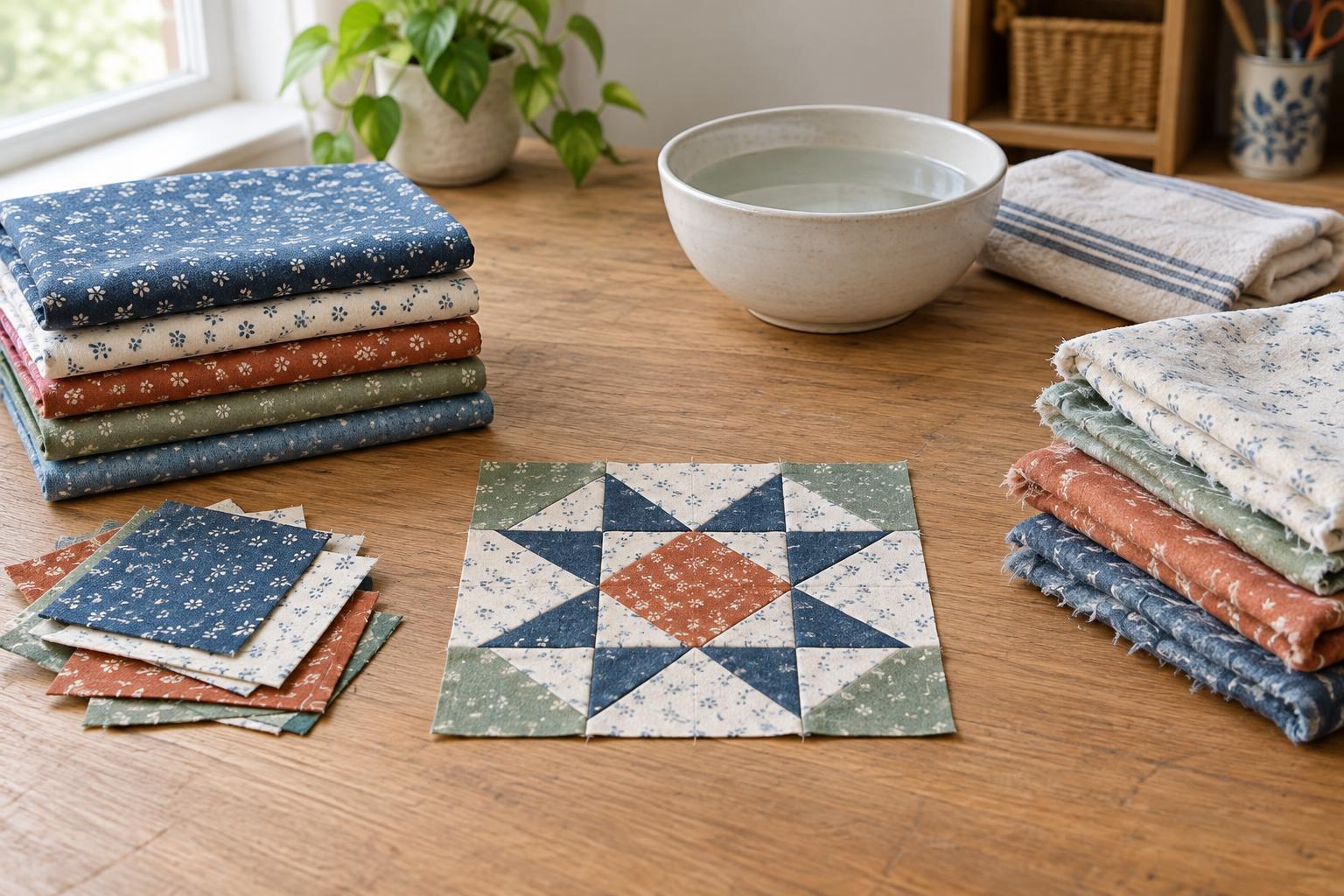
Piece size matters too. Yardage is relatively straightforward to wash, dry, press, and square up before cutting. Small precut squares and strips have many exposed edges; laundering them can cause fraying, tangling, or distortion that makes accurate piecing harder. If a pattern depends on precuts staying at their stated dimensions, leaving them unwashed is often the simpler route. When a project combines precuts with yardage, consider treating the yardage the same way as the precuts for consistency, while accepting that different fabrics may still change differently.
If you choose to prewash, keep it simple
Separate fabrics by colour, particularly when any piece is dark or highly saturated. Wash according to the fabric’s care information, using a method you would be comfortable using for the finished quilt. Dry the fabric in the way you expect to dry the quilt, if its care instructions allow. That gives you a more useful preview than washing it one way now and planning a very different routine later.
Press the fabric after it dries, smoothing it without stretching it out of shape. Check that you still have enough usable fabric for the pattern: washing, fraying, and squaring uneven edges can all reduce the amount available for cutting. If you are buying fabric specifically to prewash, allowing a little extra is safer than relying on an exact cut. A laundry bag may help contain smaller pieces, but it will not prevent every edge from fraying.
Make one plan for the whole quilt
A useful beginner rule is to prewash washable yardage when you are concerned about dye transfer, shrinkage, or mixed fabric types, and to consider leaving small precuts unwashed when their exact size matters. This is a decision guide, not a guarantee: inspect the fabrics in front of you and choose a preparation method that suits the project.
Write down which fabrics you washed, especially if a quilt will take months to complete. Before assembly, also consider the backing and binding, which will be washed with the quilt even though they may be prepared at different times. Follow the batting’s care information rather than assuming it should be treated like the cotton top. When the quilt is finished, use a gentle care routine appropriate to all its materials. The goal is not to eliminate every possible change; it is to make informed choices before the first cut.