The shared idea: squares that form a chain
An Irish Chain quilt is built from ordinary squares, but its design is easier to see from a distance than up close. Small coloured squares meet at the corners of neighbouring blocks, creating diagonal paths that appear to travel across the quilt. Open areas between those paths give the eye a place to rest.
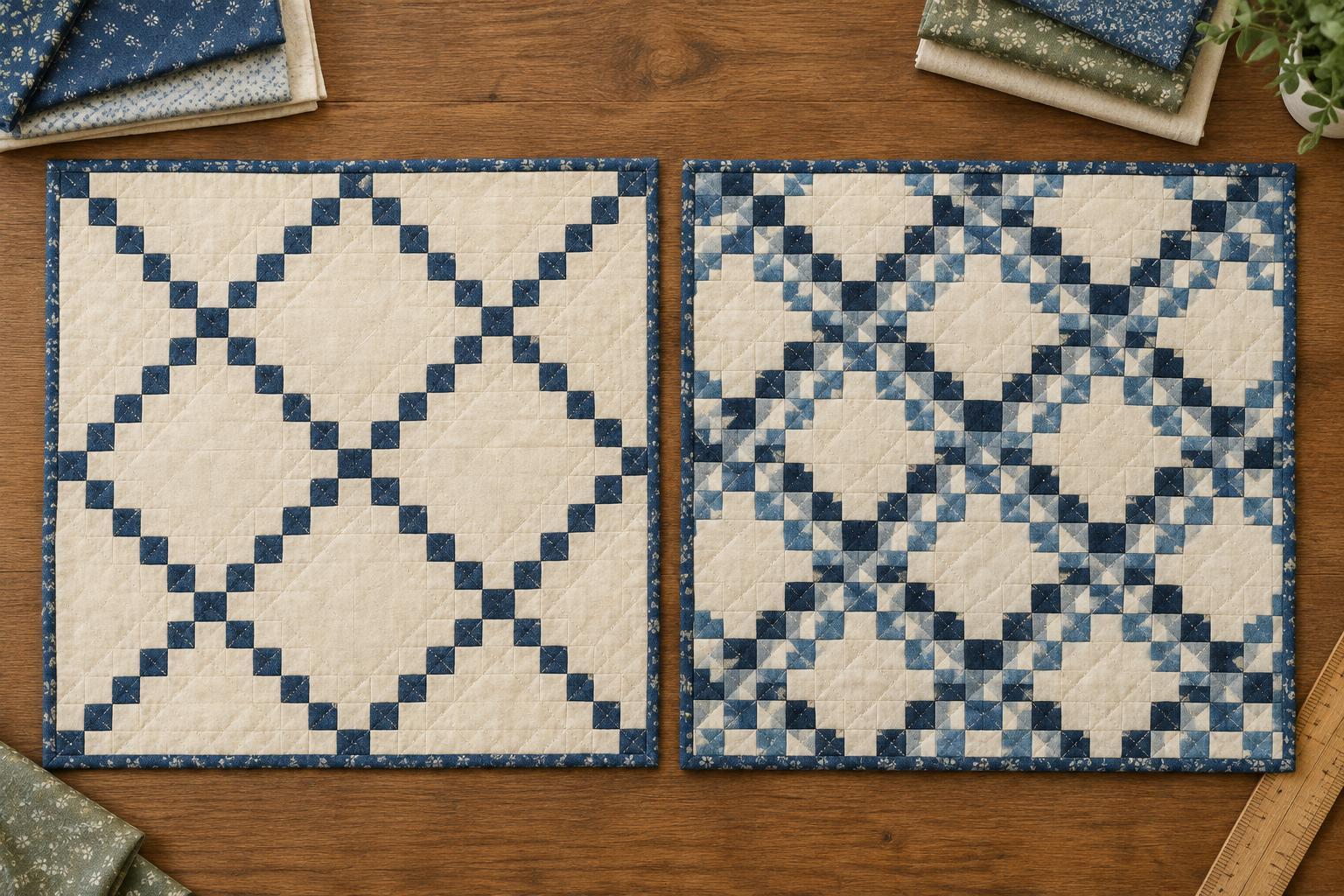
Single and Double Irish Chain patterns use this same principle. The difference is the number and arrangement of linked paths. A Single Irish Chain has a comparatively spare, one-chain look. A Double Irish Chain places more coloured squares into the design, producing two closely related paths and a denser lattice. Pattern variations exist, so it is worth looking at the full quilt layout rather than relying on the name alone.
How a Single Irish Chain takes shape
A common Single Irish Chain layout alternates plain background blocks with pieced nine-patch blocks. Each nine-patch is a three-by-three grid. In a typical version, the coloured squares occupy the four corners and the centre, while the remaining four squares match the background. Once the blocks are assembled in alternating positions, the coloured corners of adjacent pieced blocks suggest a continuous diagonal chain around the plain blocks.
That generous amount of uninterrupted fabric is part of the Single Irish Chain’s appeal. It can make a strong pattern with only two fabrics, yet it also leaves room to show off a print or add visible quilting. For a first chain project, the nine-patch is a manageable unit: you can make one test block, check its finished size, and repeat it without keeping track of many different square positions.
What makes a Double Irish Chain different
A Double Irish Chain increases the number of small squares used to form the paths. One familiar approach alternates plain blocks with pieced blocks arranged on a five-by-five grid. Depending on the pattern, the pieced blocks may use two chain colours or two values of the same colour. Across the quilt, their squares create a more closely spaced set of diagonals than the Single Irish Chain’s simple lattice.
The added detail changes the mood of the quilt. From across a room, a Double Irish Chain can look intricate and richly layered; close up, it still consists largely of straight seams and squares. The extra piecing does demand more attention to square placement and seam alignment. Before cutting all your fabric, follow the block diagram for the particular pattern you have chosen: two designs sold under the same name may arrange their small squares differently.
Choosing fabric to make the links readable
Value contrast matters more than a precise colour combination. If the chain squares and background are similar in lightness, the links may disappear, especially when both fabrics have busy prints. Lay candidate fabrics side by side and step back. You should be able to recognise the diagonal movement without examining individual seams.
For a Single Irish Chain, one consistent chain fabric against a quieter background makes the structure particularly clear. You can also distribute several fabrics of similar value through the chain for a scrappy effect. In a Double Irish Chain, two related but distinguishable chain colours can help separate the paths. If you want the colours to blend into one overall pattern instead, keep their values close while maintaining enough contrast with the background.
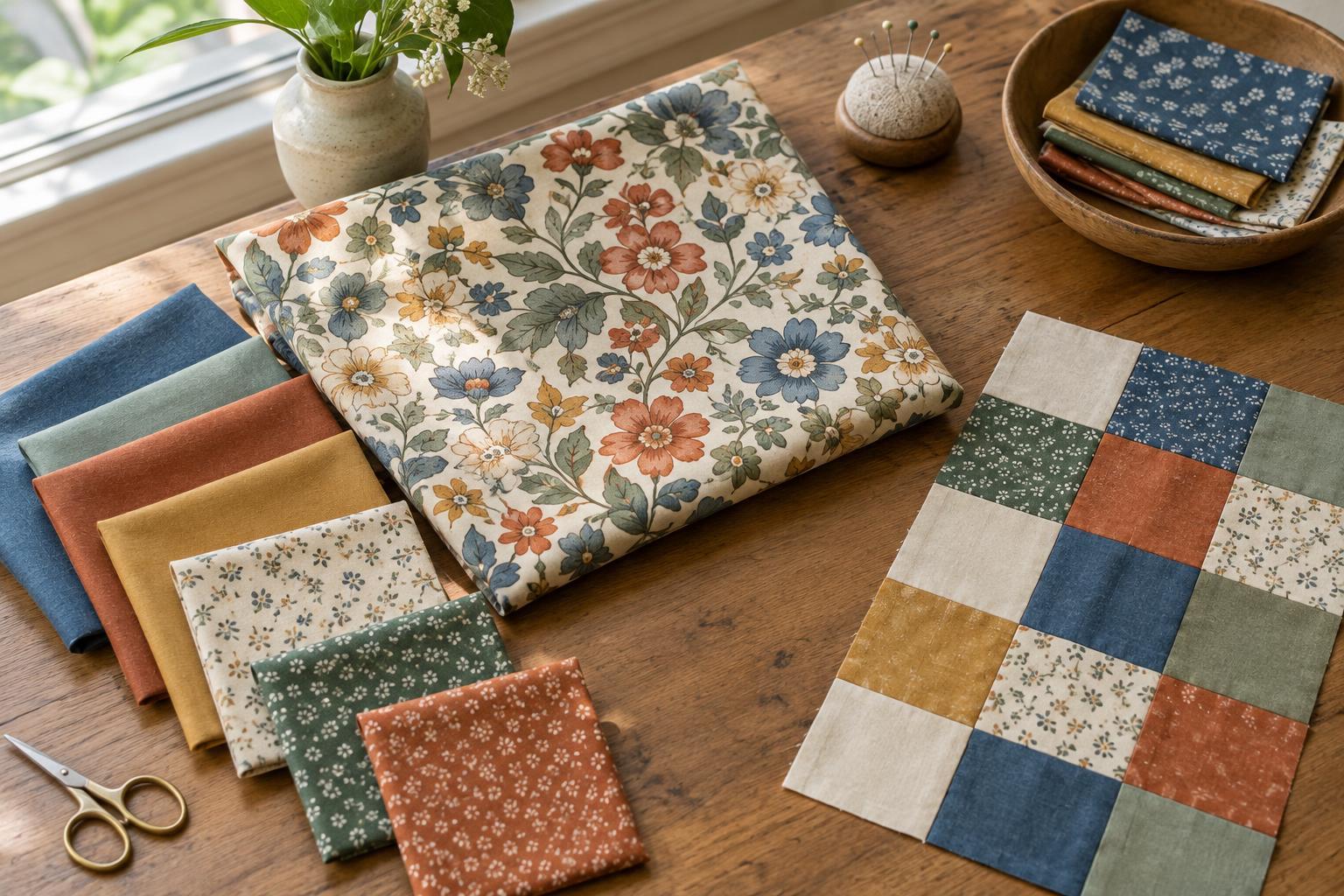
Consider the plain blocks as part of the design, not empty space to fill automatically. A large-scale print can be attractive there, but check whether its busiest areas compete with the small squares. A simple mock-up made from a few completed blocks, or from fabric swatches arranged on a table, can reveal that balance before you commit to a full quilt.
Planning and piecing your version
Start by deciding what you want the quilt to emphasise. Choose a Single Irish Chain if you prefer open space, a bold diagonal rhythm, or fewer small units to assemble. Choose a Double Irish Chain if you enjoy a busier linked pattern and are comfortable checking the position of many squares. Either can work in a limited palette or a carefully planned scrap selection.
Make a sample pieced block and a sample plain block before batch cutting. Confirm that they finish at the same size, then arrange them with a few neighbours to see whether the links meet as intended. For efficient piecing, many chain patterns can be assembled from sewn strips cut into segments, but match your strip order to the specific block diagram. Press seams consistently so adjoining blocks sit as flat as possible, and check your layout before joining rows.
The distinction is easiest to remember through the finished effect: the Single Irish Chain draws a clear, spacious route across the quilt, while the Double Irish Chain builds a fuller network of linked squares. Both turn straightforward patchwork into a design with movement.