What fabric grain means
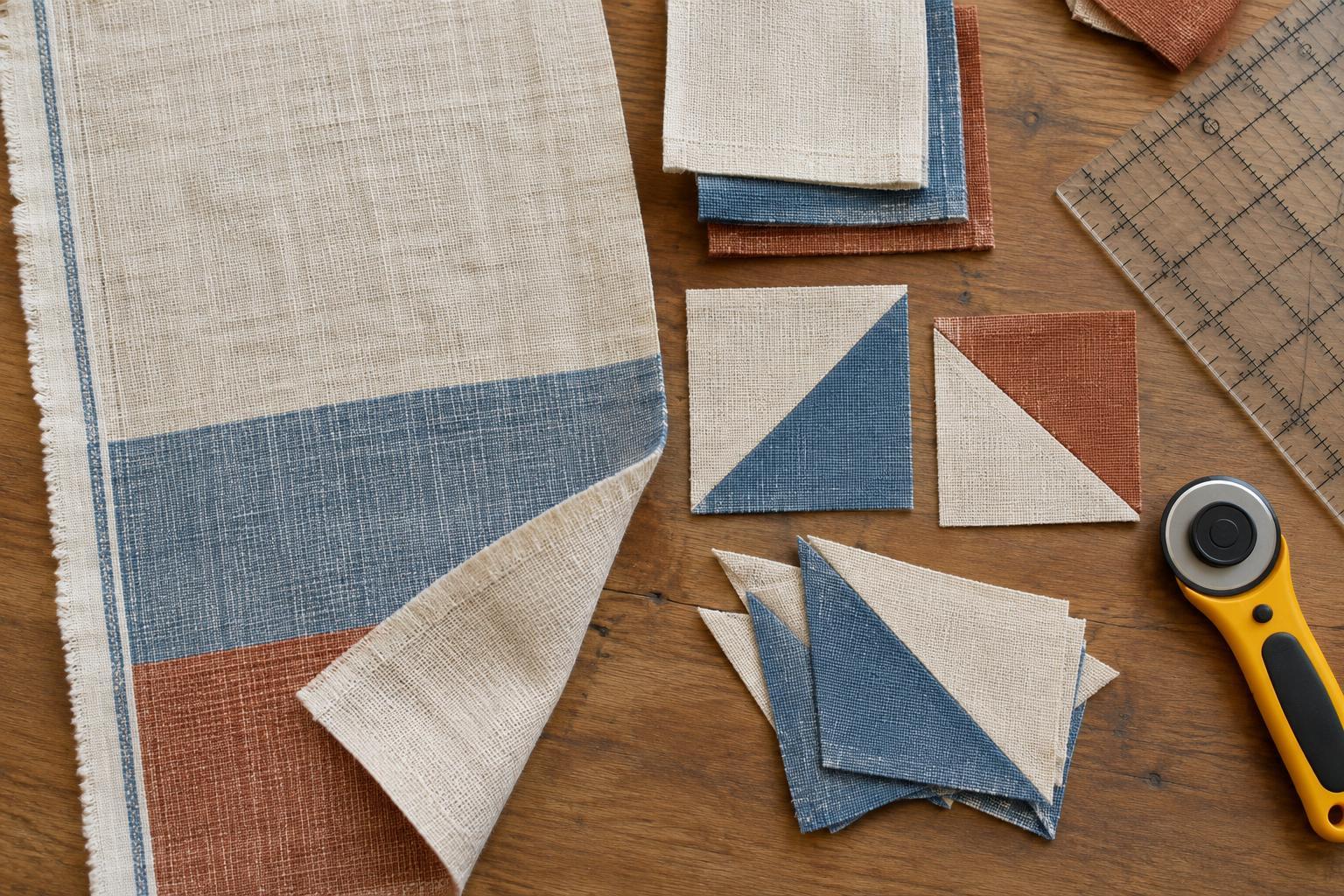
Fabric grain describes the direction of the threads in a woven fabric. The lengthwise threads run parallel to the selvages, the finished edges along each side of the fabric. Crosswise threads run from selvage to selvage. Together, these threads form the fabric’s straight grain. A line cut diagonally across them is on the bias.
These directions behave differently when handled. Lengthwise grain usually has the least give. Crosswise grain may give a little more, while a bias edge can stretch noticeably. That difference matters in patchwork: two pieces can be cut to the correct size but become difficult to join if one edge stretches during cutting, pressing or sewing. Grain is therefore worth considering alongside colour, print and fabric weight.
How to find the grain before cutting
On a piece of quilting cotton with intact selvages, the lengthwise grain runs alongside those selvages. Look closely at the weave if you need to identify the crosswise direction; its threads meet the lengthwise threads at right angles. On a small scrap without selvages, gently tug in several directions. The direction with the most give is often the bias, although this test is less reliable than following visible threads.
Do not assume that a printed line shows the grain. Stripes and other designs can sit slightly askew on the woven cloth. Likewise, a fabric folded and wound onto a bolt may not be perfectly aligned. Before cutting, smooth the fabric without pulling it taut and check that the selvages lie together naturally. If the fold twists or the layers seem uneven, open the fabric and align it more carefully. Let the woven threads, rather than a crooked cut edge, guide your first straight cut.
Choosing fabric with the cut in mind
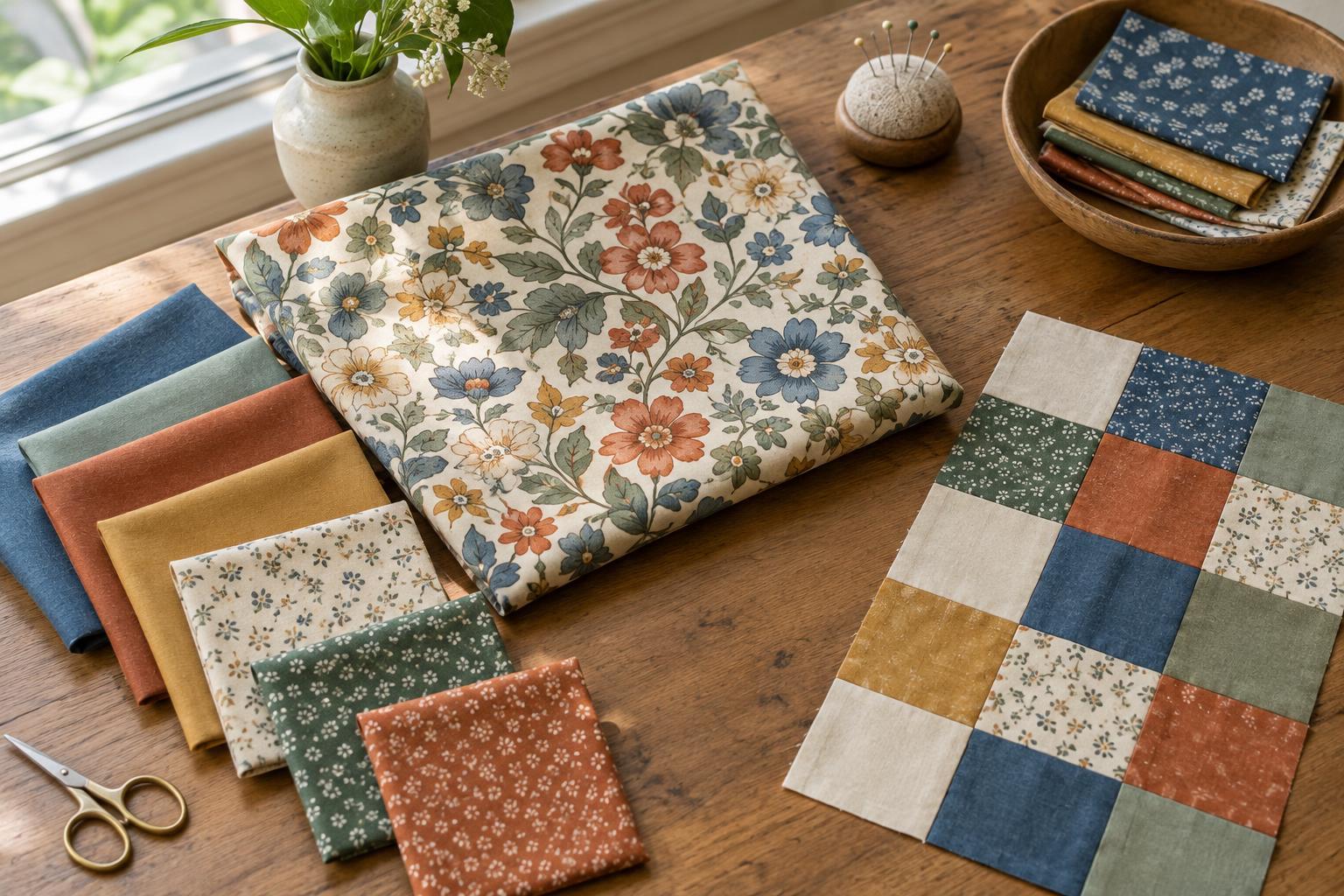
Quilting cotton is a common patchwork choice because its woven structure is relatively easy to handle. Even so, fabrics with different weights, finishes or amounts of give may behave differently in the same block. If you are combining unfamiliar fabrics, cut a few sample pieces and sew a test seam. This can reveal whether one fabric stretches or presses differently before you commit to an entire quilt.
Directional prints add another consideration. A stripe, row of motifs or one-way design may need every piece cut in a particular orientation. Sketch the block or arrange paper templates on the fabric before cutting, noting which edges must remain parallel to the selvage. Rotating a template to save fabric could turn a motif sideways or put an edge on the bias. Allowing some extra fabric gives you room to keep both the design and the grain where you want them.
Keeping patchwork pieces stable
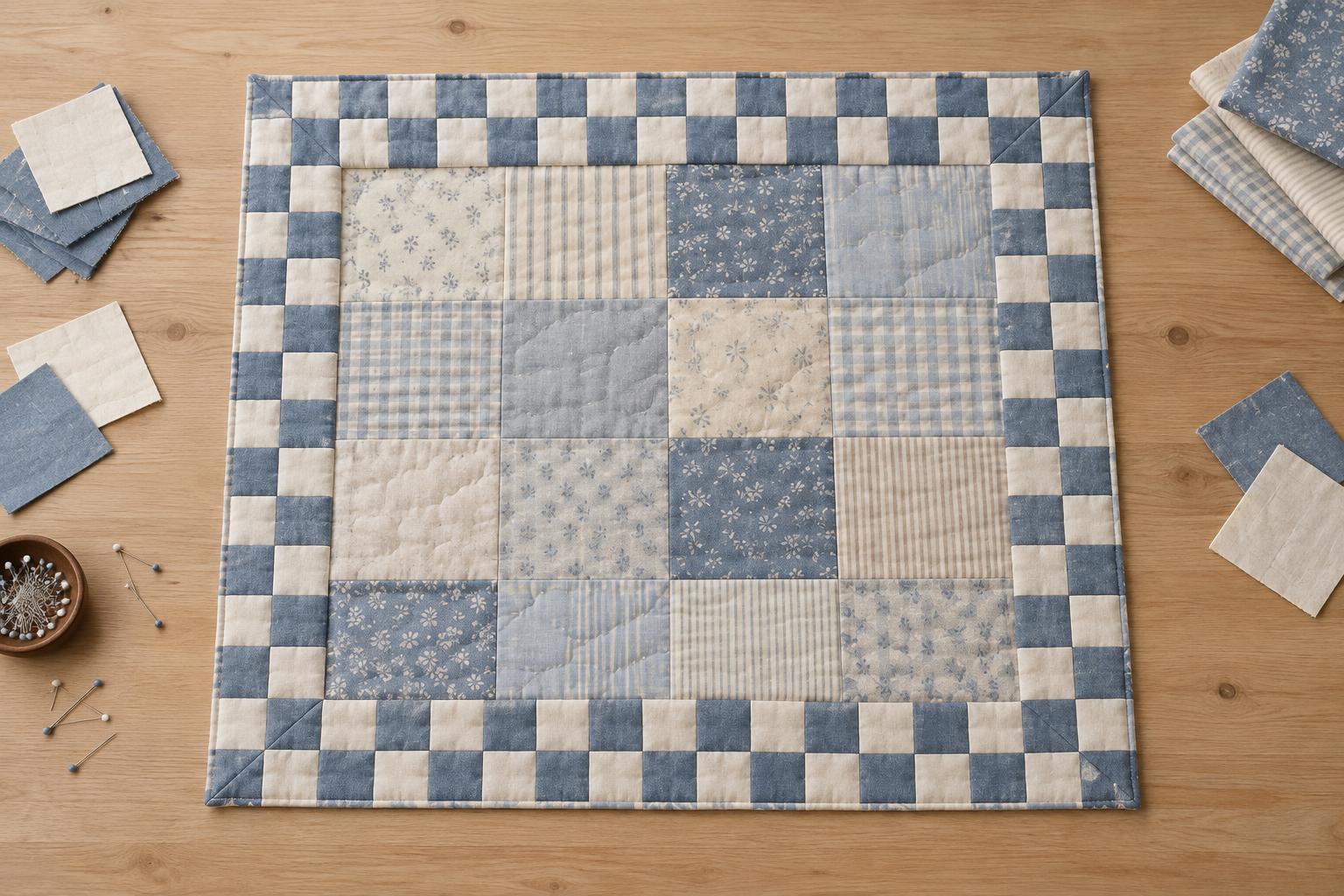
For simple squares and rectangles, cutting straight-grain edges is usually straightforward: align a ruler with the fabric’s woven direction, then cut strips and subcut them to size. Recheck the strip edge occasionally rather than making many cuts from an increasingly uneven reference line. Use a sharp rotary blade or scissors, and keep the fabric flat so it does not shift under the ruler.
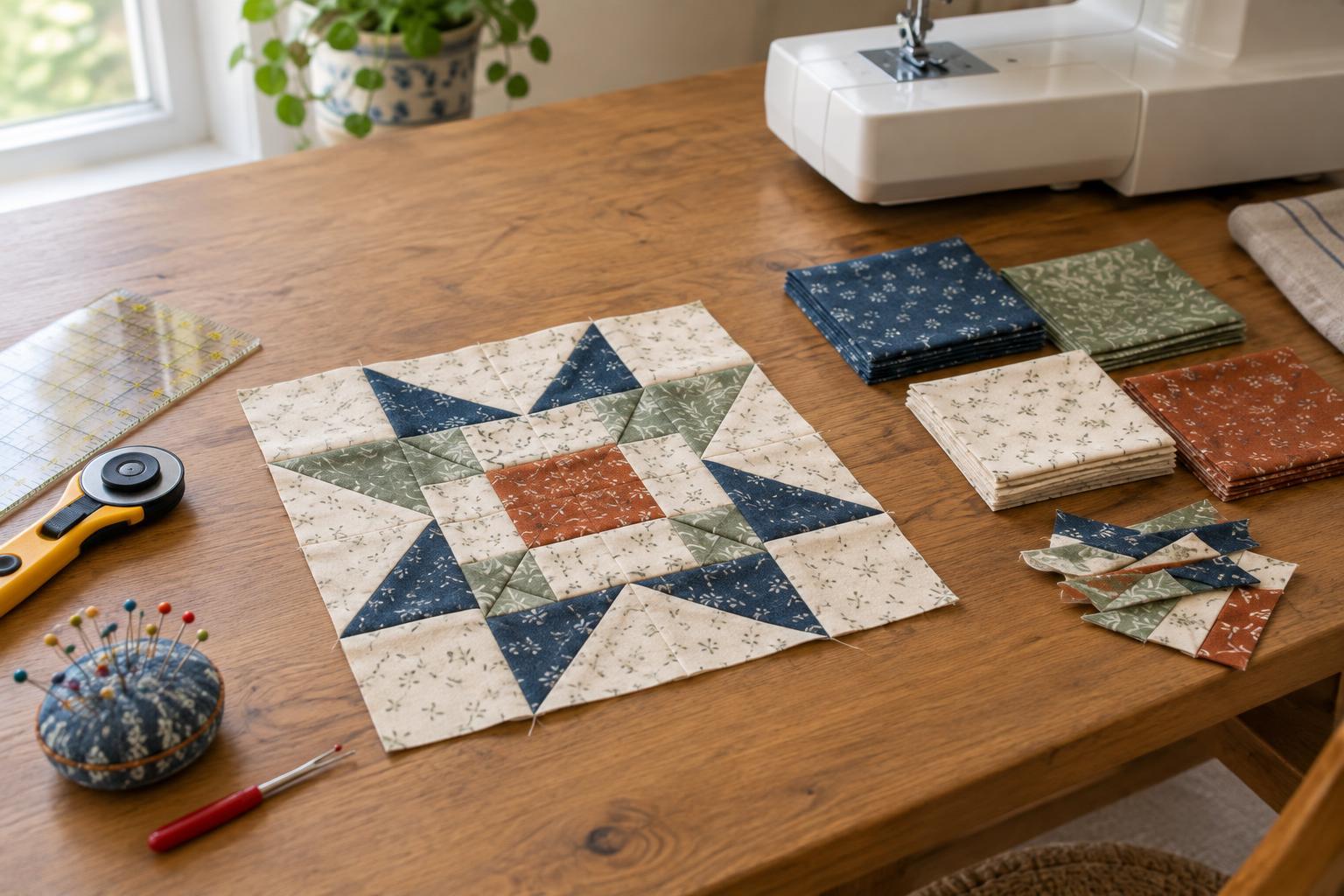
Triangles need more attention because some of their edges fall on the bias. Check the pattern’s cutting directions rather than assuming every triangle can be rotated freely. Handle cut triangles gently, avoid tugging them into place, and pin where needed. When pressing, lift and lower the iron instead of sliding it across an exposed bias edge. If a piece has stretched, try laying it flat and allowing it to relax before sewing; forcing it to match another piece can leave a ripple in the finished block.
Using grain as a planning tool
Grain is not a rule that every edge must follow. Many patchwork designs rely on diagonal cuts, and bias binding is useful when binding a curved edge because it can bend around the shape. The aim is to know when a piece is likely to stretch and adjust your handling accordingly. Straight-grain edges can provide stability; bias edges call for a lighter touch.
Before starting a block, identify its longest seams, any triangles and any prints that must face a certain way. Decide how you will place the templates, then cut one test block if the layout is new to you. This small pause can prevent mismatched motifs and stretched edges. With practice, spotting the grain becomes a routine part of choosing fabric—and a simple way to make patchwork easier to assemble.