What makes flannel different?
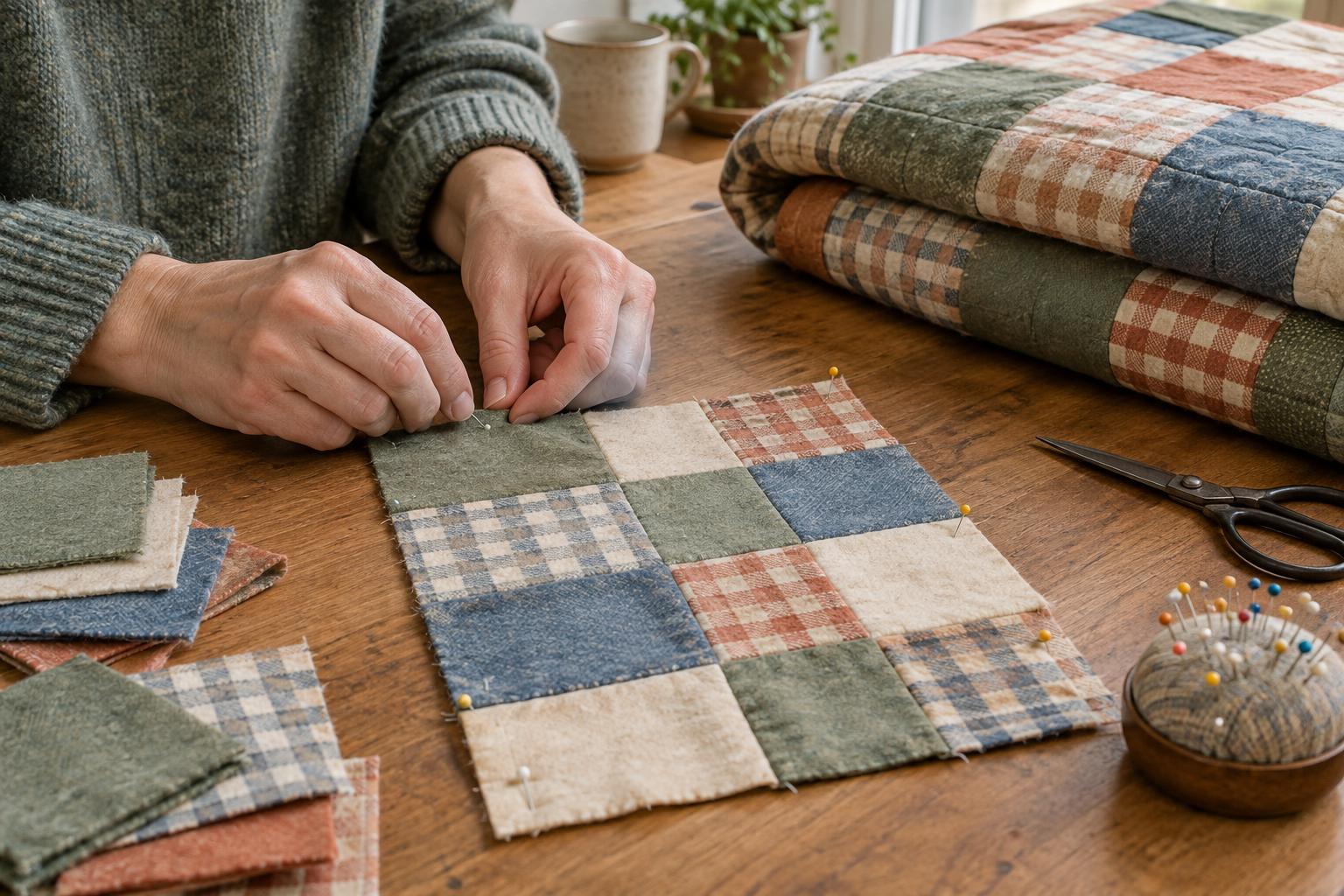
Flannel is a woven fabric with a brushed surface that gives it a soft, slightly fuzzy feel. That texture makes it appealing for quilts meant to be handled and used, but it also changes how the fabric behaves on a cutting mat and under a presser foot. Flannel pieces may cling to each other instead of sliding smoothly into place. The brushed surface can also make a small mismatch at a seam harder to notice until a block is pressed flat.
Not all flannel behaves alike. Weight, weave and fibre content vary, so handle a sample before committing to a large project. Check whether it feels stable along the straight grain, how easily it pulls out of shape on the diagonal, and whether it sheds lint when cut. A woven flannel is not the same as a stretchy knit, though its bias edges can still distort if pulled.
Prepare fabric before cutting
Decide how the finished quilt will be cared for, then prepare your fabric with that use in mind. If you expect to wash the quilt, washing and drying a small sample first will show you how much the flannel changes in feel and size. Prewashing all the project fabrics can help avoid mixing pieces that have been treated differently. Follow the fabric’s care guidance, and press it flat before measuring or cutting.
If you plan to pair flannel with quilting cotton, test the combination rather than assuming the two fabrics will respond alike. A sample block can reveal whether one fabric shifts more at the seams or behaves differently after washing. It is also worth checking a dark or strongly coloured flannel for colour transfer before placing it beside a pale fabric.
Flannel’s surface can hold folds and collect lint. Smooth each layer on the cutting mat without stretching it, and clear loose fibres from the mat and machine as you work. A sharp rotary blade helps produce clean edges; a dull blade may tug at the cloth. Cutting fewer layers at once can make it easier to keep every piece aligned.
Keep blocks square without fighting the fabric
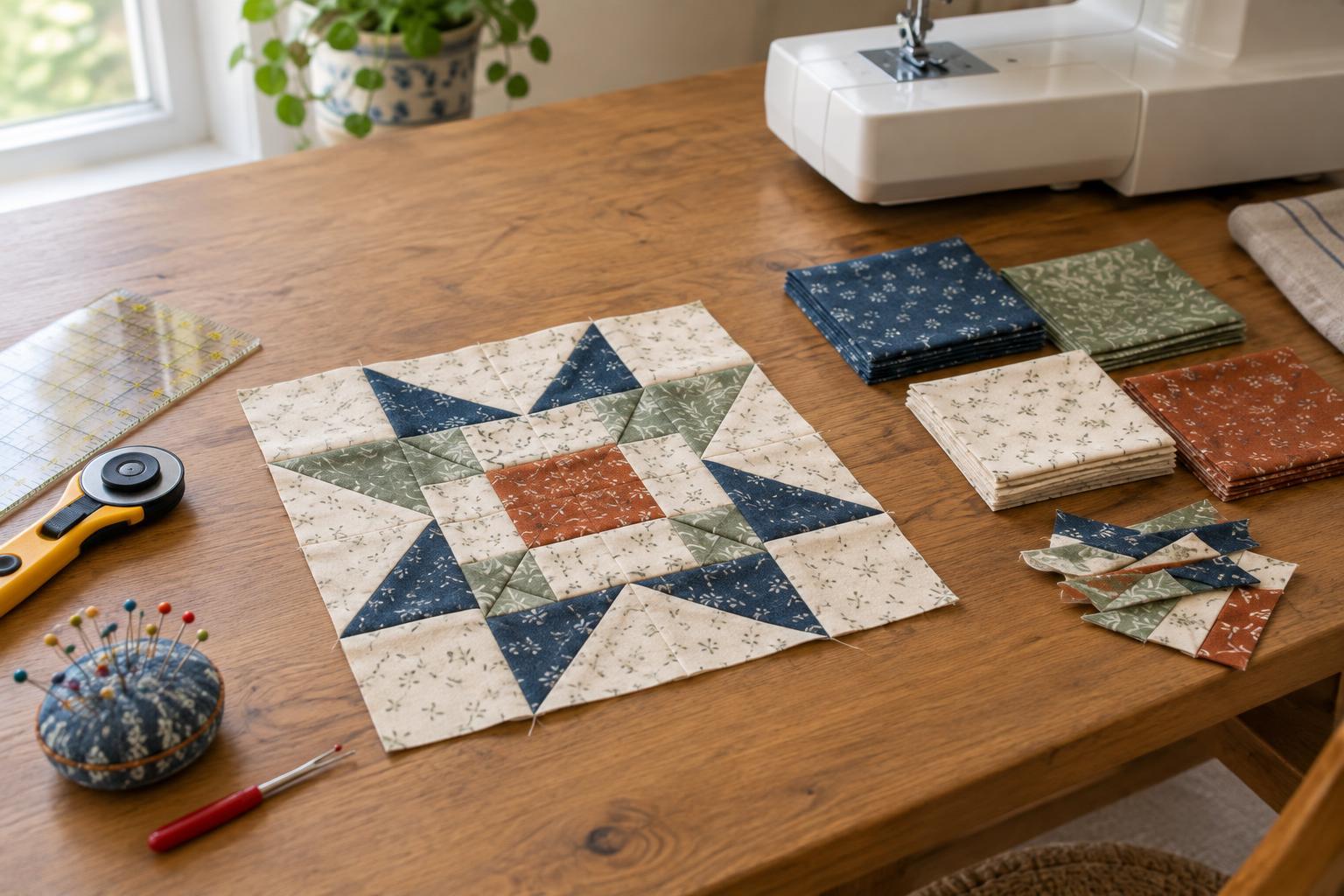
Simple block designs are a useful starting point for flannel. Larger squares and rectangles give you room to enjoy the texture without managing many small, bulky seam intersections. If your pattern includes triangles, take extra care with their bias edges. Handle cut pieces gently, keep them supported on the table, and avoid pulling a seam straight as it feeds through the machine.
Use a consistent seam allowance and secure pieces with pins or clips if their fuzzy surfaces shift. Sew a test seam through the same number of layers your block will contain, then measure the result. If the seam allowance needs adjusting, it is better to discover that before assembling a full stack of blocks. When joining rows, match key intersections first rather than stretching one row to fit the other.
Pressing should set seams without pushing the block out of shape. Lift and lower the iron instead of sweeping it across the fabric. Where several seams meet, choose a pressing direction that reduces bulk, or press seams open if that suits the project and construction. Let each block cool on a flat surface before checking its size.
Plan for softness and thickness
Flannel can add a cosy feel to a quilt top or make a soft backing, but using it in multiple layers also adds weight and thickness. Before choosing batting, stack small samples of your planned top, batting and backing. Quilt the sample to see how easily the layers move through your machine and whether you like the finished feel. Follow the batting maker’s guidance for quilting distance when planning your stitching.
The brushed surface may grip a backing or batting as you baste, yet it does not replace careful smoothing and secure basting. Work from the centre outward and check for folds on both sides. If machine quilting feels difficult, slow down and support the quilt’s weight so it does not pull against the needle. A walking foot may help the layers feed more evenly.
Finish for the way the quilt will be used
Binding takes repeated handling, so consider a firmly woven fabric if your flannel feels loose or especially bulky at a folded edge. Test a short section around a corner to see whether the binding encloses the layers neatly. Trim loose threads and lint before the final inspection, then check that seams, quilting and binding are secure.
For a quilt you intend to wash, use a gentle approach suited to all its materials and avoid relying on the flannel’s appearance alone to judge dryness. Keep care notes with the quilt so its fabrics and construction are easy to remember. With thoughtful preparation and steady handling, flannel’s texture becomes a design feature rather than an obstacle to accurate patchwork.