What blocking can and cannot do
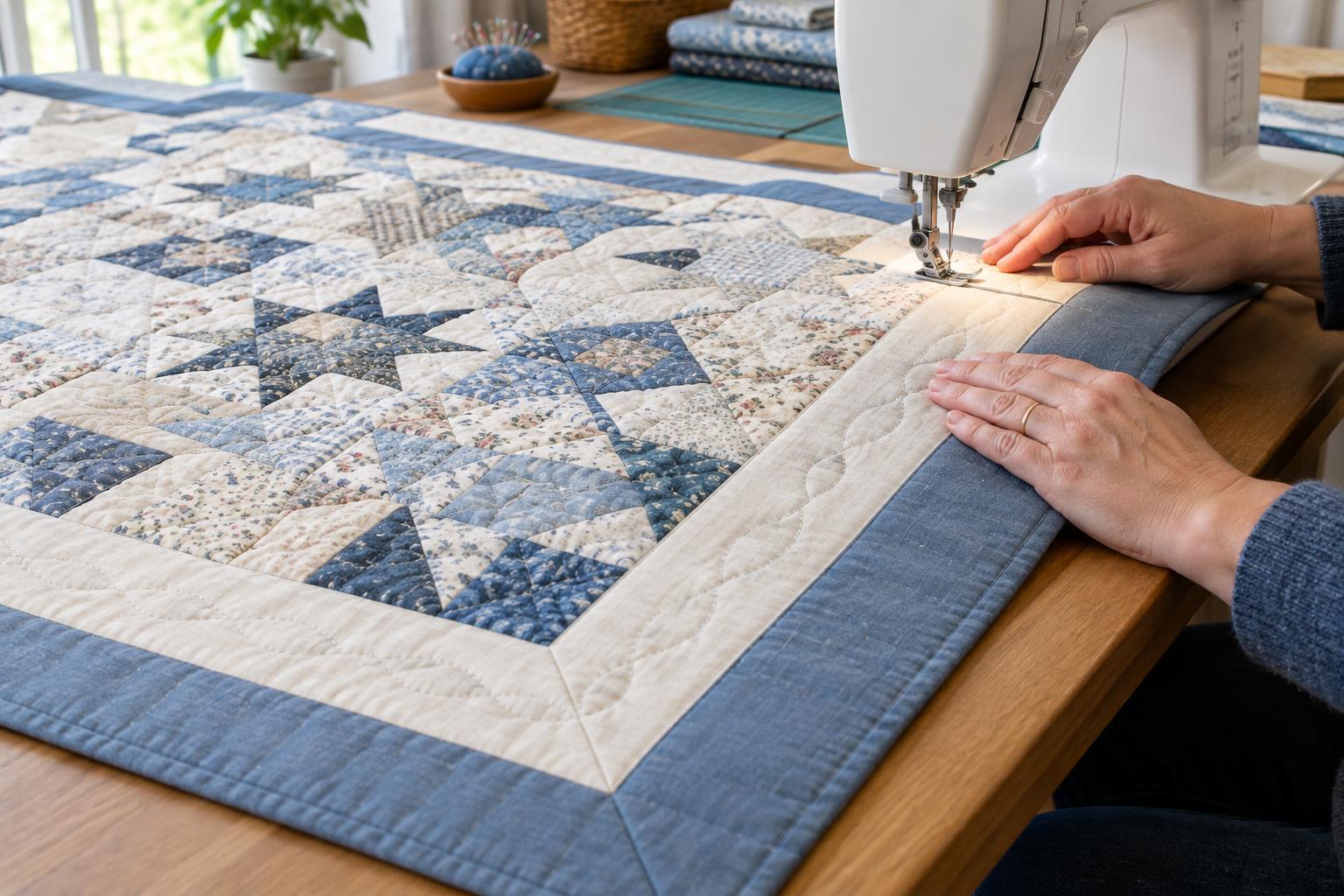
Blocking means gently shaping a quilt while it is slightly damp, then leaving it undisturbed until it dries. It can help a small wall quilt, table quilt or quilted panel lie flatter after quilting. It may also ease a minor ripple along an edge or bring corners closer to square.
Blocking is not a substitute for fixing construction problems. It will not reliably correct a significantly bowed seam, a stretched border or an area where the quilting has pulled the layers tightly out of shape. If an edge needs force to reach the desired position, let it remain where it falls naturally and look for the cause before trimming or binding.
Decide whether the quilt is suitable
A small quilt is easier to support and shape than a large one. Before adding moisture, consider the fabrics, threads, batting and any embellishments. Fabrics that may release dye, delicate stitching, unstable trims and materials that should not get wet are reasons to skip damp blocking. If you are unsure how a fabric will react, test an inconspicuous area with a damp white cloth. A clean test is reassuring, but it cannot guarantee that the whole quilt will behave the same way.
Check the quilt on a flat surface first. Smooth it lightly with your hands, without pulling. If it already lies reasonably flat, blocking may offer little benefit. For a quilt you intend to wash regularly, remember that a carefully shaped edge may shift again during washing and drying.
Prepare a clean, level surface
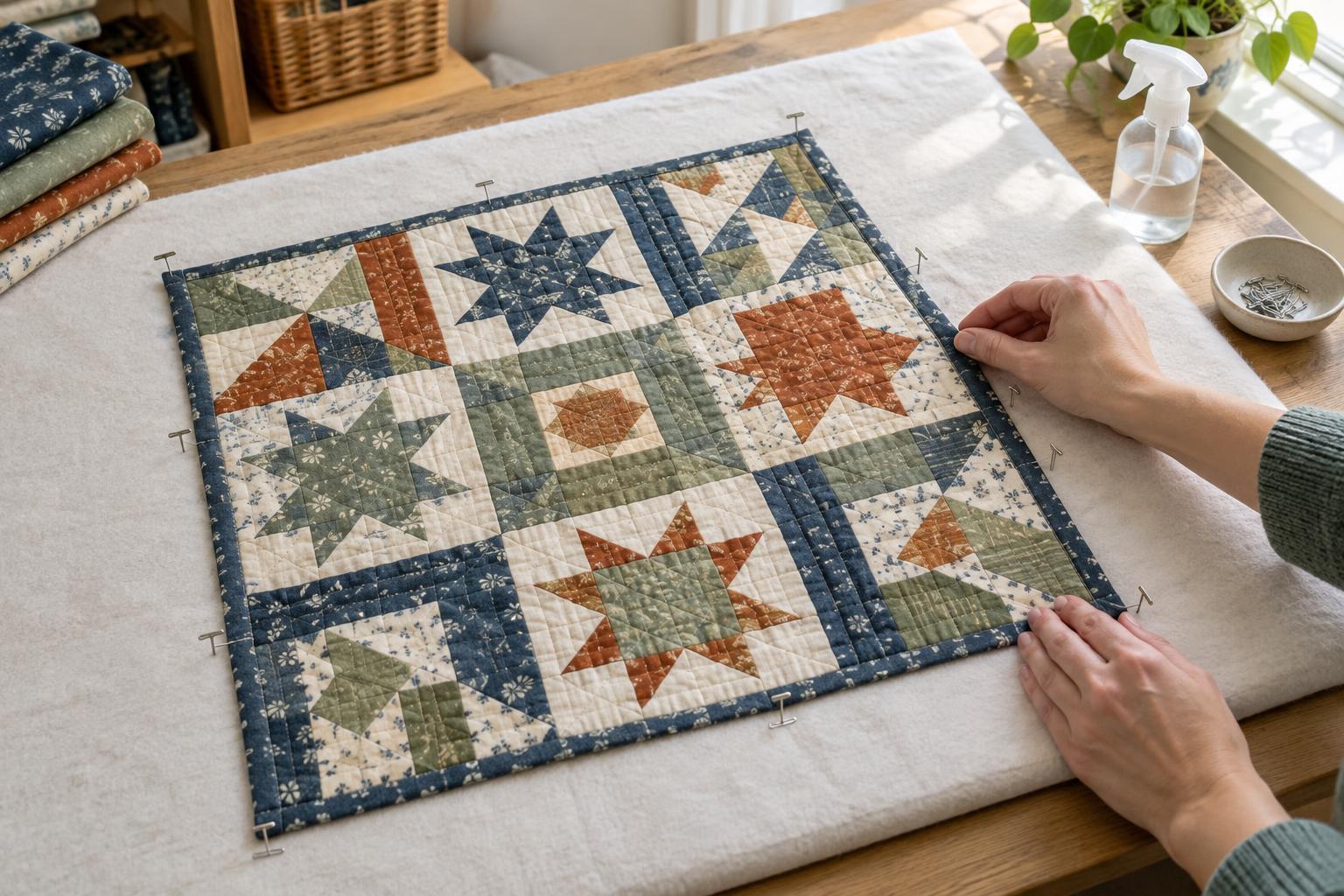
Choose a surface large enough to hold the entire quilt flat while it dries. A clean blocking mat or another moisture-tolerant surface works well if you can place pins securely in it. Protect the surface beneath from dampness, and keep the quilt away from direct sunlight, excessive heat, pets and foot traffic. Have rust-resistant pins, a ruler, a spray bottle of clean water and clean towels nearby.
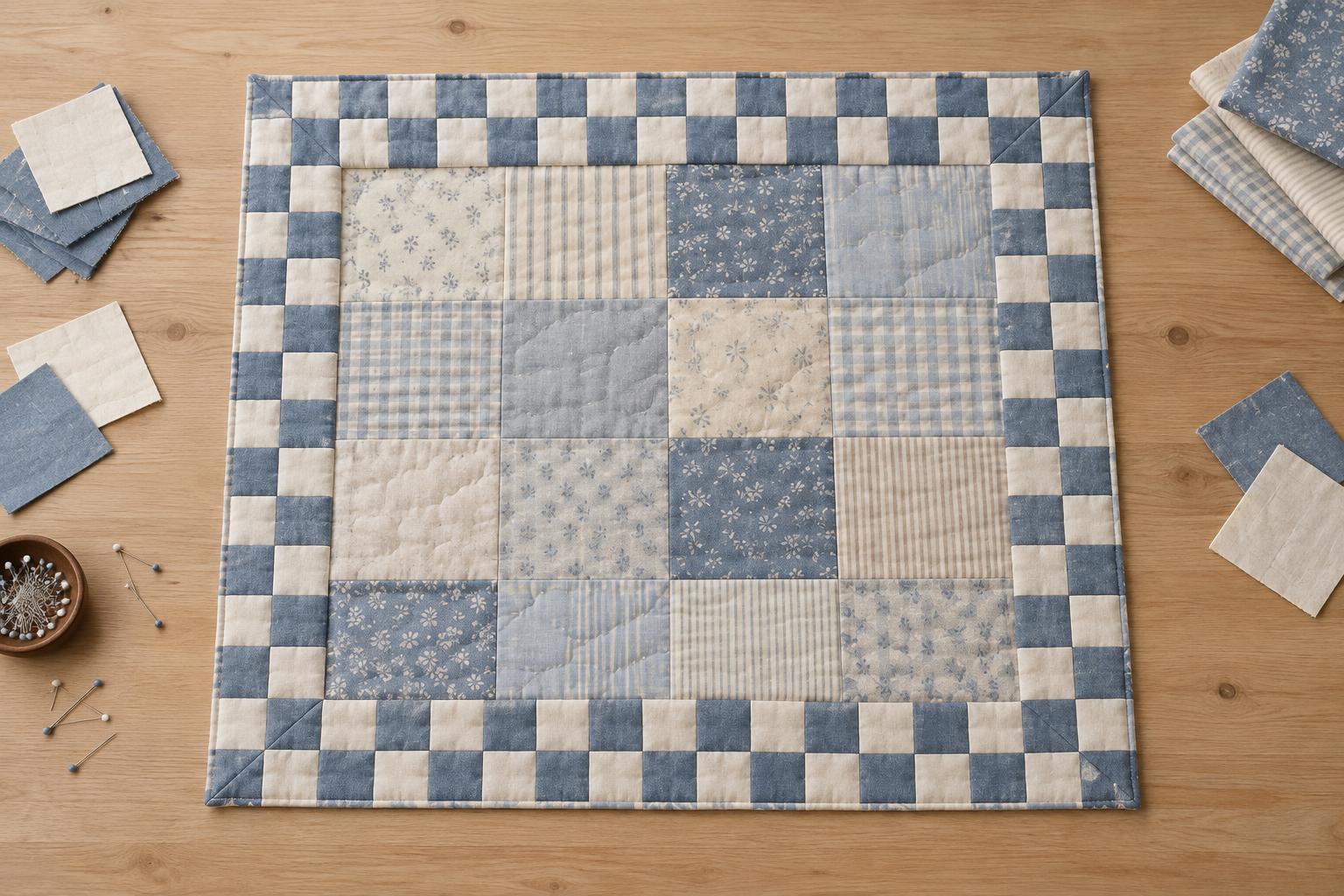
If the quilt has straight sides, measure them before you begin and note whether opposite sides differ. These measurements are guides, not targets to achieve at any cost. You can also place a ruler or square beside a corner to judge its shape without pulling the fabric.
Dampen and shape with a light touch
Lay the quilt flat and smooth it from the centre towards the edges. Lightly mist the surface so it becomes evenly damp rather than wet. Give the moisture a little time to settle through the layers. If a section stays dry, mist that area lightly instead of soaking the whole quilt. Support the quilt whenever you move it; lifting one damp corner can stretch it.
Start by positioning one edge, then work around the quilt. Use your hands to ease gentle ripples outward and align the sides. Pin through the outer edge or seam allowance where appropriate, spacing pins closely enough to hold the shape without creating sharp points between them. Compare opposite sides and check the corners as you go. If you are blocking before binding, keep any intended trimming line in mind, but do not stretch the quilt simply to make the measurements match.
Stop if stitches look strained, a border begins to distort or a corner will only sit square under firm tension. A slightly irregular quilt that lies comfortably flat is preferable to one forced into a shape it cannot retain.
Let it dry and check the result
Leave the quilt pinned until it is completely dry, including the batting and seams. Good air circulation helps; avoid concentrated heat. Remove the pins, lay the quilt flat again and check whether the improvement remains without restraint. If an edge springs back, repeated hard stretching is unlikely to provide a lasting solution.
For a quilt awaiting binding, assess its shape before deciding whether to trim. Remove only what your project allows while preserving the intended border and enough fabric beyond the stitching. For an already finished quilt, blocking may be all that is needed to improve how it hangs or rests on a table. Store or display it only after you are confident it is fully dry.